
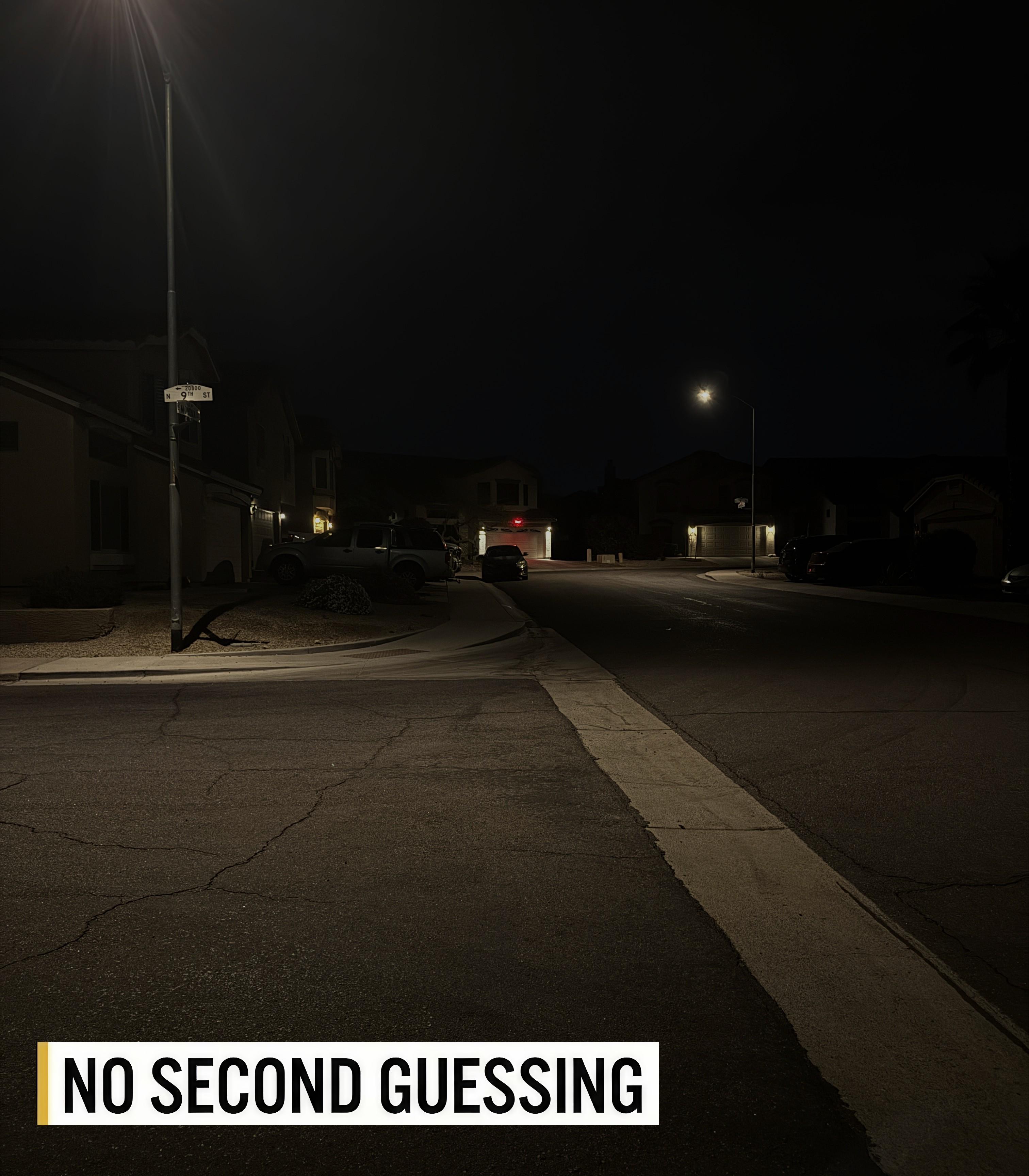
The 7-Minute Gap Nobody Talks About
When someone calls 911, most people assume help is already on the way. And it is. But "on the way" and "at your door" are not the same thing. According to a landmark study published in JAMA Surgery analyzing over 1.7 million EMS encounters across 485 agencies, the national average EMS response time — from 911 call to first unit arrival — is 7 minutes. In urban areas, it runs under 10. In rural America, it can exceed 14 minutes. Nearly one in ten callers waits over half an hour.
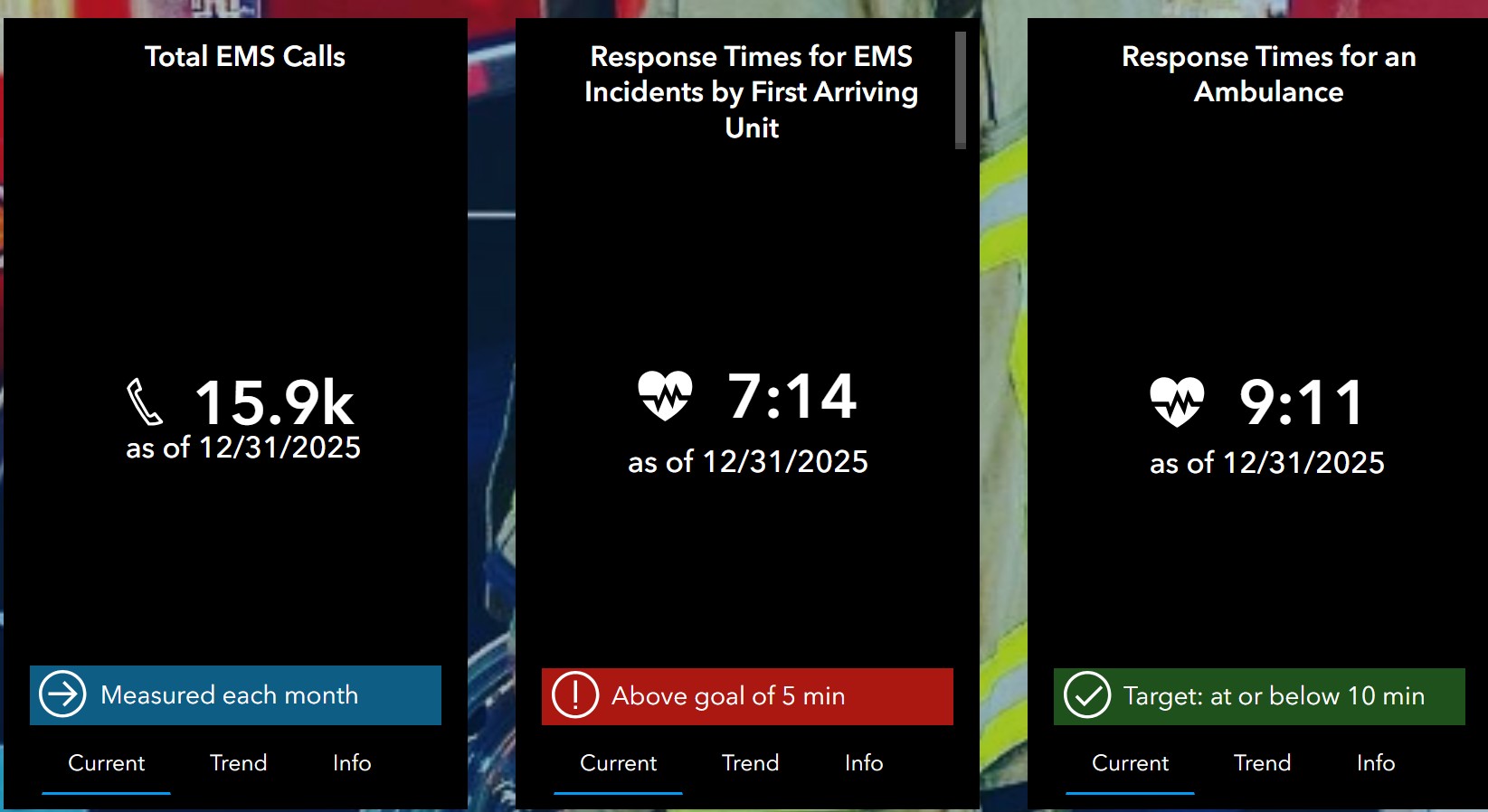
The NFPA 1710 standard sets the benchmark: first responders should arrive within 5 minutes of dispatch for 90% of calls. For advanced life support (ALS) — a paramedic with a defibrillator — the target is 9 minutes. Most systems miss these targets. Phoenix, Arizona, one of the fastest-growing cities in the U.S., reports a first-arriving EMS unit response time of 7 minutes and 14 seconds, with ambulance arrival averaging 9 minutes and 11 seconds — as of the end of 2025.
These numbers are aggregate averages. They include the calls where the station is around the corner and the crew arrives in three minutes flat. They also include the calls where address confusion, nighttime visibility, or incorrect GPS coordinates add two, three, or five minutes to the response. The averages don't distinguish between the easy calls and the nightmare calls. This article is about the nightmare calls — and the one variable you can actually control.
The Survival Math: What 60 Seconds Costs
Emergency medicine doesn't run on good intentions. It runs on physiology. And physiology has a clock.
For cardiac arrest — the most time-sensitive medical emergency — every minute without CPR reduces survival from witnessed ventricular fibrillation by 7–10%. A regression model from King County, Washington, calculated the decline at 5.5% per minute without any intervention. The American Red Cross puts it plainly: survival chances drop approximately 10% for every minute that CPR and AED use is delayed. Within five minutes of arrest, brain cells begin to die.
Now add this: according to the American Heart Association, 73.4% of out-of-hospital cardiac arrests happen in homes or residences. Not in stadiums. Not in airports with AED stations every 50 feet. In houses. In neighborhoods. On residential streets where the house numbers might be painted on a curb from 1987 or stuck to a mailbox at an angle nobody can read after dark.
The overall survival rate for EMS-treated out-of-hospital cardiac arrest in the U.S. is 9.1%. That's not a typo. Nine percent. The people who survive are overwhelmingly the ones who received bystander CPR within the first few minutes — and whose address was found quickly.
The "Last 100 Yards" Problem
GPS gets first responders to the right block. Sometimes. But getting to the right block and getting to the right house are two different problems. Every paramedic, firefighter, and police officer knows this. GPS coordinates from a cell phone call have a margin of error — sometimes 30 feet, sometimes 300. In dense suburban neighborhoods where every house looks the same after dark, that error margin turns into minutes of circling, squinting, and guessing.
This isn't speculation. The National Emergency Medical Services Information System (NEMSIS) — which aggregates data from over 14,000 EMS agencies nationally — tracks delay types. Among those delay categories: "Difficulty locating patient/scene" is a documented and recurring cause. EMS staffing shortages compound the problem. With 39% of EMS positions and 55% of paramedic positions vacant nationally, the crews that do arrive are stretched thin. Adding wayfinding confusion to an already strained system doesn't just slow things down. It costs lives.
"Time is of the essence when a cardiac arrest occurs, and late interventions can be as ineffective as no intervention."
What Happens After Dark
Here's what almost nobody measures but everyone experiences: most residential house numbers are functionally invisible at night. Painted curb numbers wear down within a year. Vinyl stick-on digits fade. Decorative brass numbers become part of the wall texture after sunset. Even "reflective" numbers only work when direct light hits them at the correct angle — which is precisely not what happens when an ambulance is scanning from a moving vehicle on a poorly lit street.
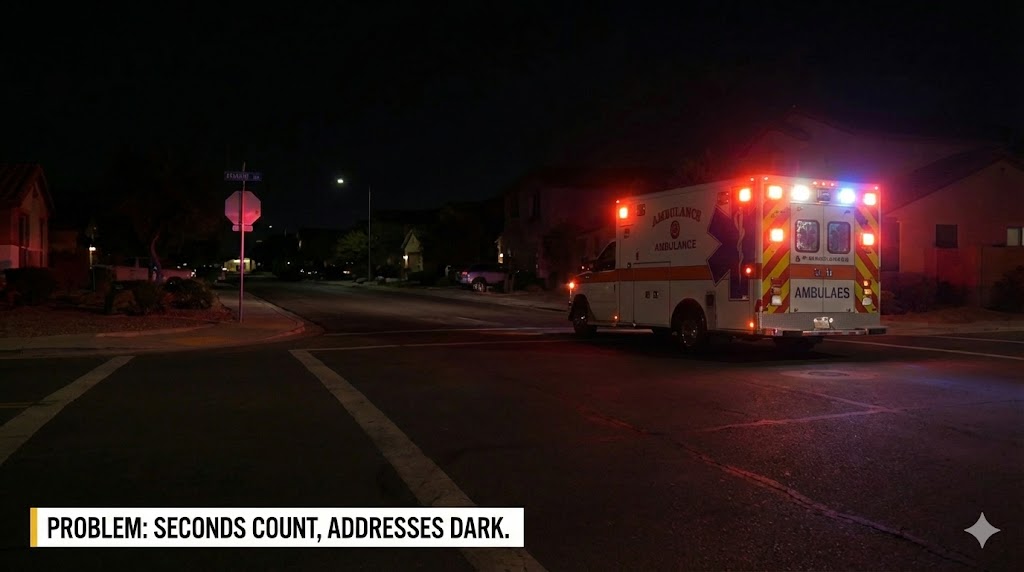
Nighttime visibility isn't a cosmetic issue. It's a physics problem. Human visual acuity degrades dramatically in low-light conditions — a phenomenon called scotopic vision. Your cone cells, which handle detail and color, shut down. Rod cells take over, providing only grayscale, low-resolution peripheral vision. A house number that's perfectly legible at noon becomes a smudge at midnight. For a paramedic operating on adrenaline, fatigue, and a 4-inch address sign 80 feet away, the task is impossible.
Published research in Medicine (2020) analyzing over 170,000 trauma patients from the Japan Trauma Data Bank found that mortality for emergency trauma patients was significantly higher at nighttime than during the day, even at hospitals with 24-hour trauma systems. The authors attributed this partly to cognitive degradation from night shifts. But if nighttime degrades the performance of the doctors inside the hospital, imagine what it does to the crew outside the hospital — the one trying to find your house.
The Numbers Most People Never See
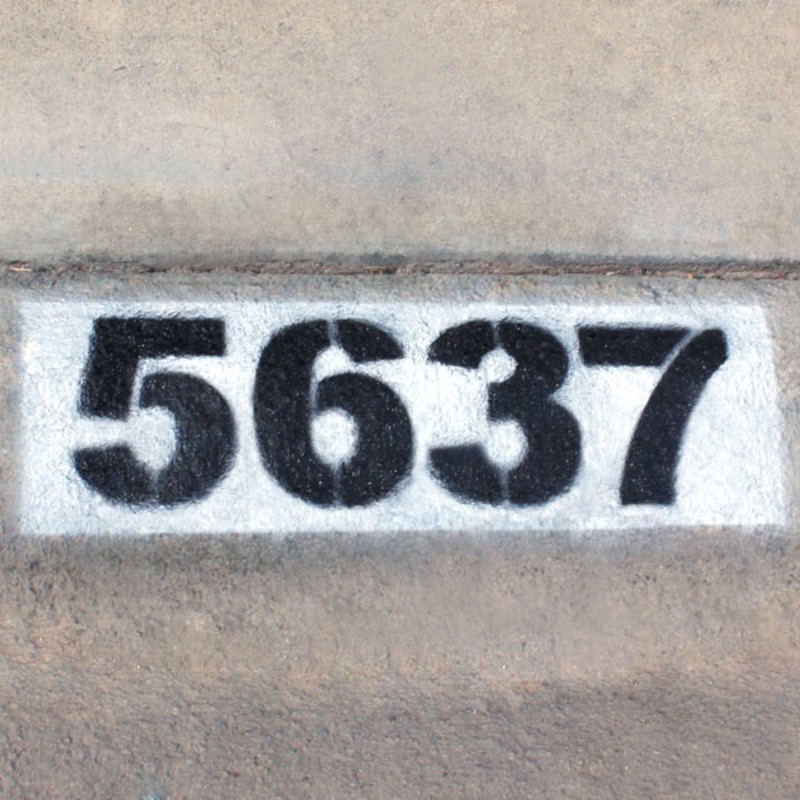
Drive through any suburb in America after 9 PM. Try to read house numbers from the street. You'll find that most are one or more of the following: too small (under the 4-inch NFPA minimum), mounted in a location that's blocked by landscaping or porch pillars, painted in a color that matches the house facade, unlighted and unreflective, or simply not there at all.
NFPA 1 (Fire Code) and the International Fire Code (IFC) both require residential address numbers to be a minimum of 4 inches tall, mounted in a position visible from the street, with contrasting background. Many local jurisdictions add requirements for illumination or retroreflective material. But enforcement is essentially non-existent. Nobody tickets a homeowner for a faded address sign. Nobody inspects curb paint. The codes exist. Compliance doesn't.
This is the gap. Not a technology gap. Not a funding gap. A visibility gap — where the last 10 seconds of a 7-minute response are lost because the crew can't find the house. And those 10 seconds, for a cardiac arrest, a stroke, or a choking infant, are not recoverable.
What If the House Found the Ambulance?
This is the question we started with at Glomensio. Not "how do we make a prettier house number" — but how do we eliminate the wayfinding delay in the last 100 yards of a 911 response?
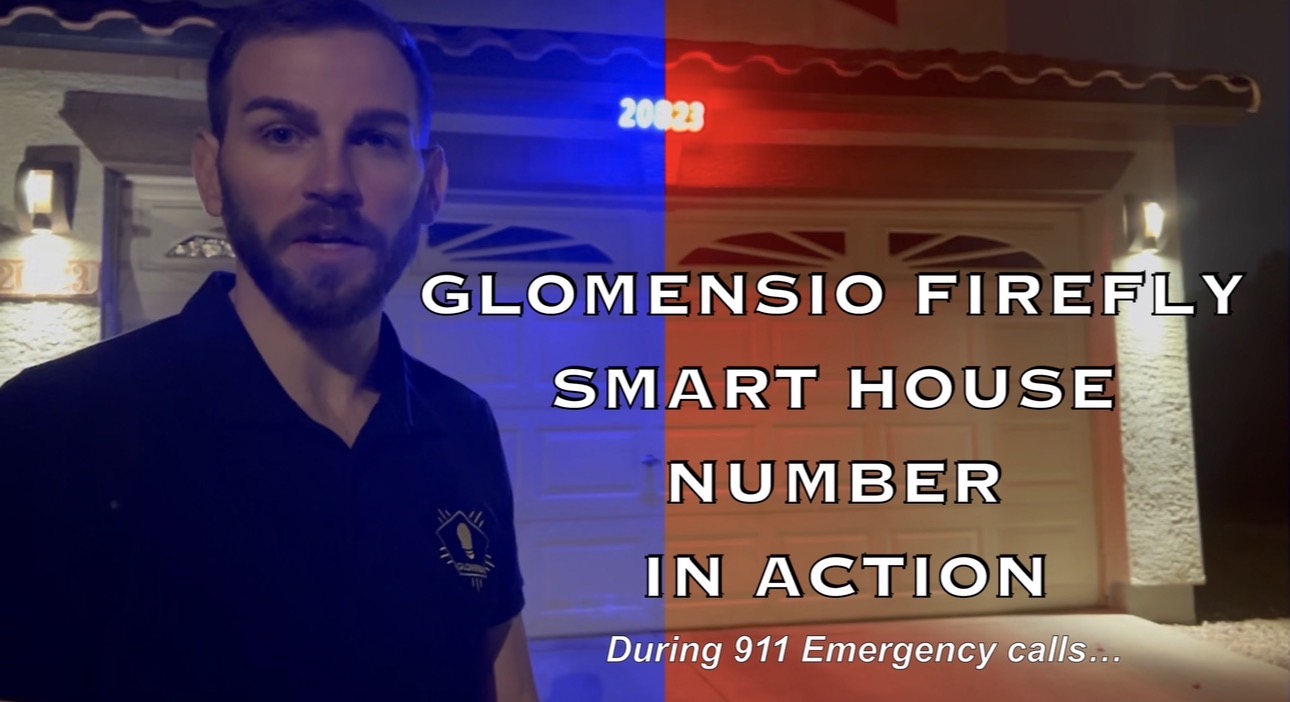
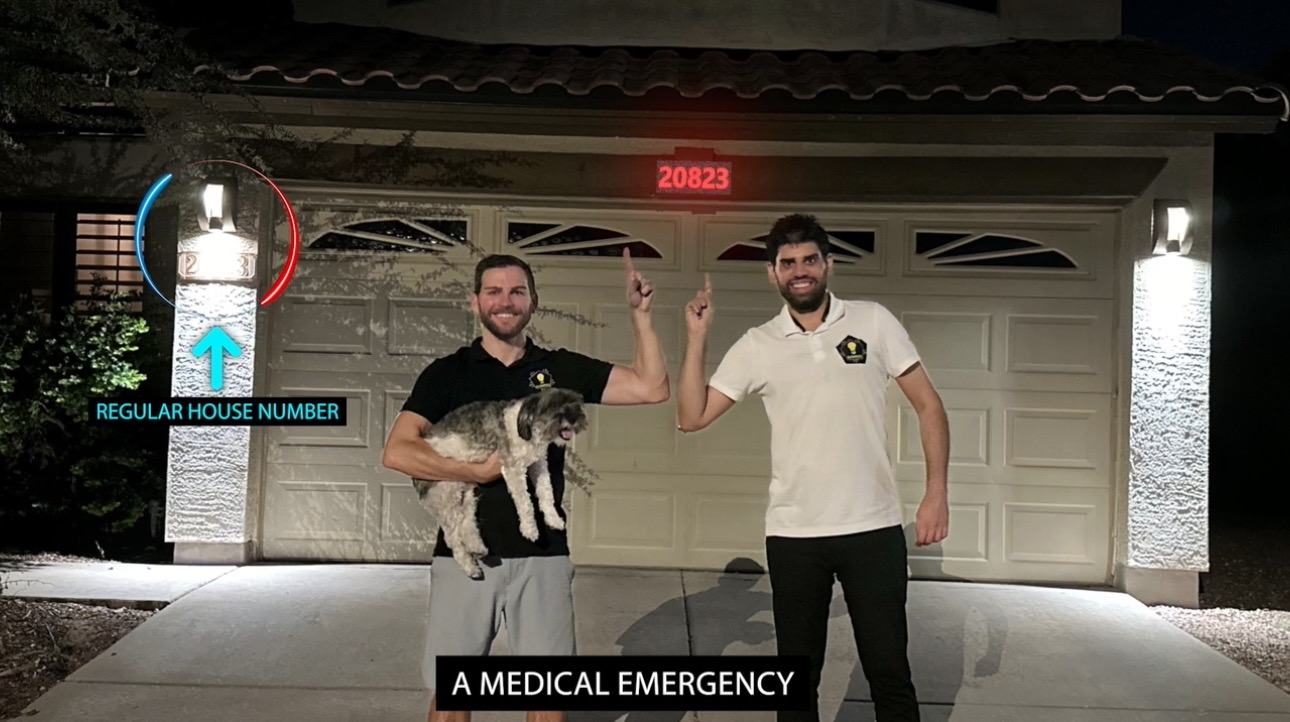
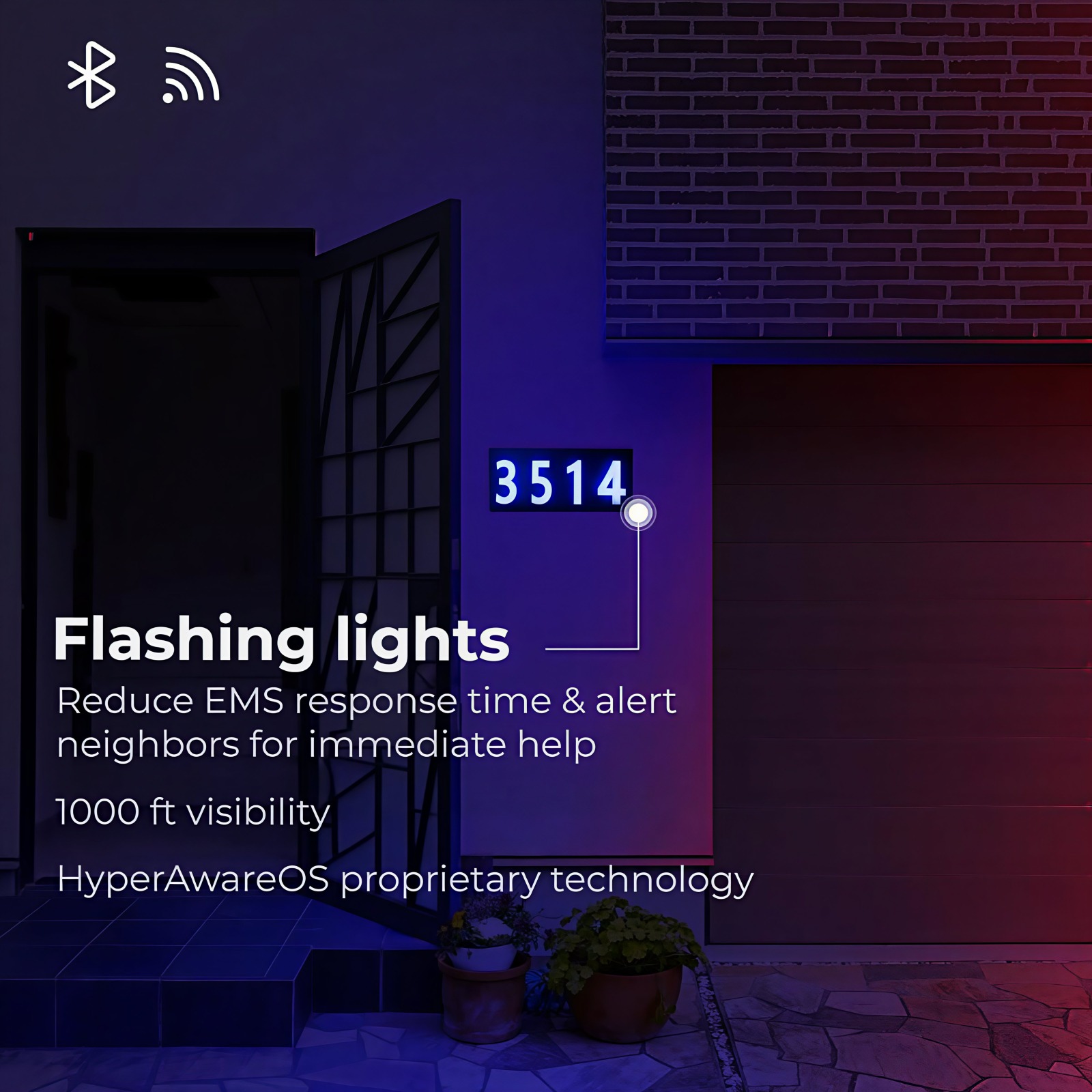
The Glomensio Firefly is a smart illuminated house number that does something no other address sign does: when a 911 call is placed from an Android phone, it automatically activates a red-and-blue emergency beacon — visible from over 1,000 feet. No button to press. No app to open. No fumbling while a loved one is on the floor. The house itself becomes the signal.
This isn't a concept. It's a product. It won the CES 2026 Innovation Award in Smart Home. It won the Future PLC Innovation Award — Best in Home & Garden 2025 — one of only 7 headline product awards given. It's deployed across 3 countries, 18 U.S. states, and it's been tested through Scottsdale summers and Wisconsin winters for over 3 years.


In normal operation, Firefly provides a warm backlit glow that makes your address unmistakable after dark — solving the baseline visibility problem that 90% of American homes have. It's hardwired (not solar, not battery), so it doesn't degrade, dim, or die on a cloudy Tuesday in February. It installs in 15 minutes with basic tools, or we coordinate a licensed electrician through our nationwide installer network for as low as $99.
But the emergency beacon is what changes the math. Instead of a paramedic scanning 40 houses at 3 AM, they see one house flashing. The neighbor three doors down sees it too. Community bystander response — the thing the AHA, the Red Cross, and FEMA's "Until Help Arrives" campaign have been trying to scale — finally has a visual trigger that works without an app, without a notification, without WiFi.
"Our work at Glomensio focuses on those crucial first 10 minutes — empowering neighbors and communities to bridge the gap, providing immediate life-sustaining assistance such as CPR that makes all the difference."
The Bottom Line
Emergency response time is a system problem — and system problems don't have single solutions. Better staffing, better dispatch protocols, better GPS integration — all of these matter. But the cheapest, simplest, and most immediately deployable improvement is also the one nobody is funding, mandating, or tracking: making the destination visible.
Your house number isn't a decoration. It's not a design choice. It's a life-safety device that operates in the worst possible conditions — at night, in an emergency, when cognitive function is degraded for everyone involved. Treat it like one.
Gen 2 sold out. Gen 3 — with AI-powered emergency alerts — launches soon.