
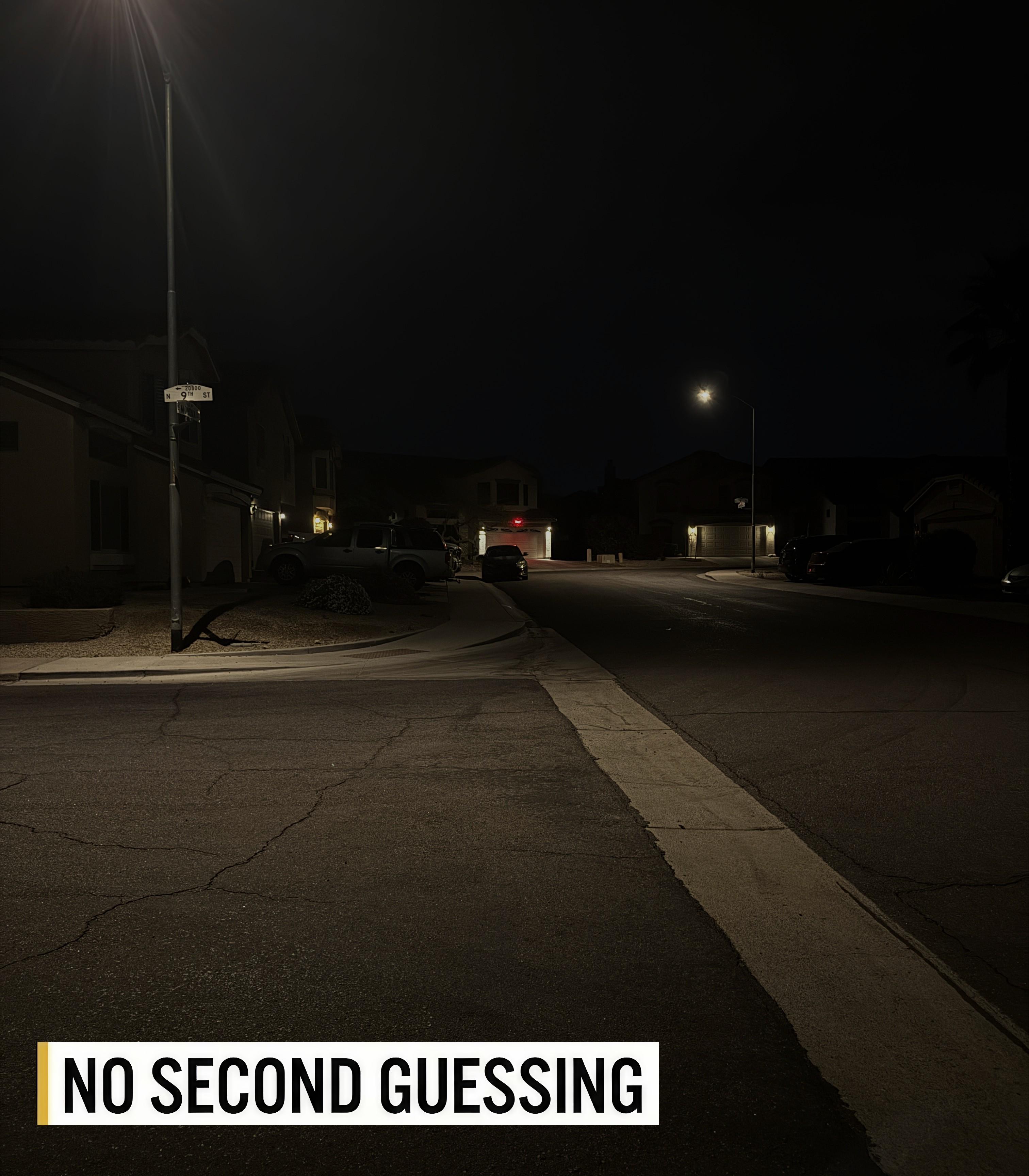
The Problem with Every Street Number You've Ever Seen
Walk through any American neighborhood after 9 PM and try to read the house numbers from the street. You'll encounter the full taxonomy of failure: faded curb paint that was last refreshed sometime during the first Biden administration, brass digits that have oxidized into the same depressing brown as the door frame, vinyl numbers peeling at the corners like a sunburn, ceramic tiles that look charming from 6 feet but become abstract art at 60.
And everywhere — the porch light. That well-intentioned coach lamp that illuminates the air around the address while leaving the digits themselves in shadow. Physics doesn't care about your intentions. A point light source aimed at a flat surface creates glare for the observer and shadows on the target.
Fire code (IFC 505.1) requires address numbers to be at least 4 inches tall, contrasting, and visible from the street. During the day, most homes technically comply. At night — when the stakes actually matter — almost none of them do.
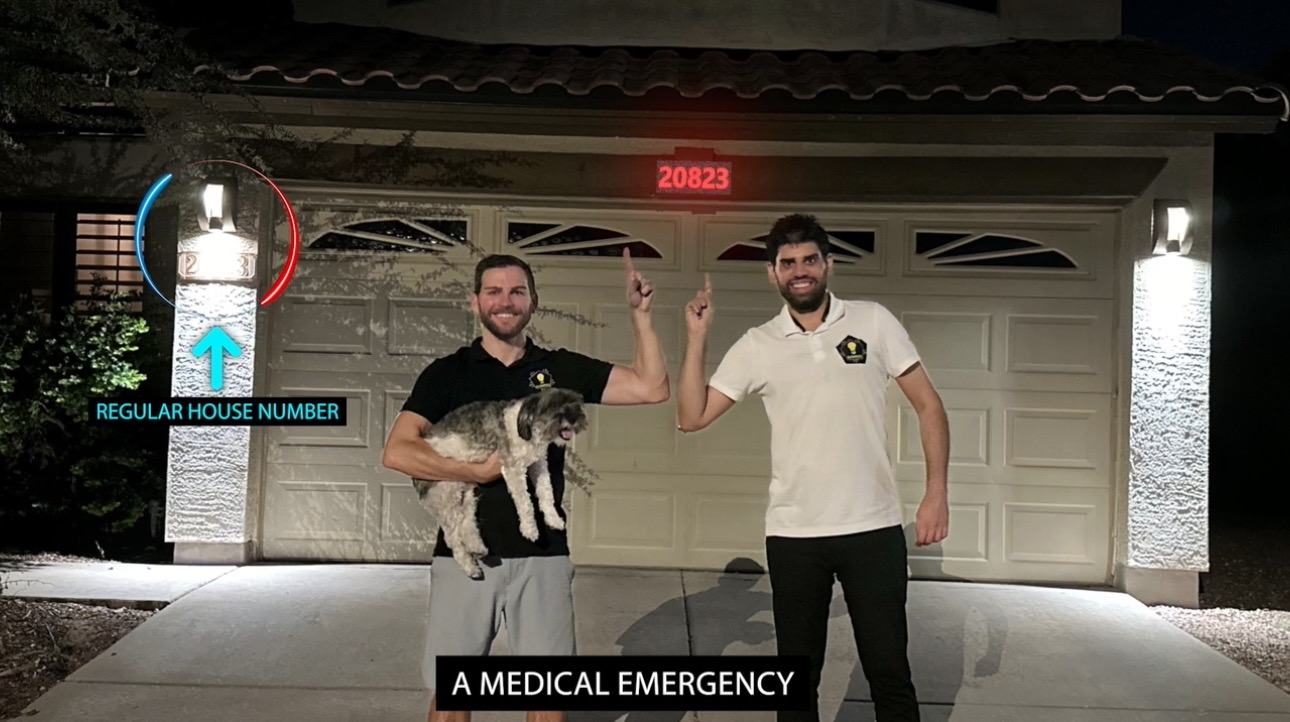
Left: coach light glare washes out house numbers. Right: backlit digits cut through cleanly.
What a Street Number Should Actually Do
A street number has one job: make your house findable. That means findable by the UPS driver at 7 PM, the Uber at 11 PM, and the ambulance at 3 AM. Findable in sunshine, rain, fog, and January darkness. Findable from a moving vehicle on a street where every house has the same roofline.
"Your street number is a life-safety device that operates in the worst possible conditions — at night, in an emergency, when everyone involved is running on adrenaline and bad light. We've been treating it like a decorative afterthought for half a century."
The Five Types of Street Numbers (And Why Four of Them Fail at Night)
1. Curb-Painted Numbers
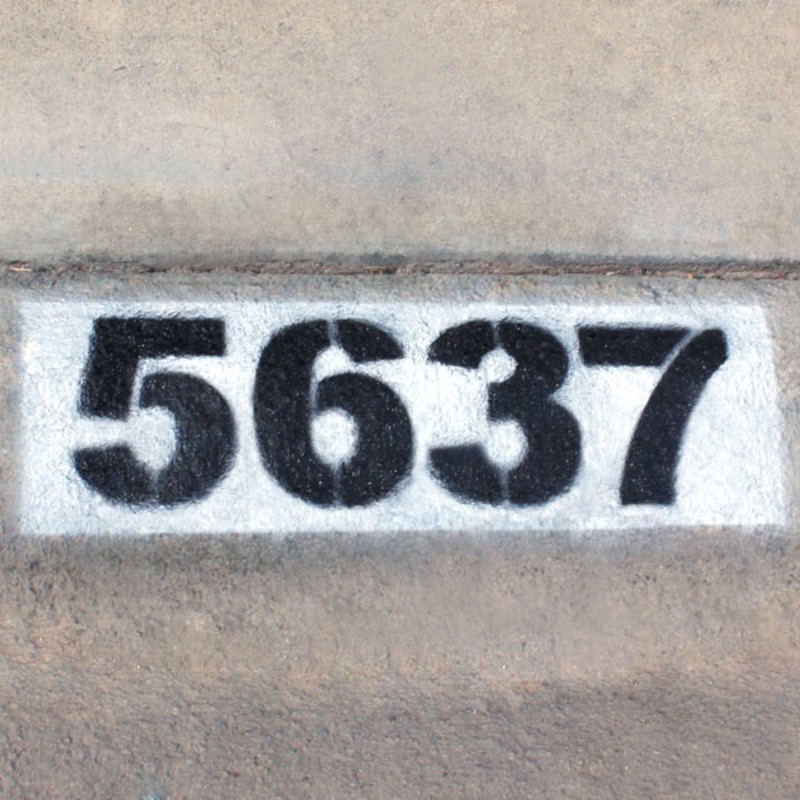
A stencil, a can of spray paint, a $20 charge from the neighborhood guy who knocks twice a year. Visible from approximately 6 feet — if you're looking at the ground, in daylight. Lifespan: 12-24 months before weather renders it illegible.
2. Mounted Metal or Brass
The standard home number sign. Screwed to the facade. Looks fine when new. After UV exposure: brass turns brown, aluminum pits. Zero illumination. A 4-inch brass "7" has the same nighttime visibility as no "7" at all.
3. Solar-Powered LED Signs
The Amazon impulse buy. Solar panels degrade. Battery capacity fades after 12-18 months. Mounting under eaves starves the panel of direct sunlight. The failure mode: intermittent. Works some nights. Not others.
4. Custom Backlit Plaques
Laser-cut stainless or acrylic with LED strips. $70-$100 per digit. Water ingress through unsealed edges is the leading failure mode. No UL certification. No smart features. No emergency capability. Just a light behind a letter.
5. Hardwired Smart Address Signs
This category has one product. The Glomensio Firefly draws from your home's AC power — no solar panel to degrade, no battery to die. Four operating modes, automatic 911 detection, 1,000+ ft emergency visibility. Tested across 18 states and 3 countries for 3+ years.
The Real Cost of Invisible Street Numbers
For every minute without CPR during a cardiac arrest, survival drops approximately 10%. The national average EMS response time is 7 minutes — and in ambulance deserts, it exceeds 25 minutes. That clock starts from dispatch, not from when the crew identifies your specific house on a dark street.
Address confusion adds seconds to minutes. Those seconds, for a stroke, a choking infant, or a cardiac arrest, are not recoverable.
Arizona's legislature knows this. SB1083 — a bill that would prohibit HOAs from banning lighted home number signs — passed the Arizona Senate 29-0. Not 29-1. Twenty-nine to zero.
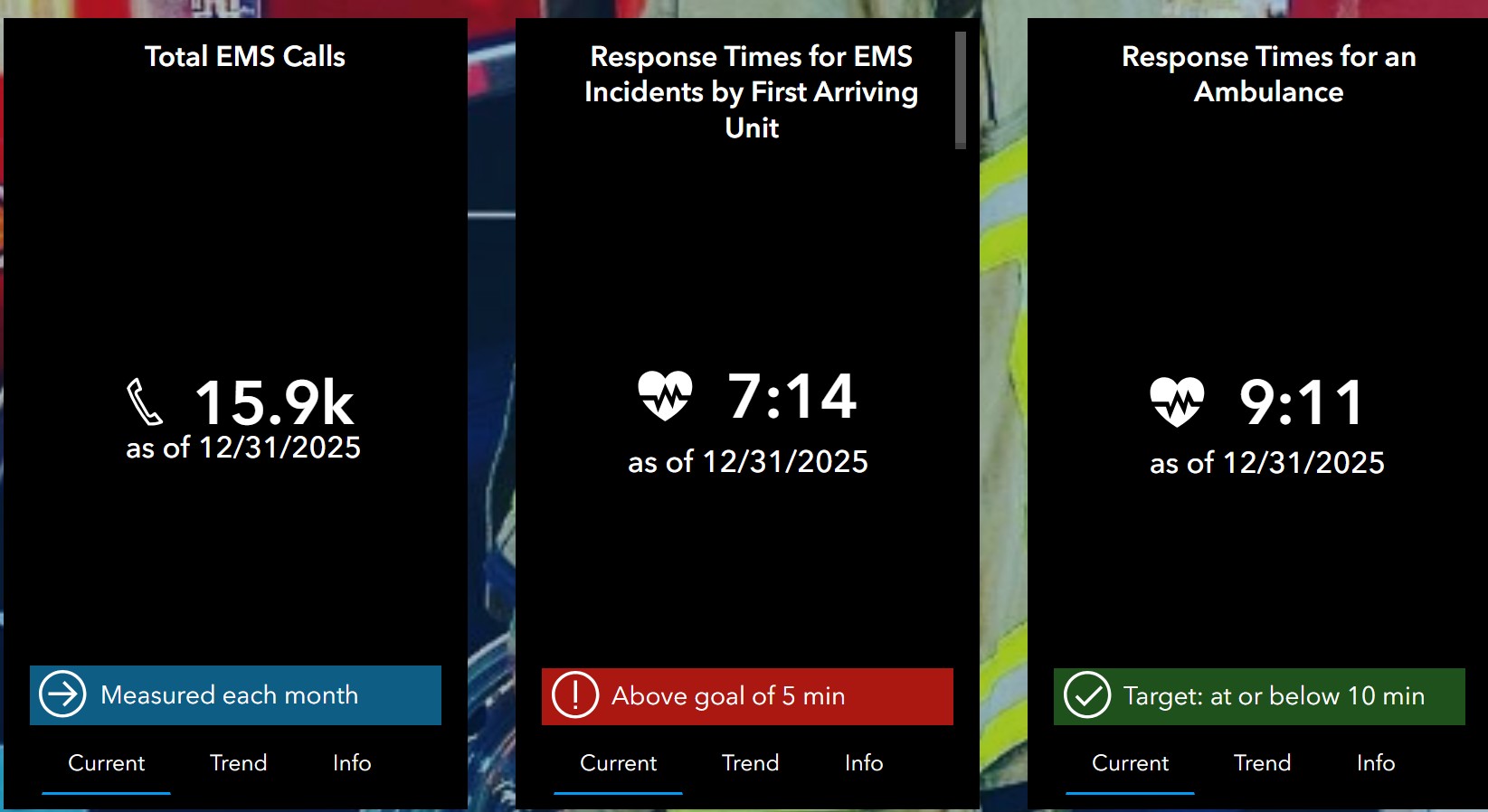
City of Phoenix EMS dashboard. Seven minutes from dispatch — every second spent finding a dark house is a second the patient doesn't get back.
"Fifty years of spray paint. Zero innovation. Meanwhile we put LiDAR on a phone and AI in a thermostat. The most critical piece of information on the outside of your house — the one that tells an ambulance where to stop — is still handled by a guy with a stencil and a can of Krylon."
The Glomensio Firefly: Street Numbers, Engineered
The Firefly was invented by Gaurav Batta, a mechanical engineer who left grad studies in 2021 because the entire street numbers for houses category was being treated as a craft project, not an engineering problem. The result: a CES 2026 Innovation Award, a Future PLC Innovation Award, a USAF Customer Memorandum, and an EB-1A "Einstein Visa" — reserved for the top ~1% in a field of expertise.
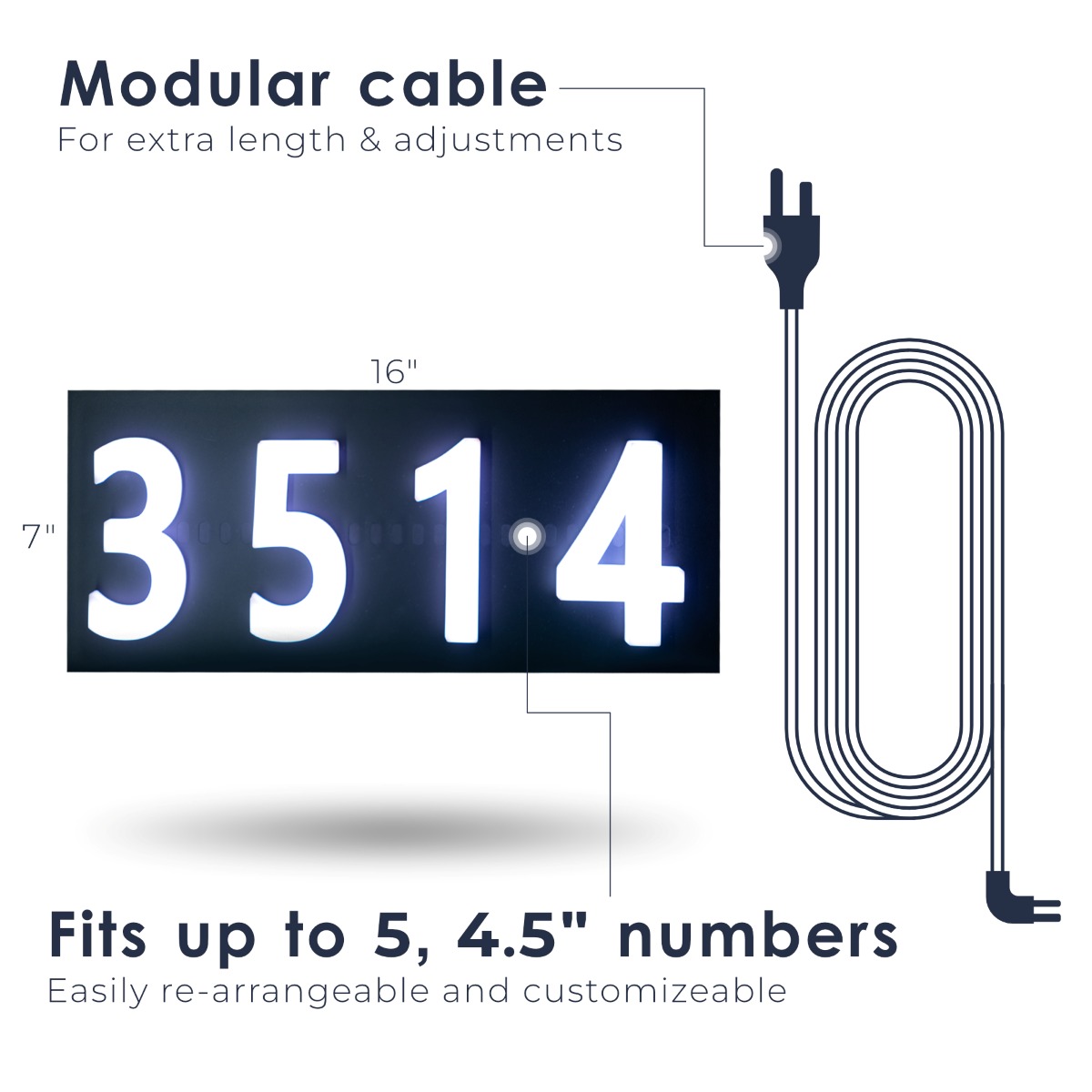
We would rather send a human being to your house to help you drill a quarter-inch hole through your siding than watch you buy a product that quits when the crisis starts. Wired is weird to install, but wired works.
Four Modes. One Address Sign.
Every other house number sign does exactly one thing. The Firefly does four — automatically switching based on time of day, network events, and your preferences.
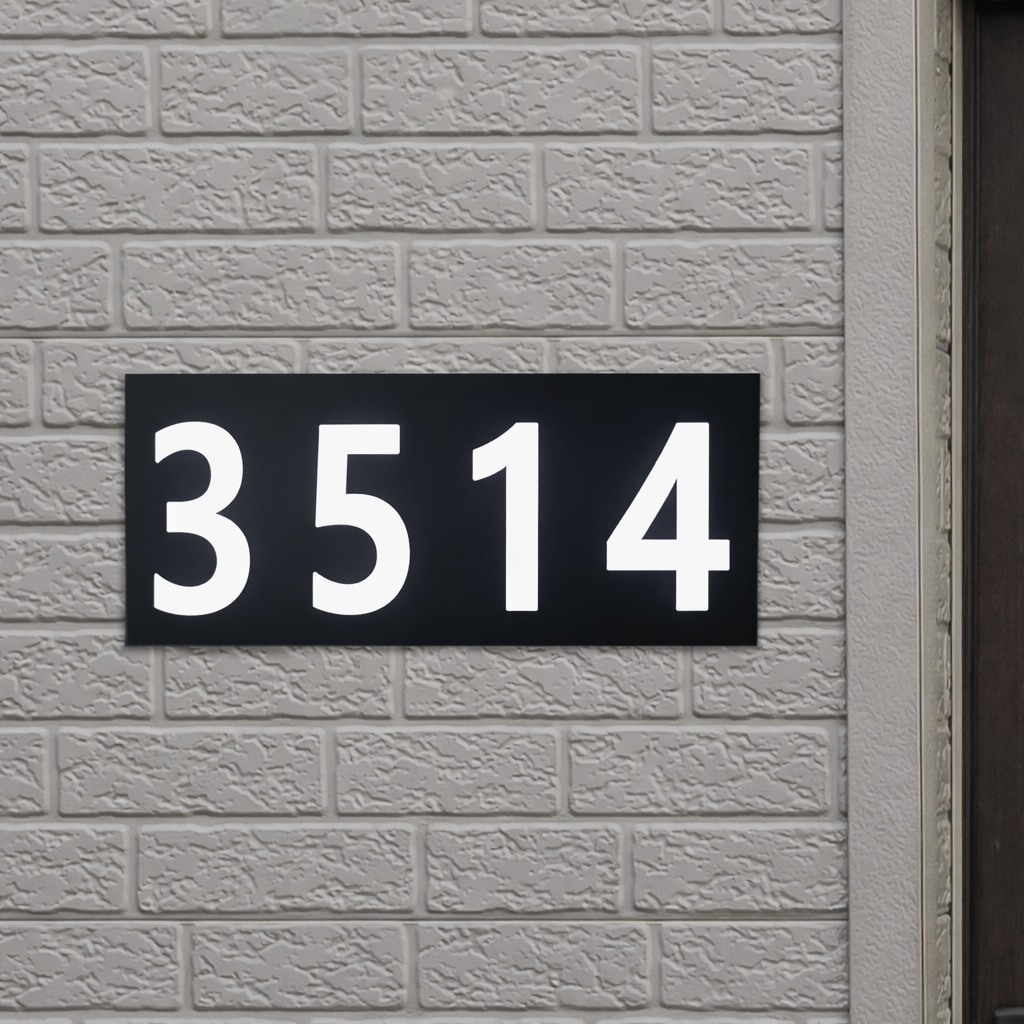
Day Mode
Clean, high-contrast digits visible during daylight. The sign's matte-black body provides maximum legibility against any facade.
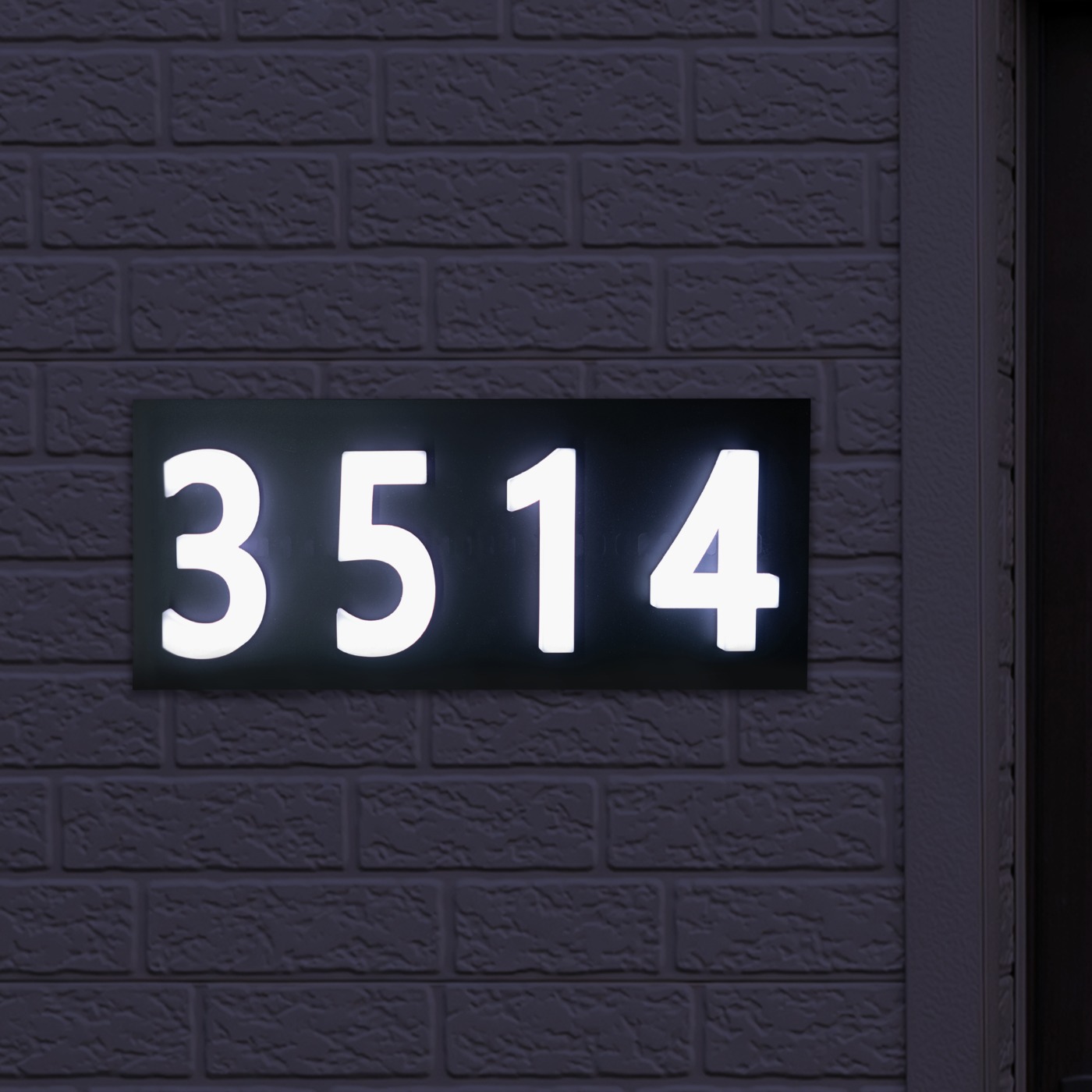
Night Mode
Warm backlit digits readable from 100+ feet. Adjustable brightness and color temperature. No porch light needed.
Emergency Mode
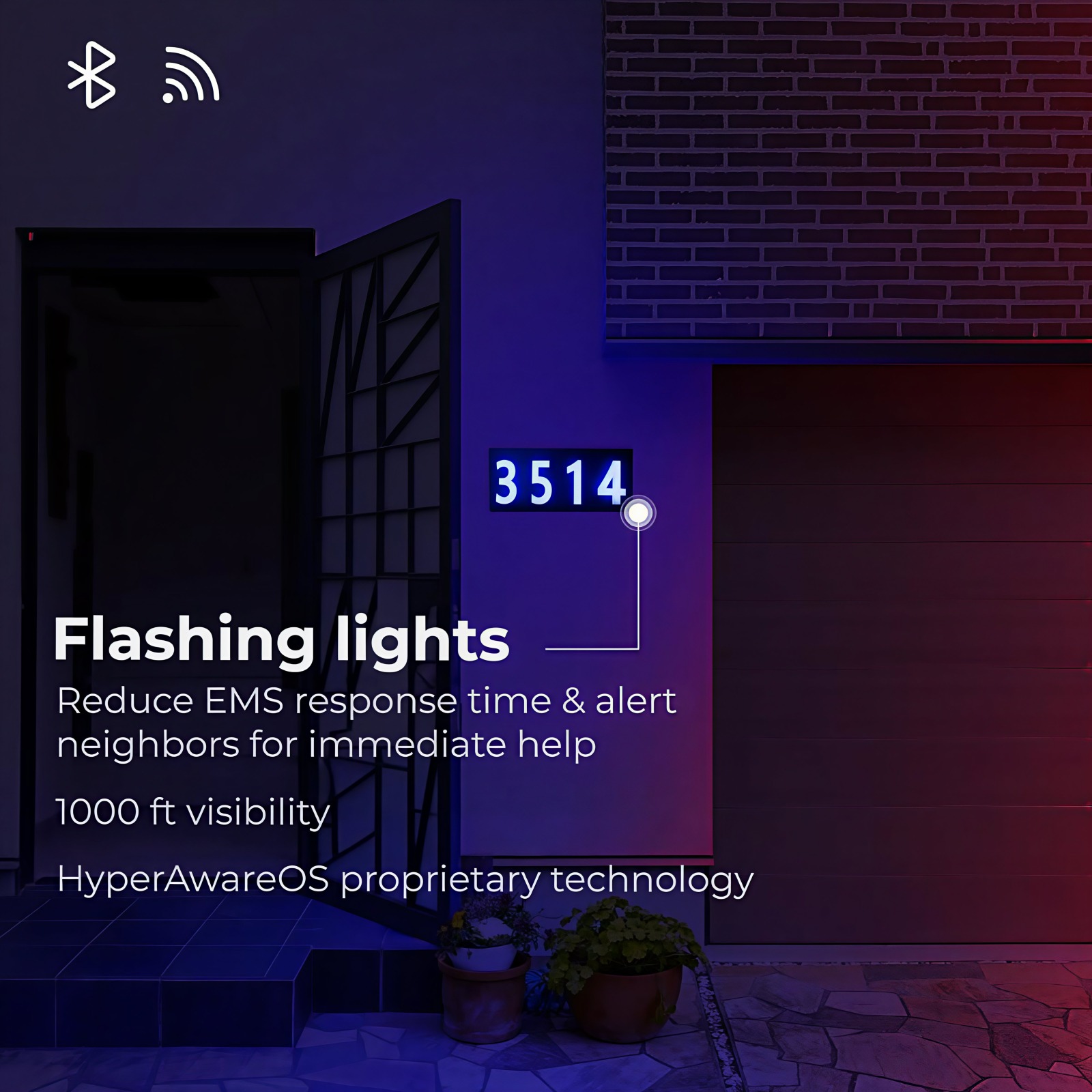
Red-and-blue beacon auto-activates when you call 911. Visible from 1,000+ feet. Guides first responders directly to your door.
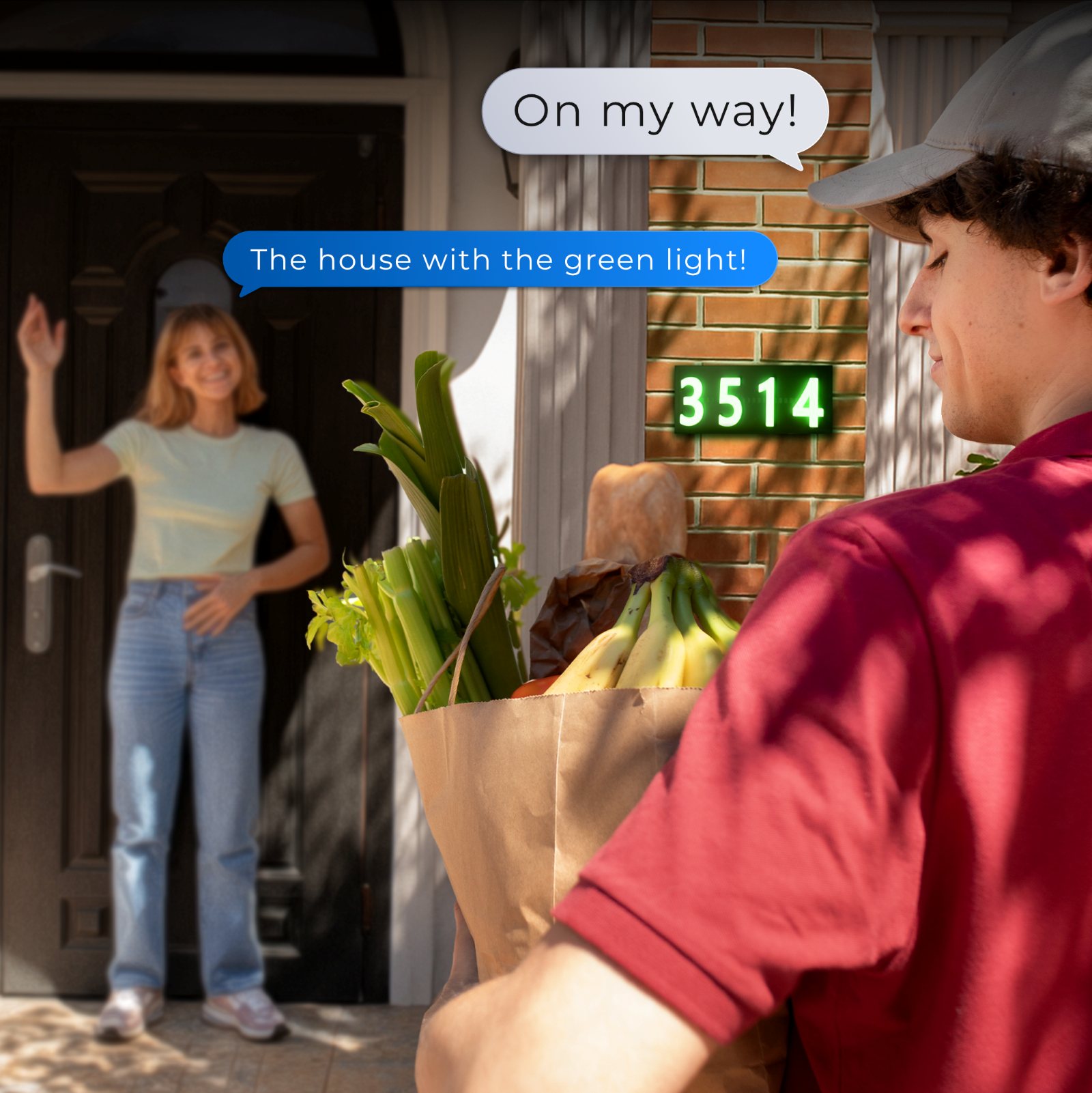
Delivery Mode
Green light confirms your address for drivers. Because "I'm the house with the beige stucco" doesn't work when they're all beige.
Why the Firefly Is the Only Street Number That Matters
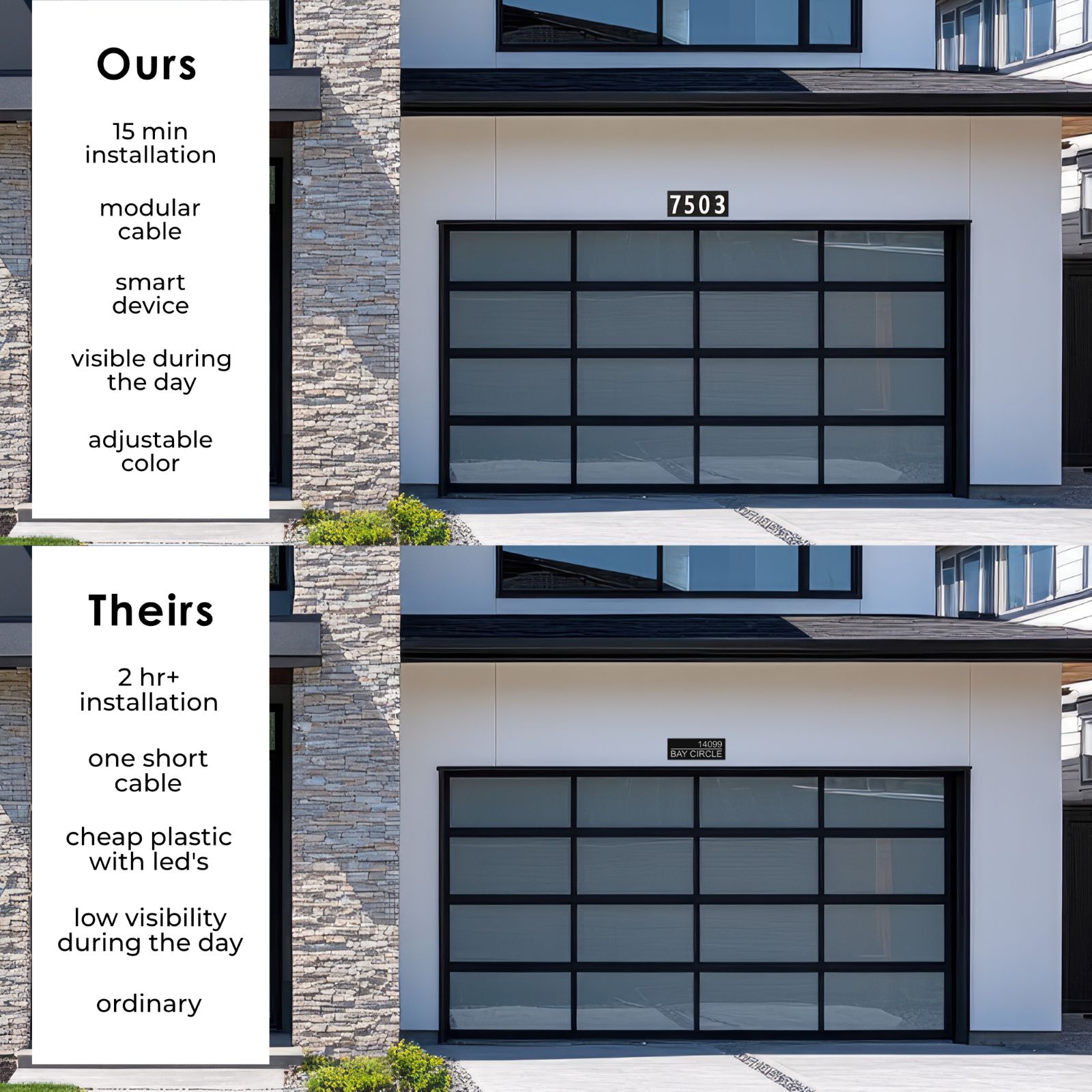
Every other product in the street numbers for houses category is a decoration with a power source taped to it. The Firefly is the only house number sign that:
- Connects to your home WiFi for smart features
- Detects 911 calls and auto-activates an emergency beacon
- Provides four distinct operating modes
- Uses modular cable for flexible installation
- Exceeds all fire code visibility requirements — day and night
- Has been tested across 18 states & 3 countries, 3+ years, zero hardware failures
3+ years. 18 states. 3 countries. Zero hardware failures.
Join Gen 3 Waitlist →Awards & Recognition
The only street number for houses with major product recognition. Not a craft project — an engineered safety device validated by the industry's most rigorous panels.


Read the PCWorld feature: "Glomensio's Firefly illuminated house numbers could save a life" →
Frequently Asked Questions
-
What are street numbers for houses?
Numeric identifiers assigned by municipalities, required by IFC 505.1 to be at least 4 inches tall, contrasting, and visible from the street. Common formats: mounted digits, curb paint, mailbox numbers.
-
How big should street numbers be on a house?
IFC minimum: 4 inches, 1/2-inch stroke. Many jurisdictions require 6-8 inches. The Glomensio Firefly's 16"×7" backlit sign body exceeds all standard requirements.
-
Why can't I see house numbers at night?
Standard numbers rely on ambient light. At night, human scotopic vision can't resolve 4-inch digits from 80+ feet. Coach lights create glare that reduces readability. Only direct backlighting — where the number is the light source — provides consistent visibility.
-
What is the best way to display street numbers?
Hardwired, backlit, and visible day and night. The Glomensio Firefly — CES 2026 Innovation Award winner — provides 100+ ft standard visibility, 1,000+ ft emergency beacon, and installs in 15 minutes.
-
Do street numbers need to be illuminated?
Not universally mandated, but fire code requires "visible from the street" — impossible at night without illumination. Several California municipalities require illumination for new construction. The regulatory trend is clearly toward illumination requirements.
Your Street Number Should Work as Hard as Your Smoke Detector.
Glomensio Firefly Gen 3 — CES 2026 Innovation Award. Hardwired. Smart. Always on.
Join the Gen 3 Waitlist →Safety. Not Surveillance. · Your Home's First Responder.