
The Category Is Wrong
Search for "house numbers" and you'll find a marketplace that treats address signs like cabinet hardware. Pick a font. Pick a finish. Stick it on the wall. Done. The entire category is built around one question: does it look good?
That's the wrong question. The right question is: can a paramedic find your house at 2 AM in the rain?
Because that's the job of a house number. Not curb appeal. Not aesthetic cohesion. Findability — under the worst possible conditions, at the worst possible time. And by that standard, the overwhelming majority of house numbers on the market today fail. They fail quietly, invisibly, and with zero accountability — because nobody measures the performance of an address sign until someone dies.
This article breaks down the actual engineering differences between the five major types of residential house numbers: painted/vinyl, retroreflective, solar-powered, battery-powered, and hardwired smart. Not "which one looks best." Which one works.
The Visibility Problem Is a Physics Problem
Human visual acuity drops dramatically after sunset. In scotopic vision (low-light, rod-dominated vision), your ability to resolve fine detail — like the difference between a "3" and an "8" on a 4-inch number from 80 feet — drops by roughly an order of magnitude compared to daylight. This isn't a matter of opinion. It's documented physiology.
Now add a moving vehicle (the ambulance), light pollution from porch lights and streetlights creating glare, and the cognitive load of a paramedic trying to match a GPS pin to a physical structure on a street where every house has the same roofline. The readability of your house number isn't a cosmetic variable. It's a compound function of character height, contrast ratio, ambient light conditions, viewing distance, viewing angle, and illumination source.
Most house numbers optimize for exactly one of these variables (character size) and ignore the rest entirely.
Five Types. One Job. Very Different Results.
1. Painted & Vinyl Numbers
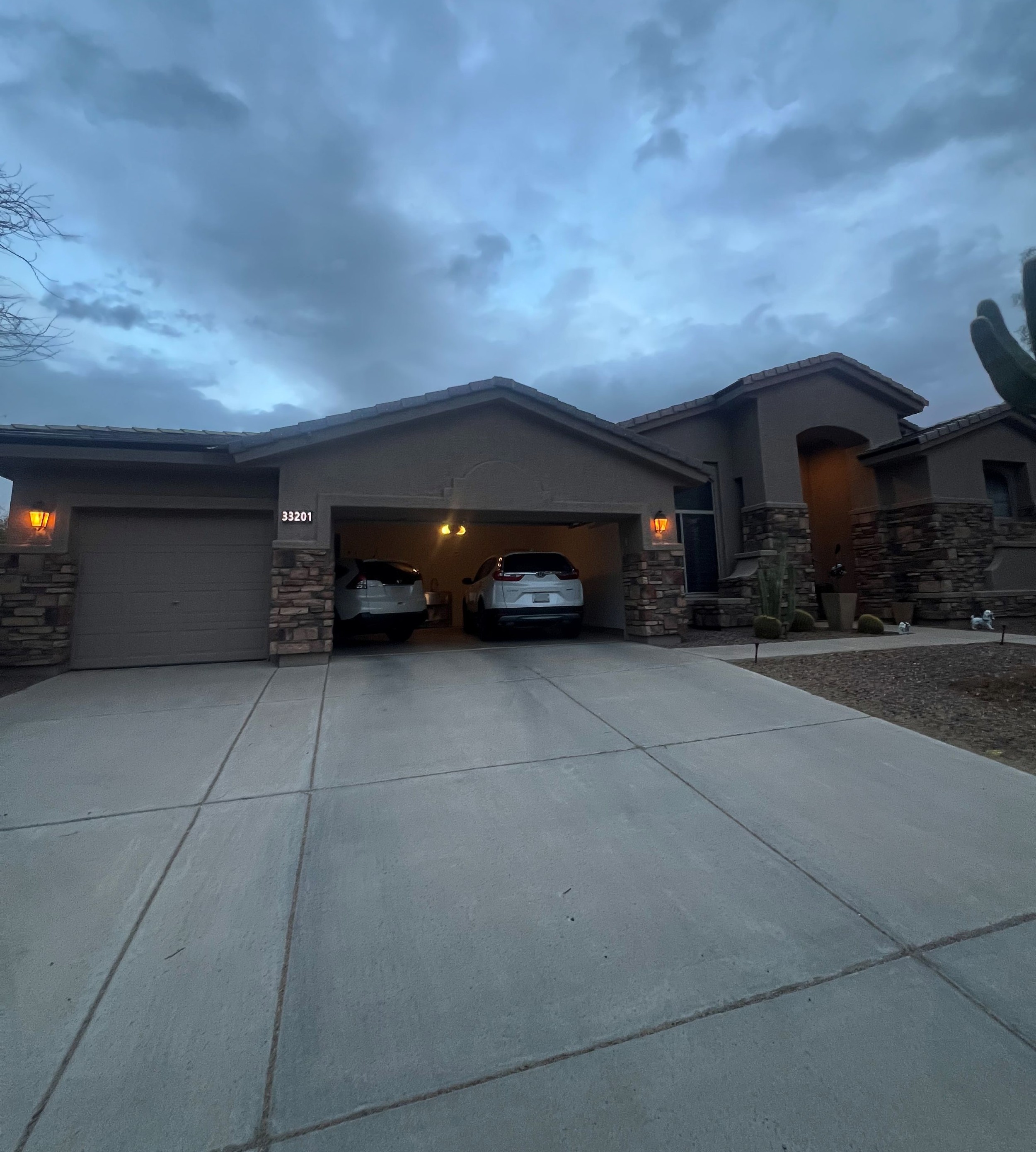
The default. Brass numerals screwed into siding. Vinyl digits stuck to a mailbox. Spray-painted curb numbers from the guy who came through the neighborhood in 2019. These are the cheapest option and the most common — and they fail on every axis that matters at night. No illumination. No contrast enhancement. No reflective material. Visibility range: 30–50 feet in daylight, functionally zero after dark. Lifespan of curb paint: about 12–24 months before weather and tire traffic render it illegible.
2. Retroreflective Numbers
An upgrade from painted — these use retroreflective sheeting (the same material used on road signs) to bounce light back toward the source. They work decently when car headlights hit them head-on. But they require a direct light source at the correct angle. An ambulance scanning from the road won't produce the beam geometry needed for retroreflection on a number mounted beside a front door 80 feet back. And retroreflective material degrades with UV exposure — the same photodegradation that affects solar panel encapsulants attacks retroreflective adhesives and sheeting. Effective range: 50–100 feet under ideal conditions. Under real conditions, significantly less.
3. Solar-Powered LED Numbers
This is where the market gets confident — and the engineering gets sloppy. Solar house numbers look great on Amazon listing photos taken at dusk after a full day of Arizona sunshine. But solar panel degradation is real: even high-quality panels lose 0.25%–0.7% of output per year, and the tiny, low-grade cells in $40 solar address signs degrade faster. Extreme heat — exactly the conditions in Phoenix, Houston, or Miami — accelerates battery capacity loss.
The failure mode is worse than no light at all: intermittent light. The sign works on sunny days. It's dim on cloudy days. It dies during consecutive overcast days in November. The homeowner assumes it's working because it worked yesterday. The paramedic arrives to a dark sign on the one night it matters. Effective range when charged: 50–150 feet. Effective range when it's been cloudy for three days: zero.
4. Battery-Powered LED Numbers
An improvement on solar in one respect: they aren't weather-dependent. But batteries have their own degradation curve. Lithium-ion cells lose capacity with every charge cycle — a phenomenon called capacity fade — and extreme temperatures accelerate it. In a Scottsdale summer where surface temperatures hit 160°F+, a battery-powered sign on a south-facing wall is essentially a slow-cook experiment. In Wisconsin in January, the same battery may deliver 40% of its rated capacity.
Battery house numbers require the homeowner to remember to check them, charge them, or replace cells. That's a maintenance dependency for a safety device. It's like building a smoke detector that requires you to remember to plug it in. Effective range: 50–150 feet when fresh. Degrades unpredictably over months.
5. Hardwired Smart House Numbers
This is a different product category entirely. A hardwired sign draws from your home's electrical system — the same power source that runs your porch light, your doorbell camera, and your smoke detector. It doesn't depend on the sun. It doesn't depend on a battery that was last replaced in "probably March." It runs 24/7, 365, whether you're home or not, whether it's cloudy or clear, whether it's July in Scottsdale or January in Milwaukee.
And when it's smart — when it connects to your home network, responds to 911 calls, changes modes for deliveries, and integrates with your existing smart home ecosystem — it stops being a sign. It becomes infrastructure.
The Comparison Table
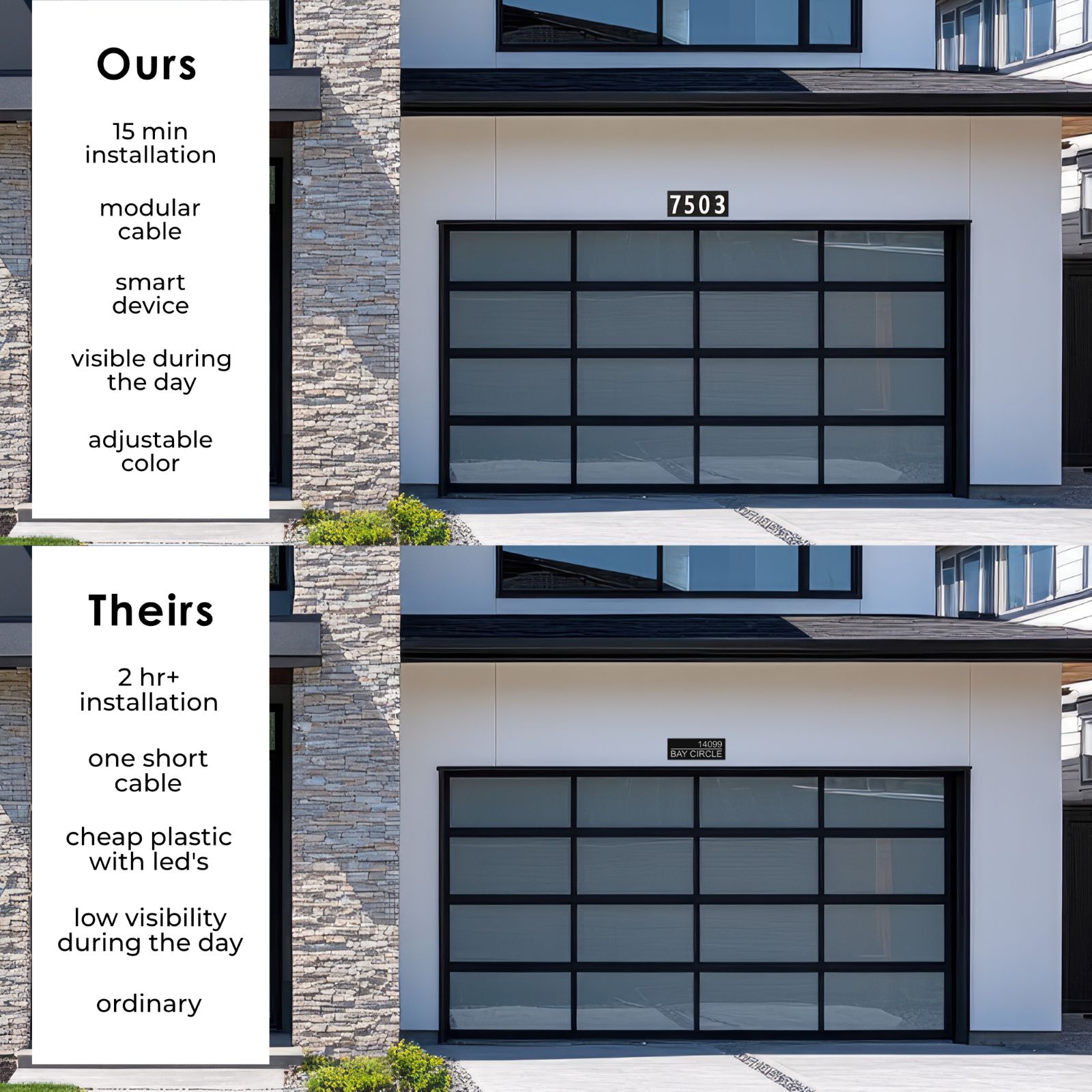
| Feature | Painted / Vinyl | Retroreflective | Solar LED | Battery LED | Glomensio Firefly |
|---|---|---|---|---|---|
| Power Source | None | None (passive) | Solar panel | AA / Li-ion battery | Hardwired (AC) |
| Night Visibility | None | Angle-dependent | Weather-dependent | Charge-dependent | Always on |
| Effective Range | 30–50 ft (day) | 50–100 ft (ideal) | 50–150 ft | 50–150 ft | 1,000+ ft (emergency) |
| 911 Emergency Beacon | No | No | No | No | Auto-activates on Android |
| Delivery / Rideshare Mode | No | No | No | No | Green light confirmation |
| Adjustable Brightness | N/A | N/A | Some models | Some models | App-controlled |
| Color Modes | Fixed | Fixed | 1 color | 1–2 colors | 4 modes (day, night, 911, delivery) |
| Smart Home Integration | No | No | No | No | Yes (HyperAwareOS) |
| OTA Firmware Updates | No | No | No | No | Yes |
| Weather Resistance | Degrades 1–2 yrs | UV degrades | Panel/battery degrades | Heat/cold affects | 3+ years field-tested |
| Installation | Screw / adhesive | Adhesive / screw | Screw / stake | Screw / adhesive | 15 min DIY or $99 pro install |
| Awards / Recognition | — | — | — | — | CES 2026 + Future PLC 2025 |
The Smart Home Integration Gap
The smart home market is consolidating around Matter — the IP-based interoperability standard backed by Apple, Google, Amazon, Samsung, and over 600 other companies through the Connectivity Standards Alliance. As of 2026, over 1,200 Matter-certified products are on the market. Version 1.5, released in November 2025, added camera support, energy management, and enhanced closures — with the 2026 roadmap targeting video doorbells, irrigation systems, and health sensors.
In this landscape, a house number that doesn't connect to anything is an orphan device. It can't coordinate with your smart locks during an emergency. It can't notify your contacts. It can't participate in an automation routine that says "when 911 is called, unlock the front door, flash the address sign, and send an alert to the neighbor." That routine — the one that turns passive hardware into an active emergency response system — requires a connected device.
No solar house number does this. No battery house number does this. No retroreflective sticker does this. The Glomensio Firefly does this.
The Emergency Beacon: A Category of One
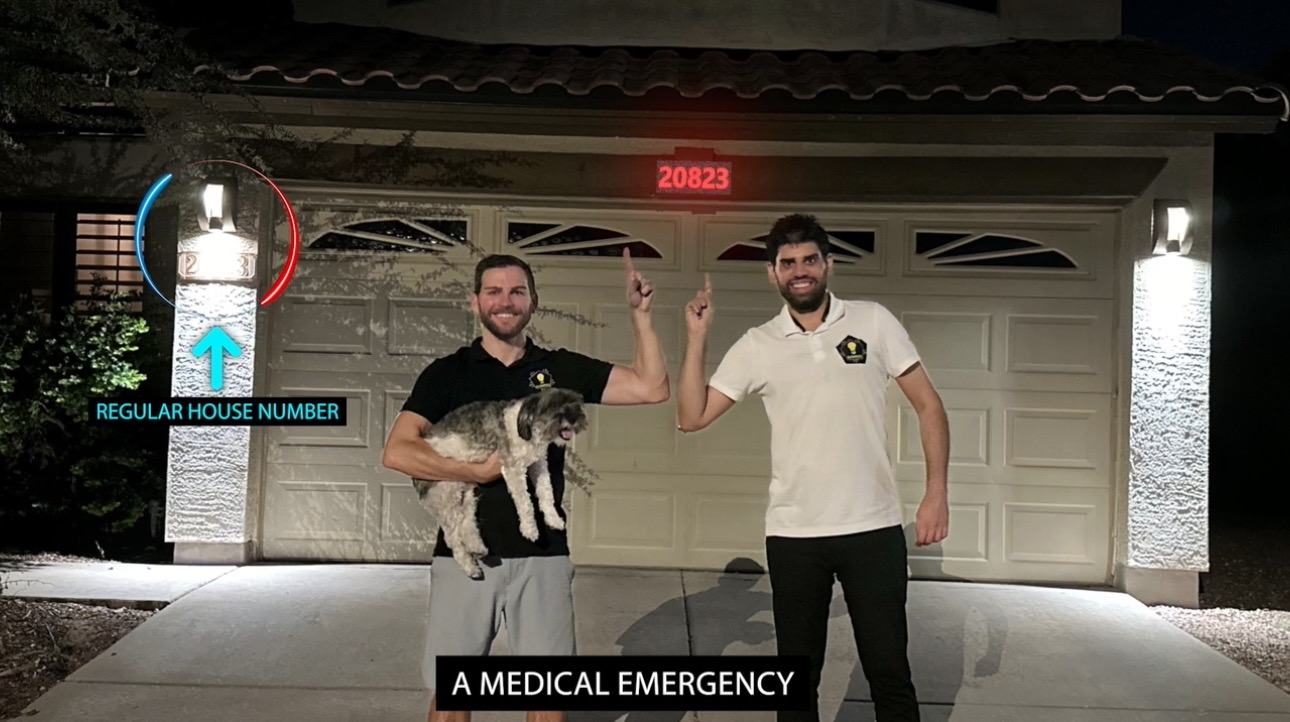
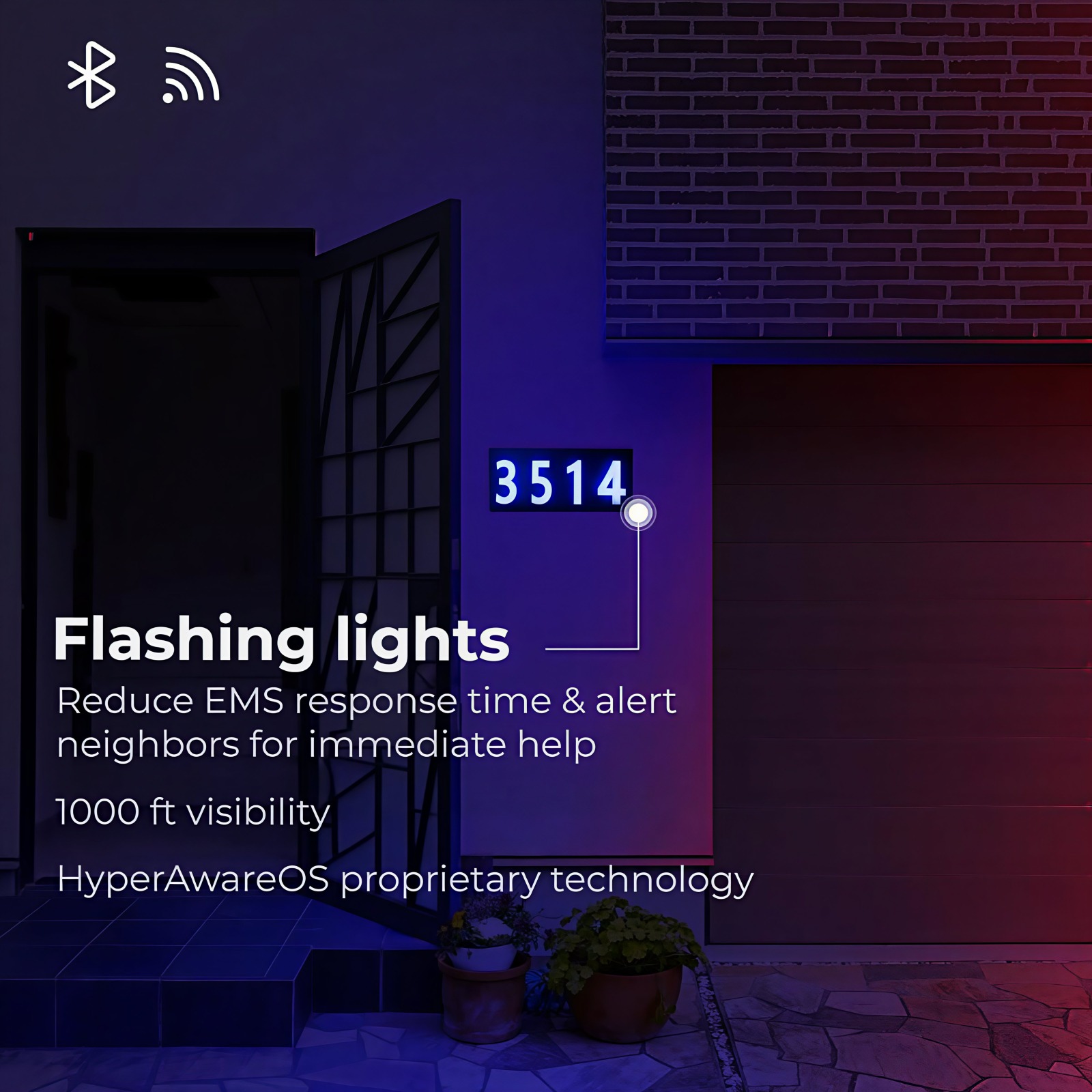
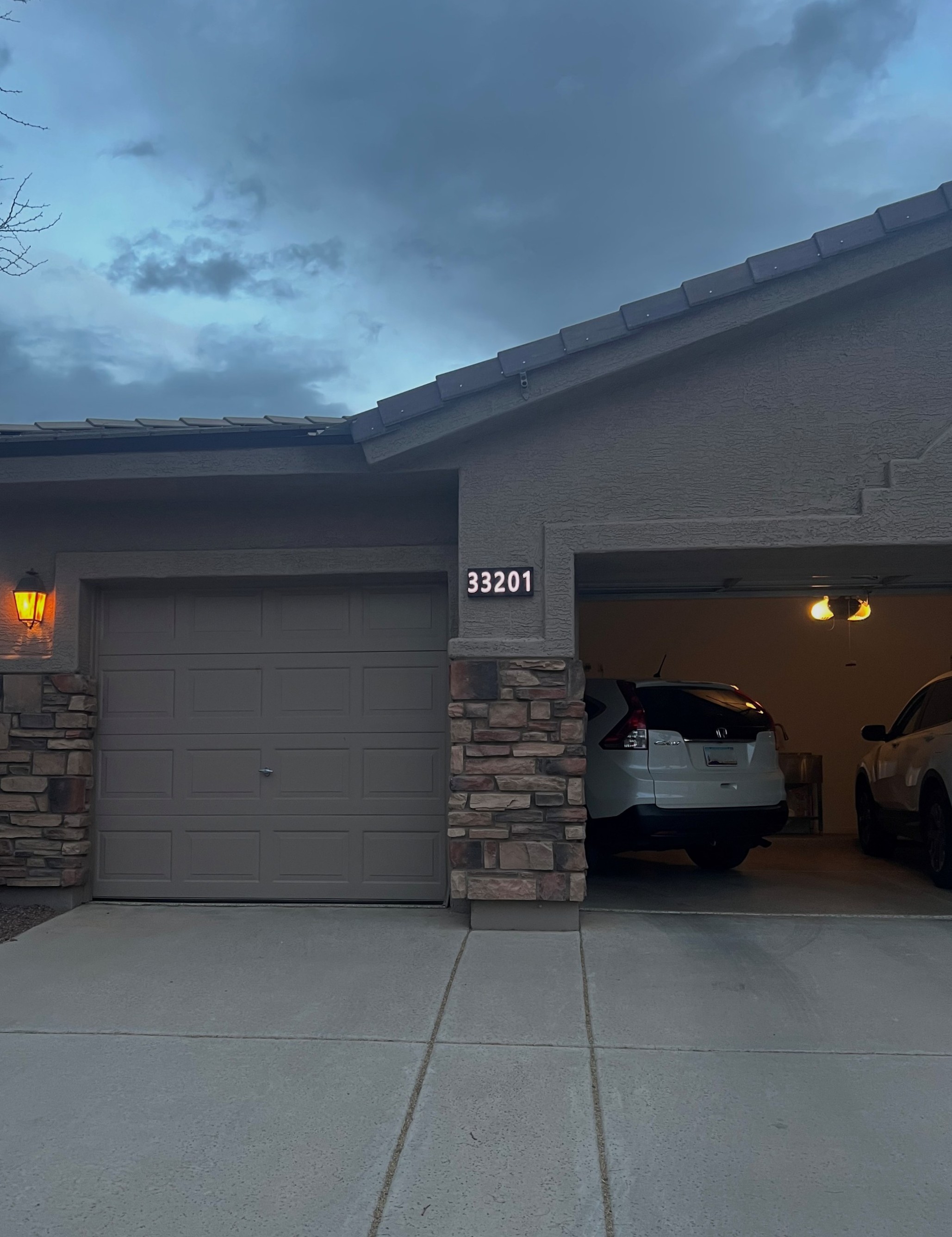
This is the clearest differentiator and the one that has no equivalent in the market. When a 911 call is placed from an Android device in the home, the Glomensio Firefly automatically activates a red-and-blue flashing beacon visible from over 1,000 feet. No app open. No button pressed. No conscious decision required from someone who is in the middle of a medical crisis.
On iPhone, it's a single tap in the app. On either platform, the result is the same: the house identifies itself. To the ambulance crew. To the neighbor walking the dog. To the off-duty nurse three doors down who knows CPR. Every one of those people becomes a potential first responder — but only if they know which house needs help. The Firefly makes it unmistakable.
This isn't a feature that can be retrofitted onto a solar sign. It's not something a retroreflective sticker will ever do. It requires a connected, powered, programmable device with a high-output LED array and the firmware to detect a 911 event. It's the reason the Firefly won the CES 2026 Innovation Award in Smart Home. It's the reason Arizona's legislature is writing SB1083 to protect this category of device from HOA bans. And it's the reason this comparison isn't close.
The Bottom Line
If you want something that looks nice during the day, any house number will do. If you want something that works at night, you need illumination. If you want something that works reliably every night without maintenance, you need hardwired power. And if you want something that actively helps save a life when 911 is called — that signals the house, alerts the community, and integrates with the smart home ecosystem you've already invested in — there is exactly one product in the market that does all of that.
The Glomensio Firefly wasn't designed to compete with house numbers. It was designed to replace them with something better — something engineered like the safety device it actually is.
Gen 2 sold out. Gen 3 — with AI-powered emergency alerts — launches soon.