
Four Ways Solar House Numbers Fail
1. The Night Problem
Solar house numbers charge during the day and discharge at night. By 2–3 AM, the battery is significantly depleted and brightness drops. This is not a hypothetical edge case. This is every single night. And it coincides with when emergency calls statistically peak.
The failure mode is the worst possible kind: intermittent. It works some nights. Not others. It gives homeowners false confidence that their address is visible when it may not be.
2. The Degradation Curve
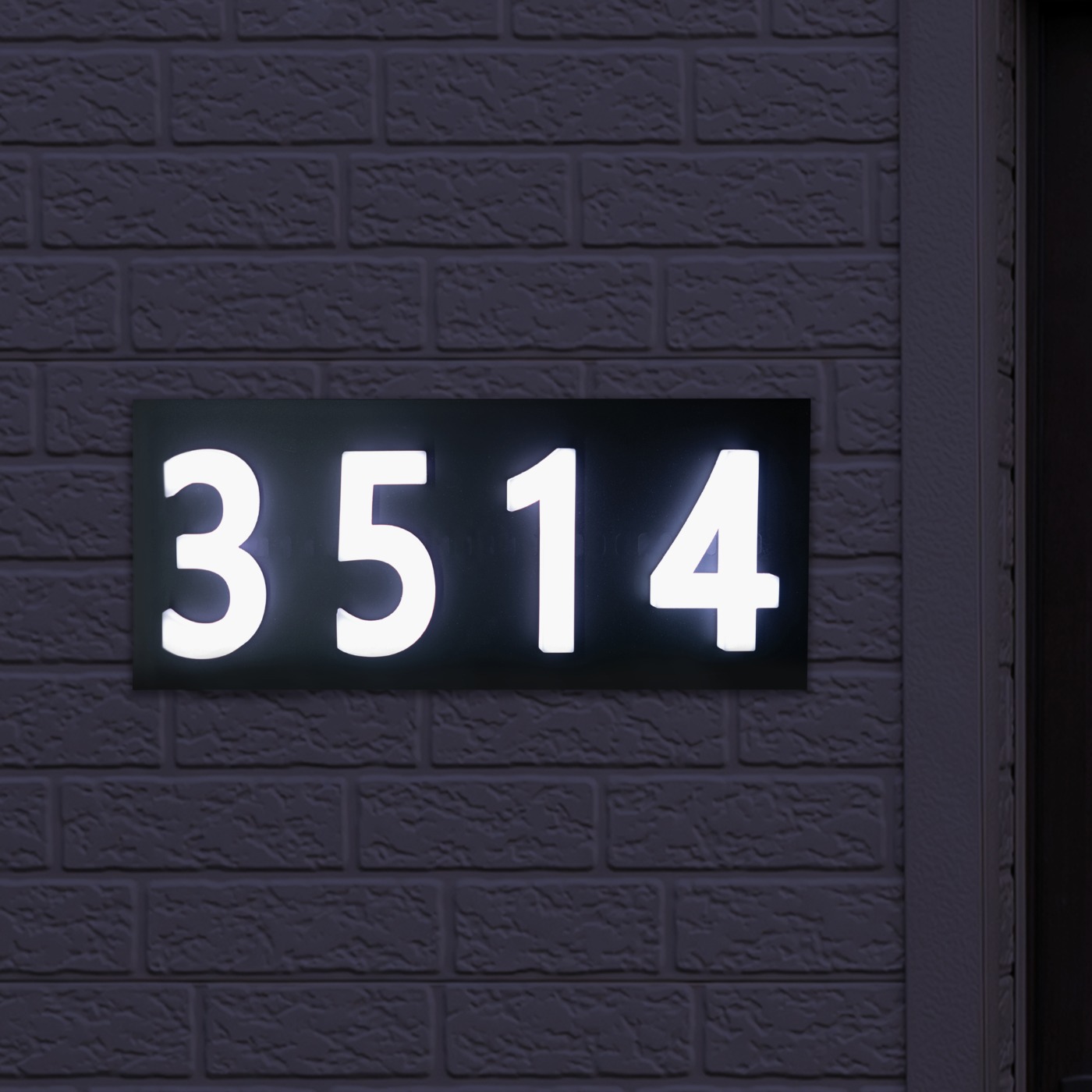
Solar panels degrade 0.25%–0.7% per year under ideal conditions. The small, low-grade cells in address sign products degrade faster due to heat concentration and inferior materials. Battery capacity shrinks after 12–18 months of outdoor thermal cycling.
Replacement batteries — when available — cost nearly as much as a new unit. Your “eco-friendly” sign becomes toxic waste on your siding.
3. The Mounting Paradox
Fire code (IFC 505.1) requires house numbers to be visible from the street. That means mounting on the front facade — often under eaves, behind pillars, or on a north-facing porch. These are the exact worst locations for a solar panel.
Fire code says: mount where the street can see it.
Solar engineering says: mount where the sun can reach it.
Pick one.
4. The Price Illusion
Solar house numbers range from $30 to $300. The $30 versions are disposable. The $300 versions are disposable on a longer timeline. Neither includes wiring because both avoid the one decision that would make them reliable: connecting to your home's electrical system. The money you “save” by not hiring an electrician buys you a product with a built-in expiration date.
Solar vs. Hardwired: The Honest Comparison
| Factor | Solar House Numbers | Glomensio Firefly (Hardwired) |
|---|---|---|
| Power Source | Solar panel + rechargeable battery | Home AC power (24/7/365) |
| Night Reliability | Dims after midnight | Consistent all night, every night |
| Cloudy Days | Reduced charge → dim or dark | Unaffected by weather |
| Lifespan | 12–18 months before decline | 3+ years, zero hardware failures |
| Emergency Beacon | None | Red/blue SOS, 1,000+ ft |
| 911 Detection | None | Auto-activates on Android |
| Smart Home | None | WiFi, app, 4 modes, Matter-ready |
| Mounting Conflict | Needs sun; fire code needs street view | Mount anywhere — power from wire |
| Maintenance | Battery replacement every 12–18 mo | Zero maintenance |
| Awards | None | CES 2026 · Future PLC 2025 |
What a House Number Looks Like When an Engineer Builds It
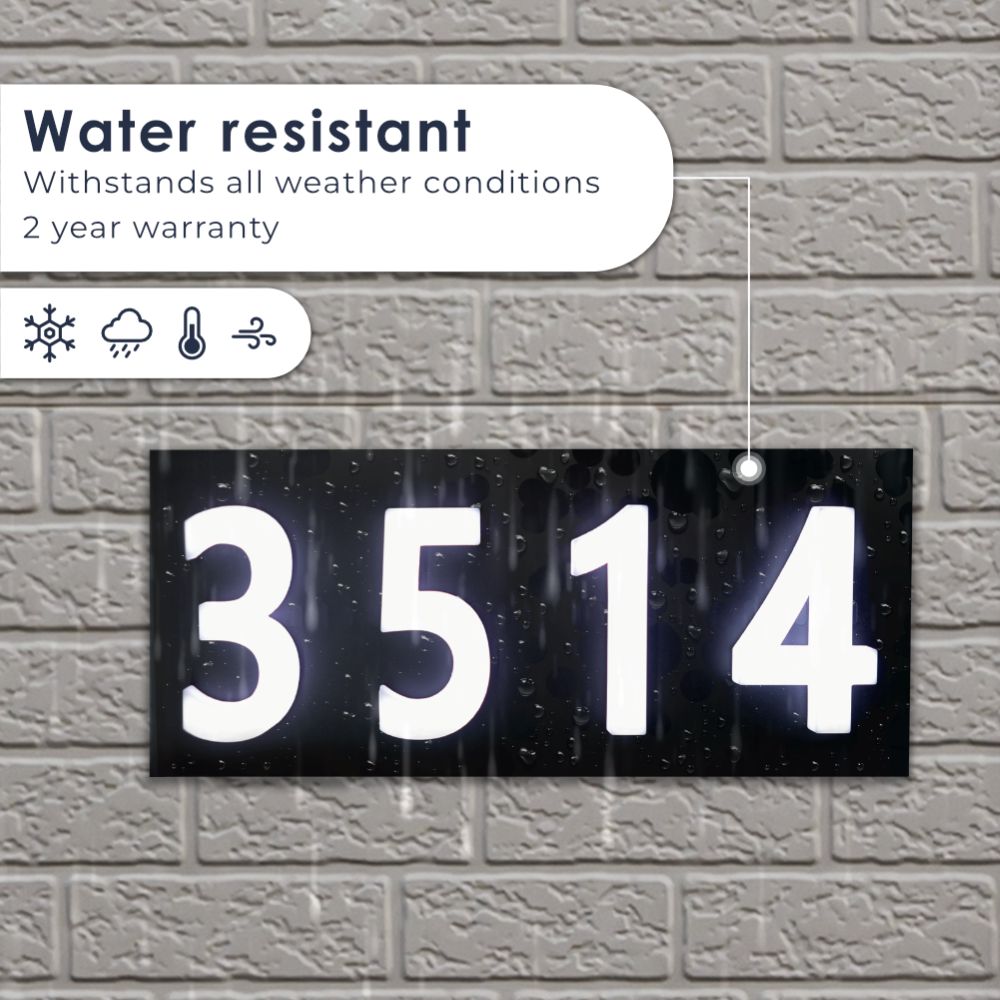
The Glomensio Firefly draws from your home's AC electrical system. No solar panel to degrade. No battery to die at 2 AM. No maintenance window you'll forget. Always on, full brightness, regardless of weather, season, or time of night.
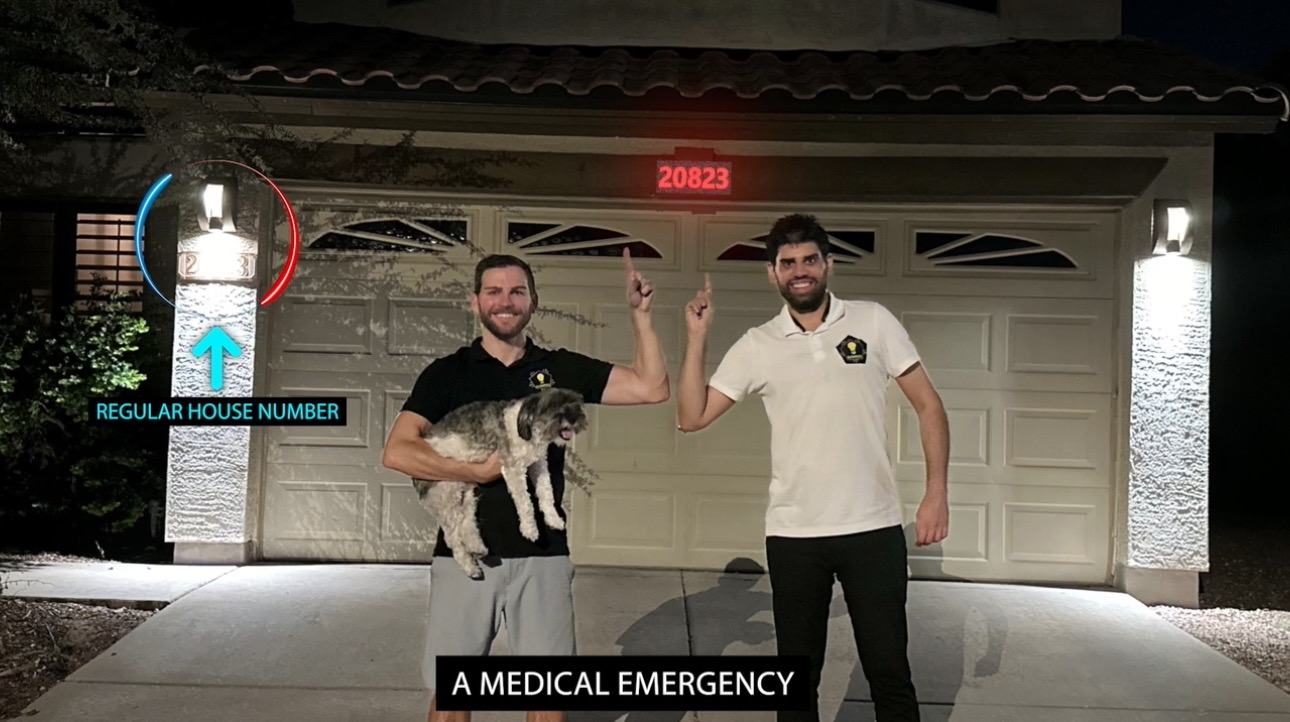
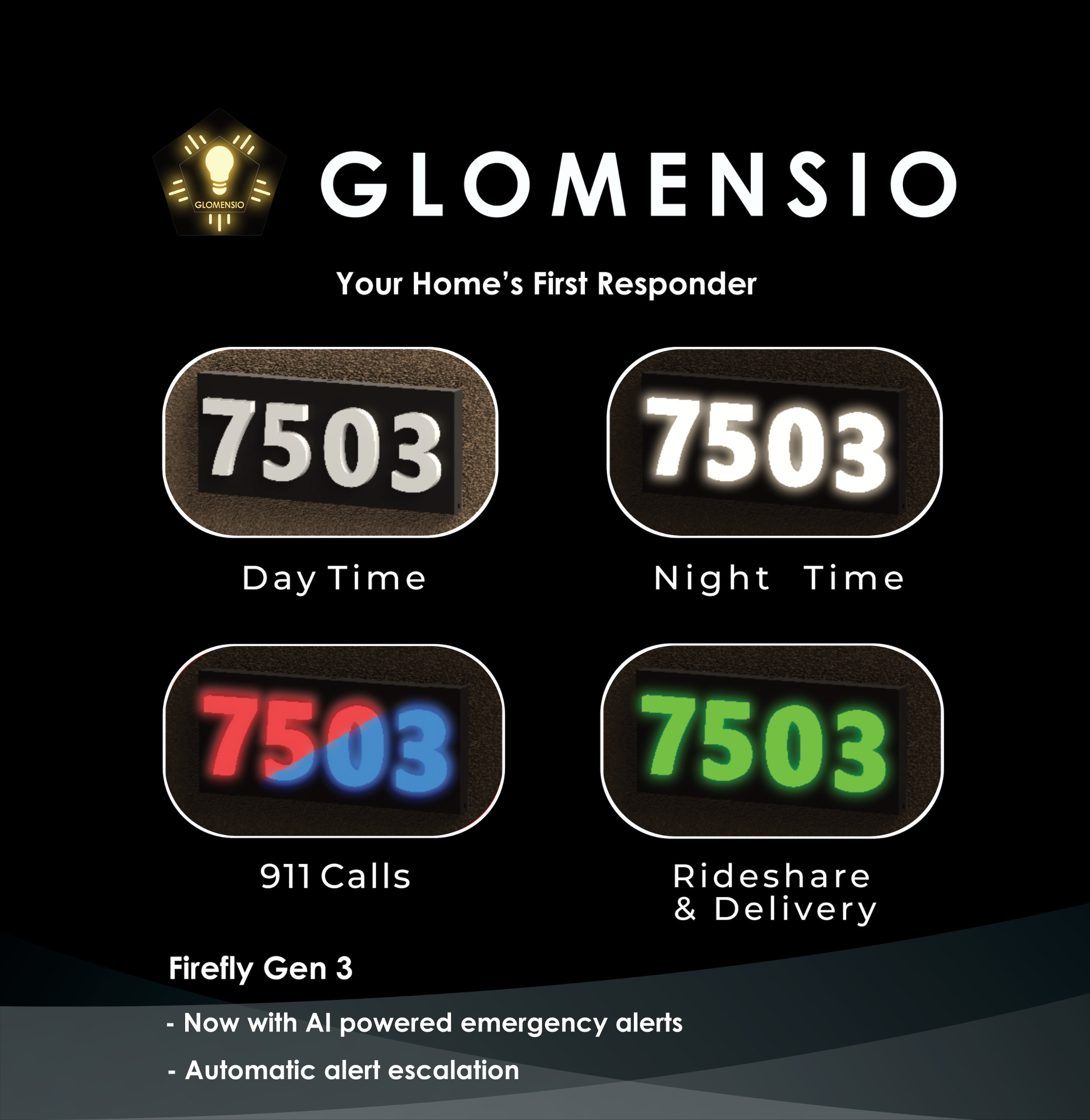
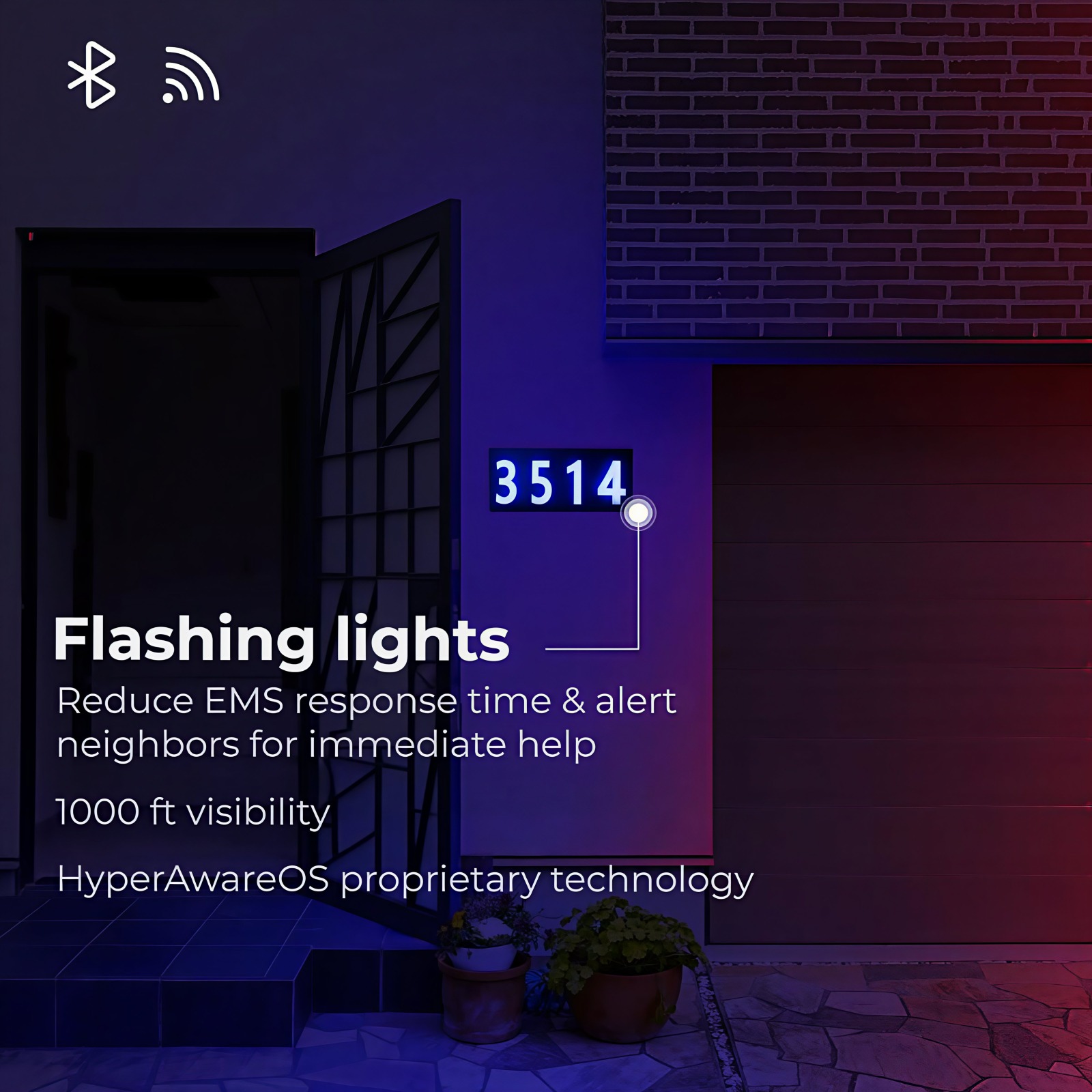
During a 911 emergency, it strobes red and blue at over 1,000 feet of visibility, guiding first responders directly to your door. Auto-activates on Android. One tap on iOS. The house identifies itself.
That is the difference between a product that avoids a wire and a product that saves a life.
Hardwired, Not Solar
Runs on your home's AC power. 24/7/365. No batteries, no panels, no degradation curve.
1,000+ Foot SOS Beacon
Emergency red/blue strobe visible from over 1,000 feet. No solar house number has emergency capability.
CES Innovation Award
CES 2026 Innovation Award. Future PLC Best in Home & Garden 2025. Zero solar products have won any of these.
15-Minute Install
A screwdriver and 15 minutes. Or $99 professional installation. Either way, you never touch it again.
We would rather send a human being to your house to help you drill a quarter-inch hole through your siding than watch you buy a product that quits when the crisis starts. Wired is weird to install, but wired works.
Solar house numbers are optimism with a rechargeable battery. The sun is not on call at 3 AM in January.
Frequently Asked Questions
Do solar house numbers actually work?
How long do solar house numbers last?
Why do they fail at night specifically?
What is better than solar house numbers?
Can you mount solar house numbers under eaves?
Are expensive solar house numbers better?
Related Reading
- Best House Numbers: 10 Ways to Light Up Your Address — the definitive comparison
- House Number Signs: Every Type Ranked by Nighttime Visibility
- Smart vs Regular House Numbers — the full engineering breakdown
- Ambulance Deserts & Emergency Visibility — why visible house numbers are a life-safety issue
- Street Numbers for Houses — from curb paint to smart safety
- Builders & Developers — bulk deployment for new construction
Your House Number Should Not Depend on the Weather
The Glomensio Firefly is hardwired, always on, and visible from over 1,000 feet in an emergency. It requires a screwdriver and 15 minutes. It does not require a sunny day.
Safety. Not Surveillance. · Your Home's First Responder.