
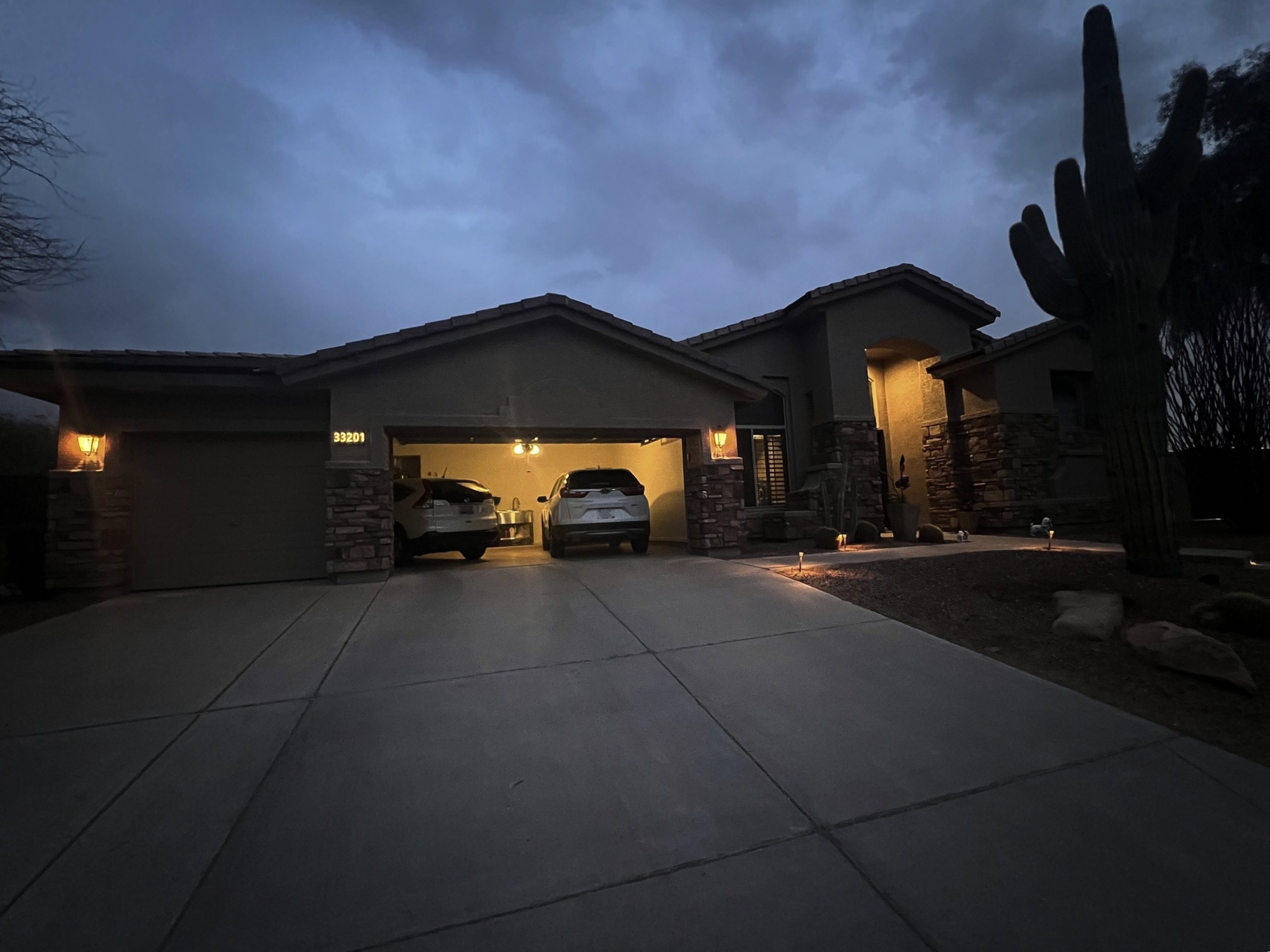
Two Codes. One Address. Zero Alignment.
Every home in America sits at the intersection of two regulatory systems that rarely talk to each other. On one side, fire codes — written by the National Fire Protection Association (NFPA) and the International Code Council (ICC) — mandate that your house number be visible, legible, and identifiable from the street. On the other side, HOA governing documents — written by developers and volunteer boards — regulate the color, material, placement, and sometimes the very existence of anything attached to your exterior walls.
When these two systems agree, nobody notices. When they don't, homeowners get caught in a gap where life-safety requirements run headfirst into aesthetic preferences. And in that gap, address signs fail, first responders lose time, and nobody takes responsibility.
What Fire Code Actually Requires
Section 505.1 of the International Fire Code (IFC) is the baseline. It's adopted — with local amendments — by most jurisdictions in the United States. The requirements are straightforward:
Address numbers must be Arabic numerals (not spelled out), must contrast with their background, and must be positioned to be visible from the street or road fronting the property. Where a building can't be seen from the public way — a common situation with setback homes in suburban HOA communities — additional signage such as a monument, pole, or other approved means is required.
NFPA 1 (Fire Code), the other major model code, mirrors these requirements and provides the broader framework that many state and local jurisdictions adopt. Together, these two codes establish the floor: your address must be findable. Period.
But the floor gets raised — frequently. Local jurisdictions layer on stricter requirements. Federal Way, Washington, requires 8-inch numbers. Several California municipalities, including Murrieta, require illuminated address numbers for buildings constructed after 2011 — with a photoelectric device controlling the light source so it can't be switched off. Montgomery County, Maryland warns that unreadable or unlit house numbers can significantly delay emergency response.
The trend is clear: fire codes are moving toward illumination, not away from it.
What HOAs Actually Enforce
Homeowners associations are private entities, not government entities. They don't enforce fire codes. They enforce CC&Rs (Covenants, Conditions & Restrictions) — the governing documents you agreed to when you bought your home. And those documents, drafted by developers who were thinking about resale aesthetics, not EMS response times, often include broad authority over exterior modifications.
The typical architectural review process works like this: you want to change something on the outside of your home — a fence, a paint color, a light fixture, an address sign. You submit a request. A committee reviews it against the community's design guidelines. They approve, deny, or request modifications. The entire process can take weeks.
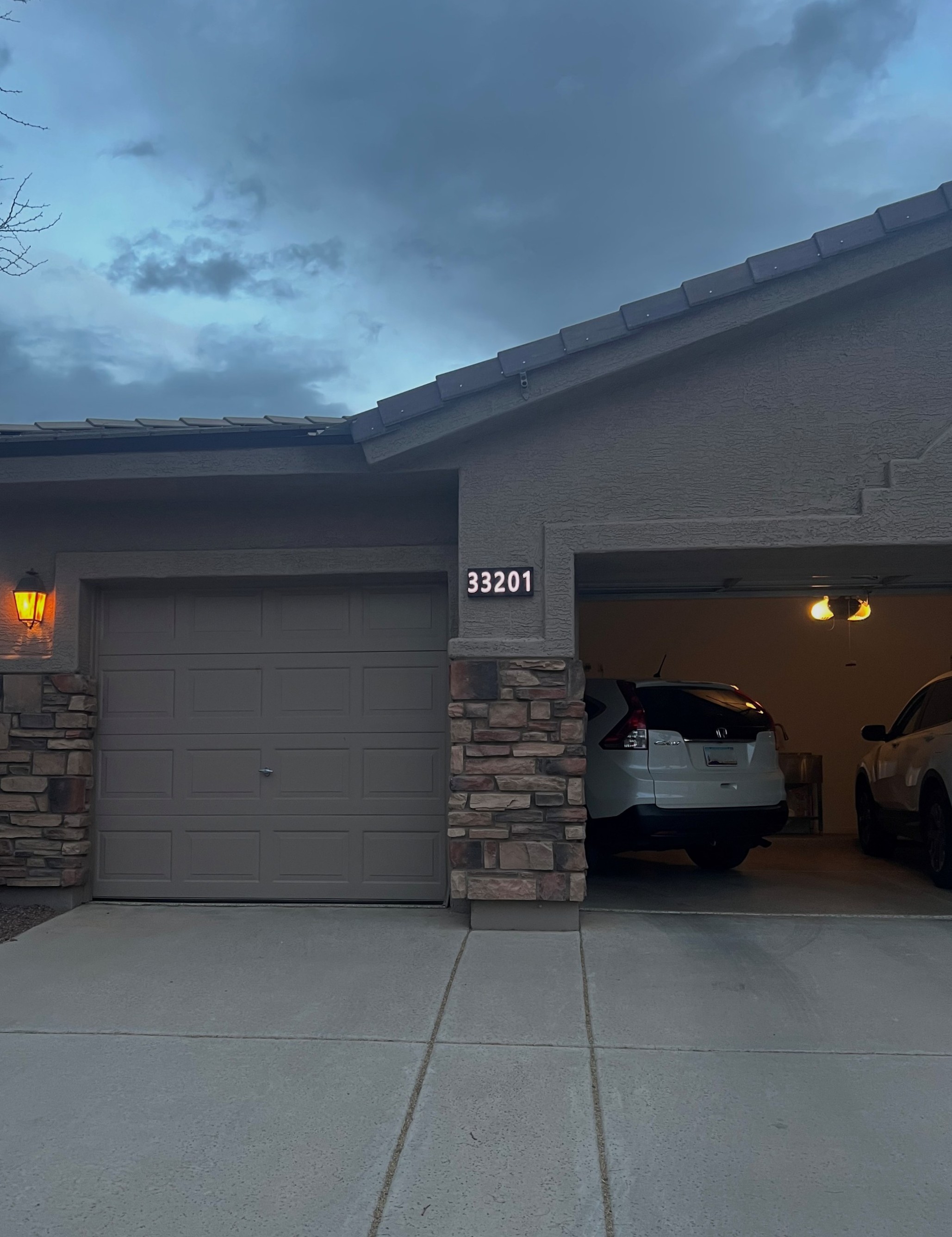
The most common HOA objections to illuminated house numbers fall into a few categories: "too bright" (adjustable brightness solves this), "not consistent with neighborhood aesthetic" (subjective and rarely codified), "electrical modification requires approval" (fair, but a 15-minute plug-in install is hardly rewiring), and the classic — "it's a sign, and we restrict signs" (an address number is not a sign, it's a fire code requirement).
The fundamental problem: HOA boards are volunteer committees with broad discretion and minimal fire safety training. They're optimizing for aesthetics. Fire code is optimizing for survival. Those goals aren't inherently incompatible — but nobody is building the bridge between them.
State-by-State: Where the Law Stands
HOA authority varies dramatically by state. Some states have aggressive homeowner protection statutes. Others give associations near-total control. Below is a comparison of how major states handle the intersection of HOA authority, address visibility, and illuminated house numbers.
| State | Base Code | Min. Height | Illumination | HOA Override | Notes |
|---|---|---|---|---|---|
| Arizona | IFC 505.1 | 4" (local: 6") | Advancing | SB1083 | SB1083 passed Senate 29-0. Prohibits HOAs from banning lighted address devices. House 2nd reading as of March 2026. |
| California | CA Fire Code / IFC | 4"–6" (varies) | Required* | Partial | Some municipalities (e.g., Murrieta, Willows) require illumination for post-2011 construction. HOAs retain exterior modification authority. |
| Texas | IFC 505.1 | 4" | Recommended | Limited | Texas restricts HOA sign bans, but no specific statute for address devices. Local fire marshals may mandate illumination. |
| Florida | IFC 505.1 / FL amendments | 4" (local: varies) | Some cities | None specific | HB 1203 (2025) reformed HOA transparency but didn't address address signs. Cities like Clearwater have illumination mandates. |
| Colorado | IFC 505.1 | 4"–6" | Varies by county | None specific | Colorado Springs requires 4" with ¾" stroke for residential. No state-level HOA address sign protection. |
| New York | NYC Fire Code / IFC | 4" (NYC: 4"+) | Varies | None specific | NYC Fire Code requires 4" min with ½" stroke. Placement near entrance door. Condo boards retain authority. |
| Washington | IFC 505.1 / WA amendments | 4"–8" | Some cities | None specific | Federal Way requires 8" numbers. No state-level HOA override for address devices. |
| Virginia | IFC 505.1 | 4" | Varies | HOA-favorable | Virginia permits HOAs to ban even political signs — one of the most HOA-favorable states. |
The pattern is unmistakable: fire codes are converging on larger, more visible, and increasingly illuminated address numbers. HOA regulations haven't caught up. Arizona's SB1083 is the first bill in the country to directly bridge this gap.
Arizona SB1083: The First Law to Say "You Can't Block This"
Arizona Senate Bill 1083, introduced in the 2026 session, does something no other state law has done: it explicitly prohibits HOAs and condominium associations from banning lighted home address devices. The bill defines the protected device clearly — it must display the house number, flash to signal an emergency, be visible from the street, and include a low-light adjustment.
The bill passed the Arizona Senate 29-0 (with one not voting) on February 12, 2026. It cleared the Senate Government Committee unanimously (7-0) before that. As of March 2026, it has been read a second time in the House and is pending the House Government Committee.
What makes SB1083 well-crafted is its balance. It doesn't strip HOAs of all authority. It allows them to adopt "reasonable placement and lighting restrictions" — as long as those restrictions don't prevent, impair, or unreasonably increase the cost of the device. It also includes an enforcement mechanism: if a homeowner substantially prevails in an action against a board for violating this section, the court must award reasonable attorney fees and costs. That's a meaningful deterrent against boards that deny claims just because they can.
The Associated Asset Management (AAM) summary of 2026 Arizona HOA bills confirms SB1083's scope: it protects devices that "display the house number, flash to signal an emergency, are visible from the street, and include a low-light adjustment." That's a description of exactly one product category — and it's the one Glomensio created.
The Argument Your HOA Hasn't Heard
Most homeowners who get denied by their HOA for an illuminated address sign don't fight back — not because they lack standing, but because they don't know the argument. Here it is:
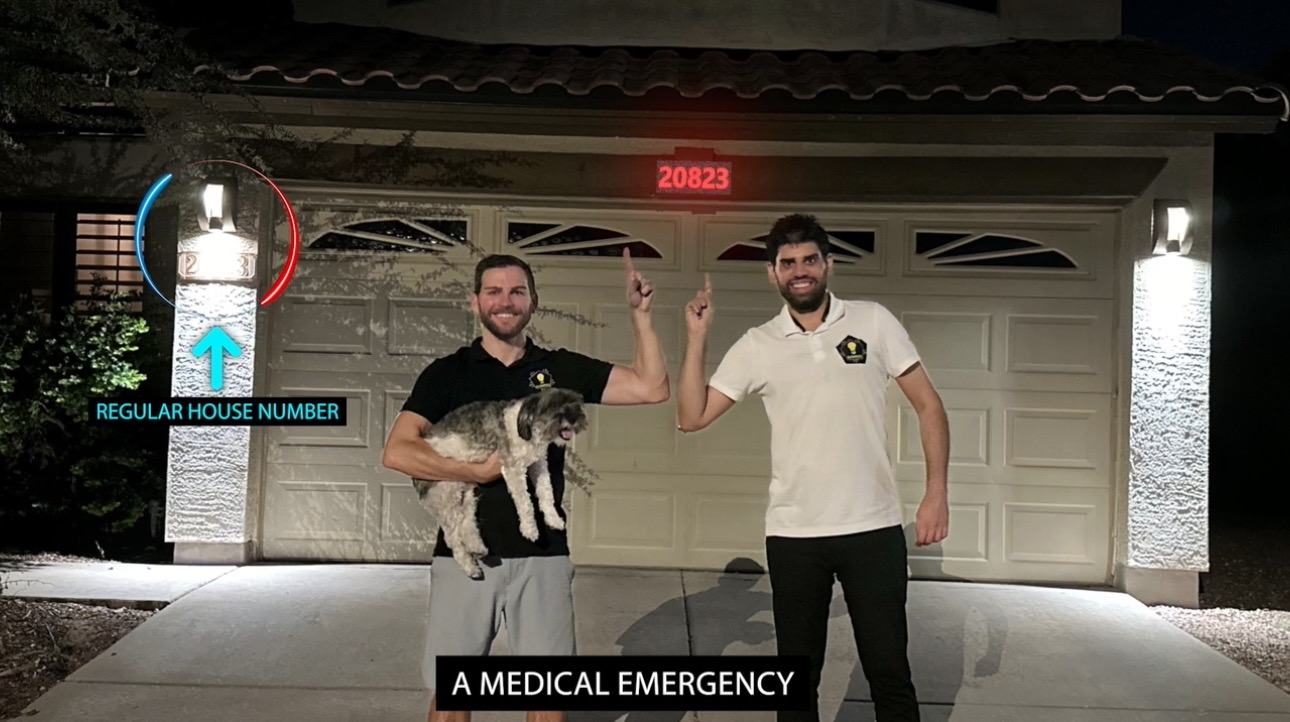
Fire code supersedes architectural preference. If your local jurisdiction has adopted the IFC (most have), your home is legally required to have visible, contrasting address numbers. An HOA cannot impose restrictions that make your home non-compliant with fire code. If your current house numbers are invisible at night — and most are — installing an illuminated sign isn't a cosmetic upgrade. It's a code compliance measure.
That said, winning an architectural review isn't about being right. It's about making it easy for the board to say yes.
HOA Approval Checklist for Illuminated House Numbers
The Direction This Is Moving
The regulatory trajectory is unambiguous. Fire codes are getting stricter about address visibility. Municipalities are starting to require illumination, not just recommend it. Arizona is legislating explicit HOA override authority for lighted address devices. The International Association of Certified Home Inspectors (InterNACHI) notes that jurisdictions across the country are beginning to enforce house number laws with fines — sometimes $200 or more for non-compliance.
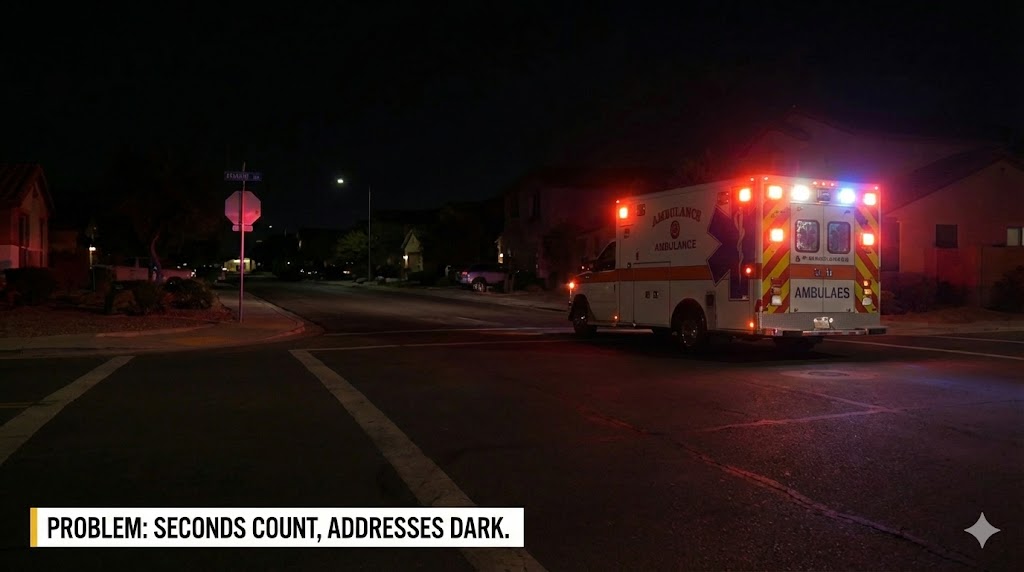
HOAs that blanket-ban illuminated address numbers aren't just behind the curve. They're creating liability. A board that denies an illuminated sign — and a resident dies in a medical emergency where the crew couldn't find the house at night — is going to wish they'd said yes to an adjustable-brightness address light.
The Glomensio Firefly was designed for exactly this intersection. It meets fire code requirements. It has adjustable brightness for HOA compliance. It installs in 15 minutes without structural modification. It's waterproof, hardwired, and recognized by CES, Future PLC, and deployed across 18 states. And in Arizona, SB1083 was written to protect devices with exactly its feature set.
Your house number isn't a sign. It's a safety device that your fire code requires and your community depends on. Treat it accordingly.