
We have laws protecting people who act (Good Samaritan laws), but we have created a housing system (HOAs) that prevents the signal needed to initiate that act.
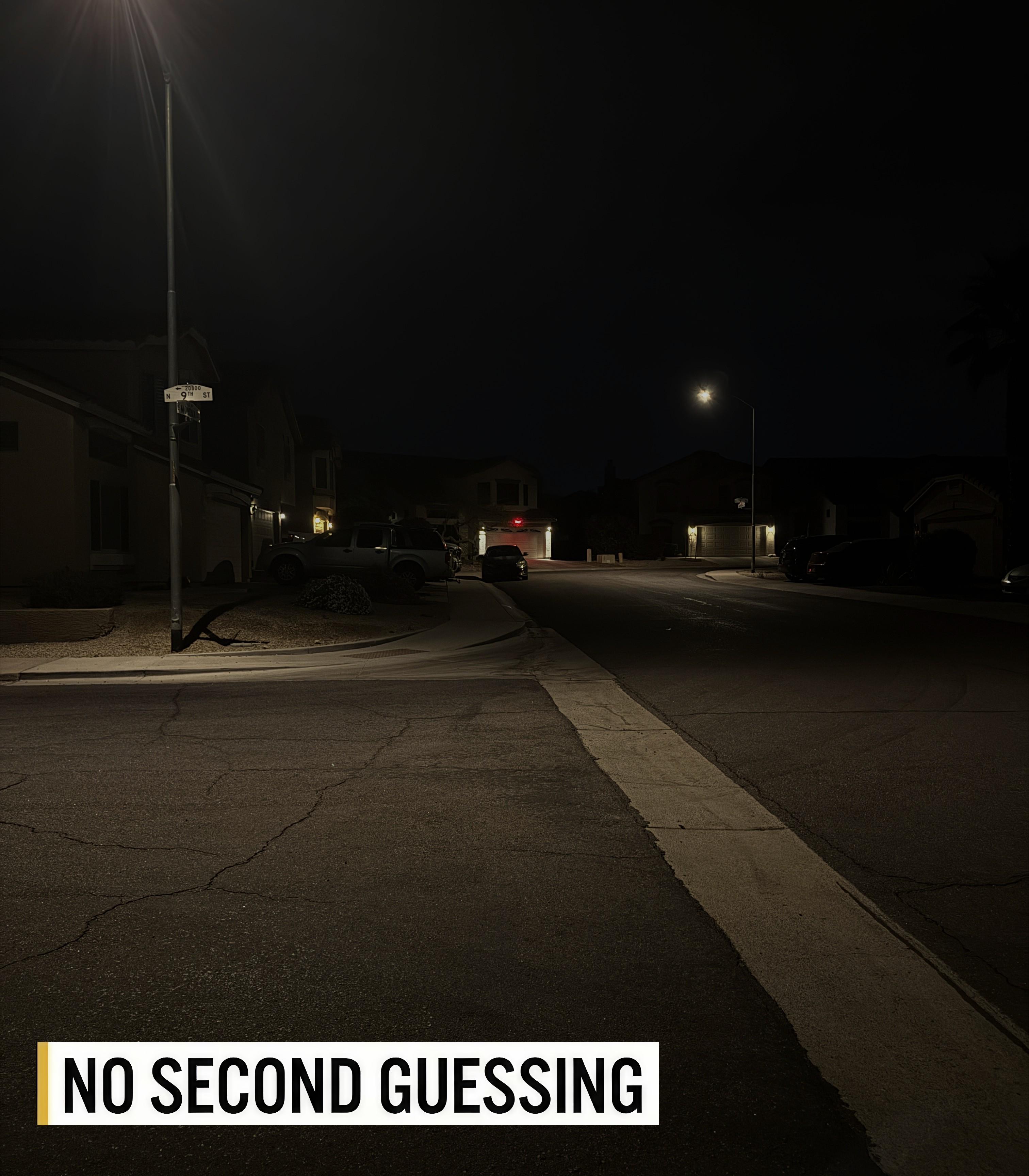
When a car crashes, it makes a noise. When a house catches fire, there is smoke. These visible cues trigger Good Samaritan intervention. But medical emergencies—Cardiac Arrest, Stroke, Home Invasions—are silent. They happen behind closed doors.
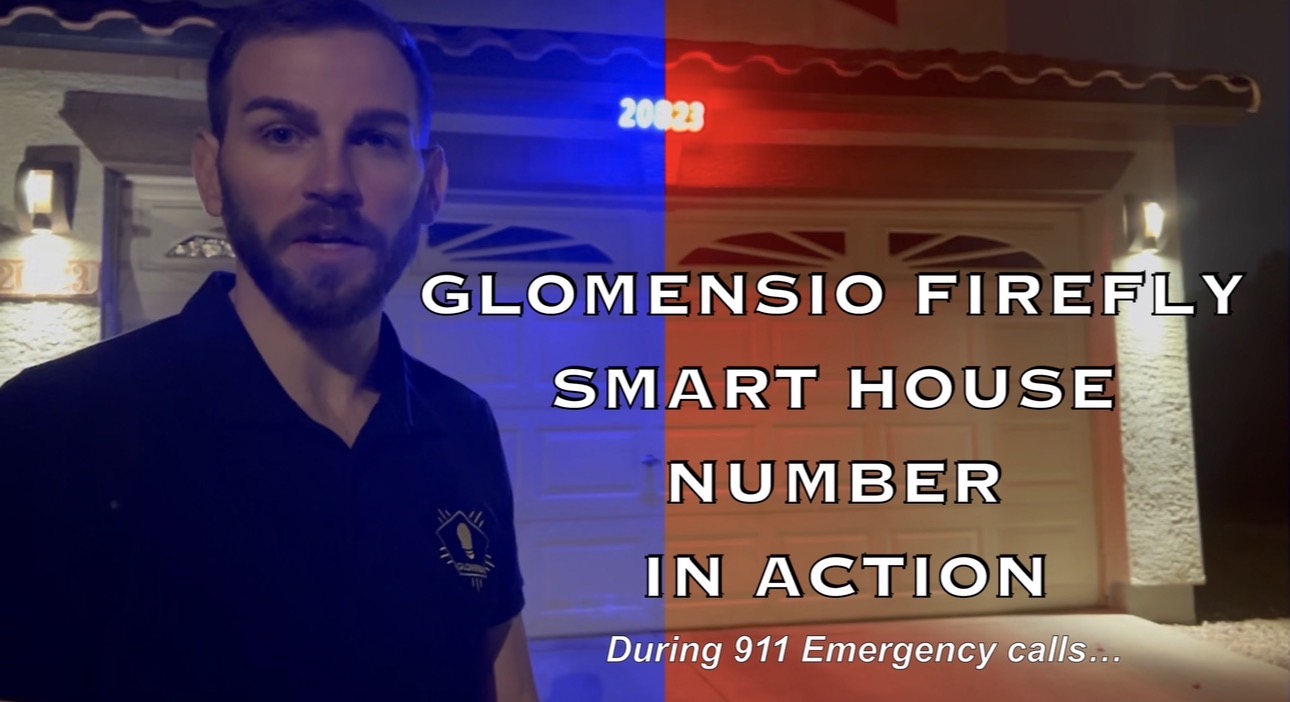
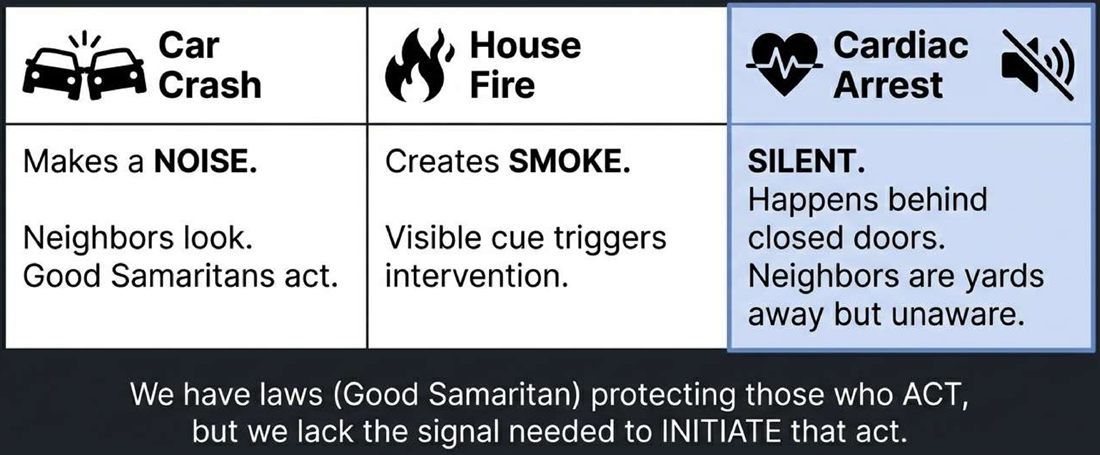
A fire makes smoke. A car crash makes noise. A cardiac arrest makes nothing — until an ambulance pulls up at the door, often too late. Reflective vinyl can make a house number readable. It cannot make an emergency visible.
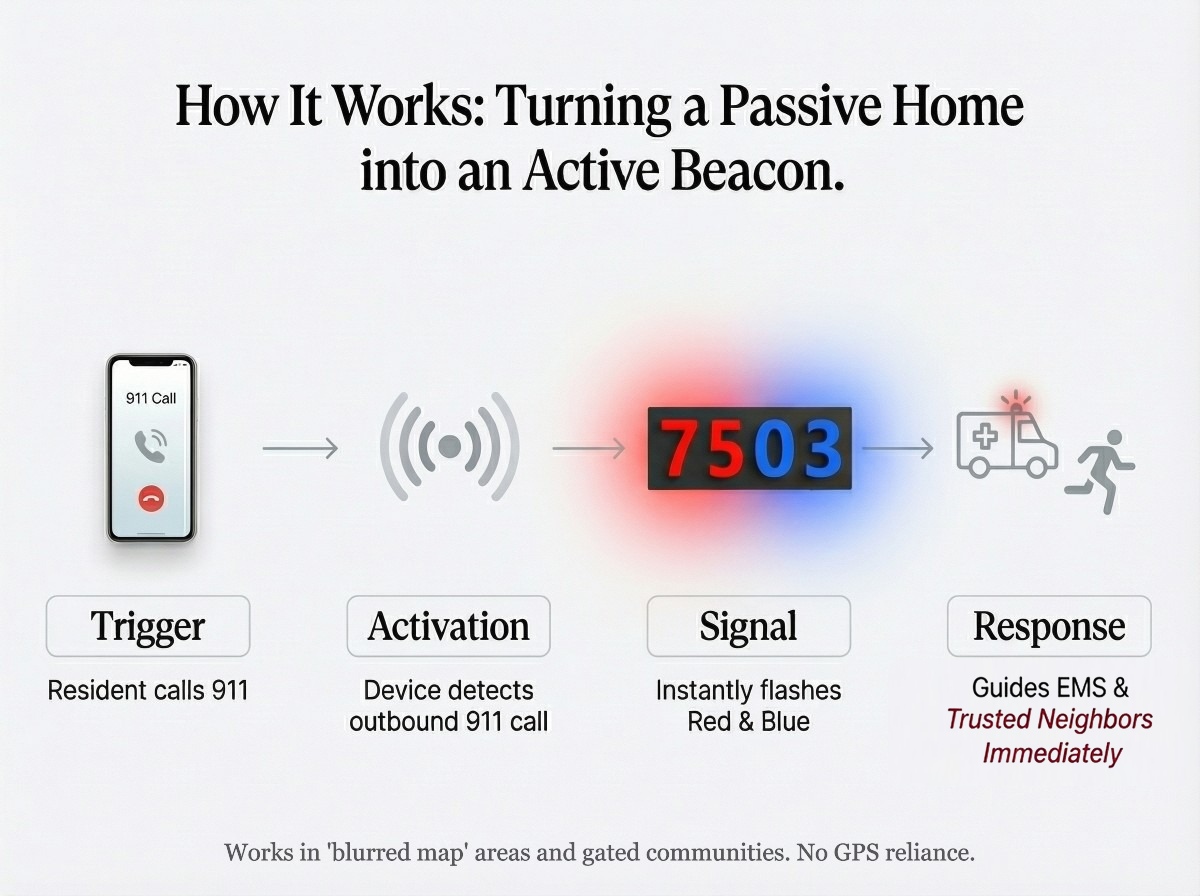
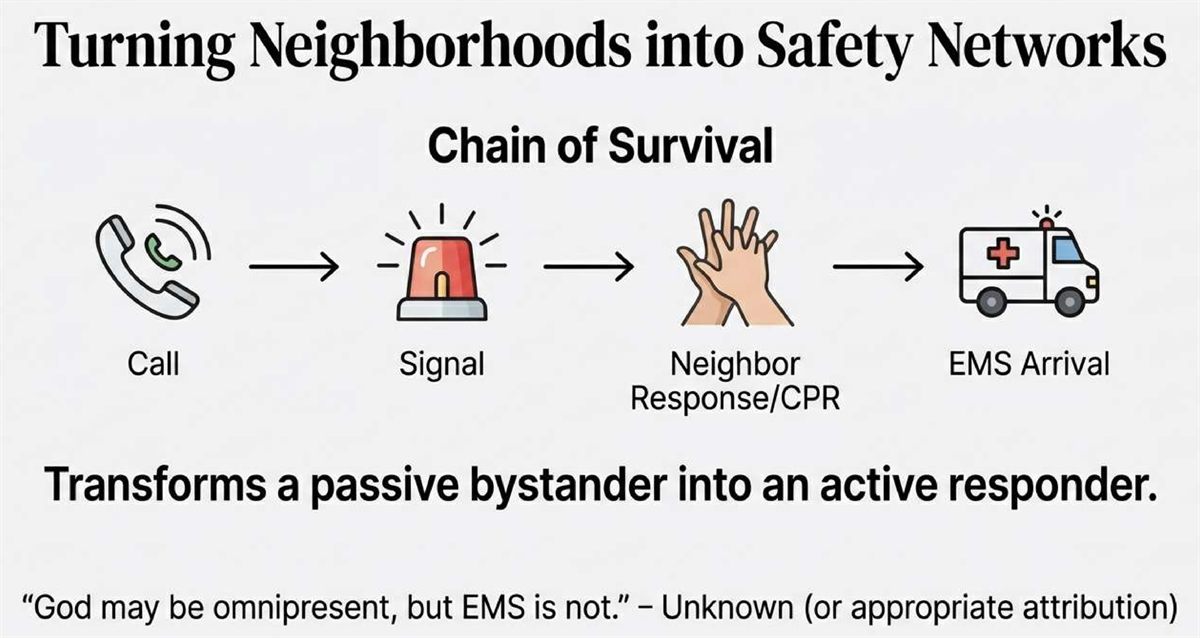
The people most likely to save a life are not paramedics seven minutes away. They are a family member down the hallway, or your trusted neighbors across the street — already close enough, already willing, but with no idea the call was made. Firefly is the missing link in the chain of survival. It makes the emergency itself visible in seconds to the people best positioned to act on it, then guides EMS in with 1,000-foot precision when they arrive.
A house number marks where someone lives. Firefly marks the moment their life is on the line.
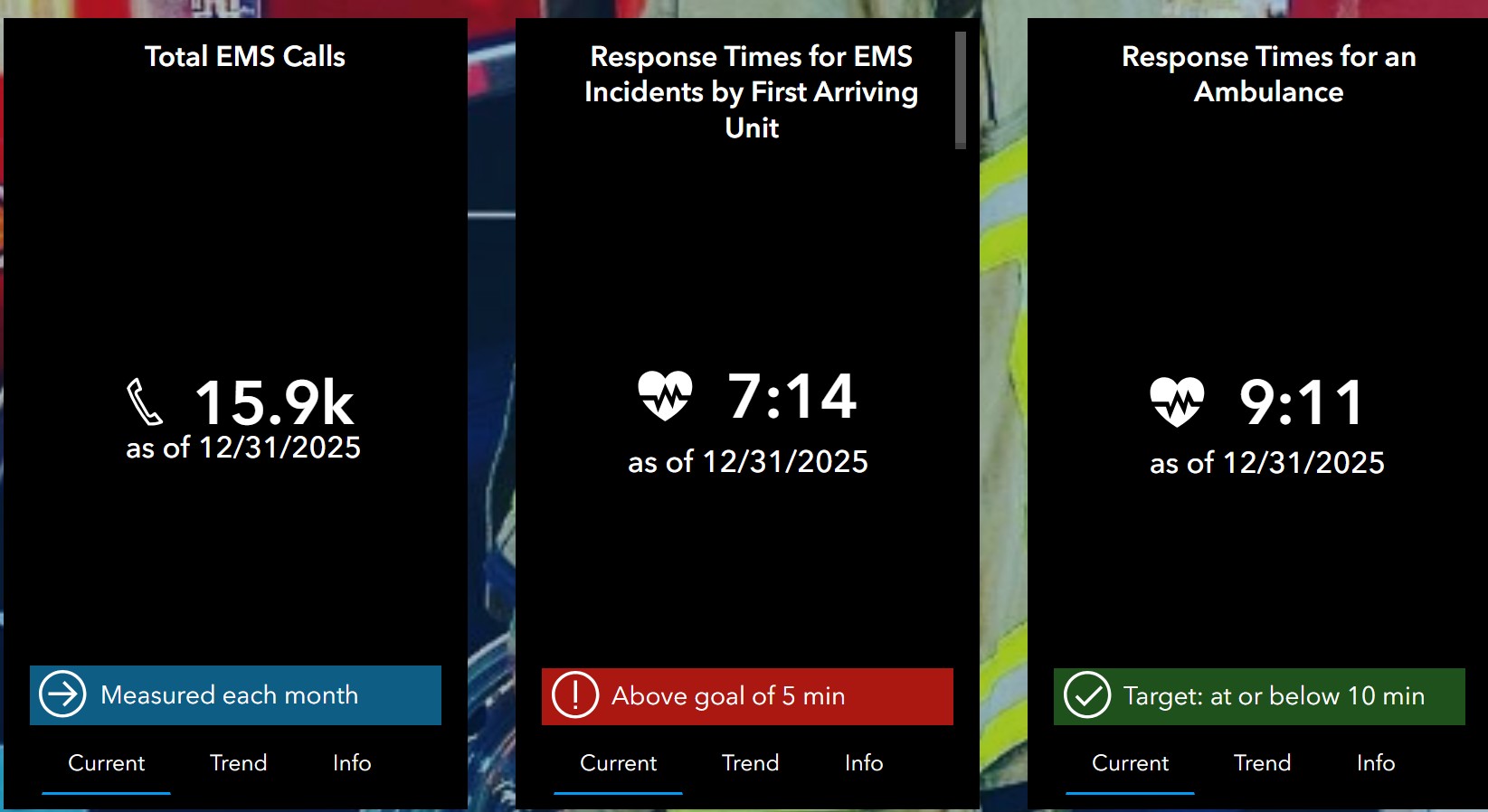
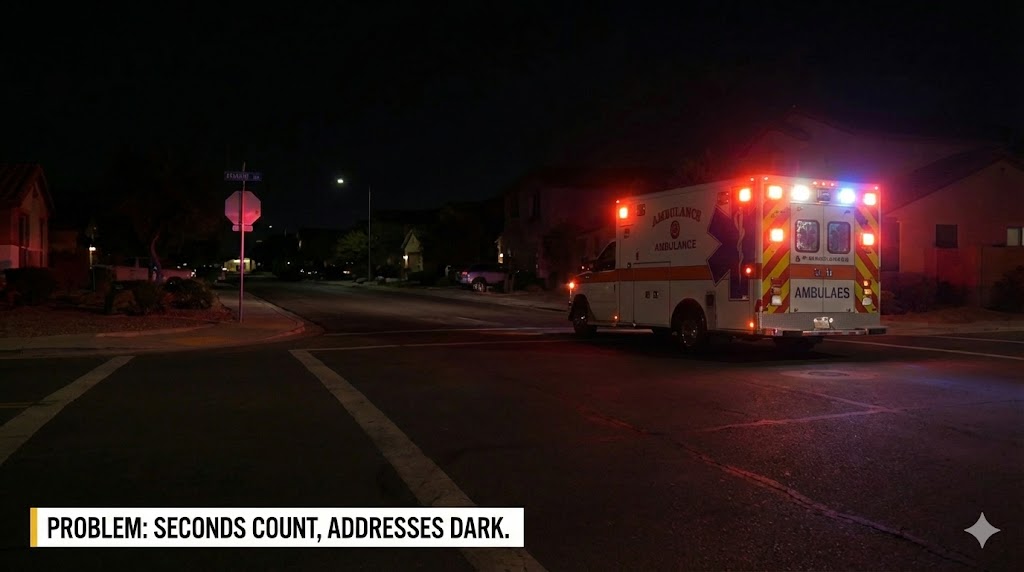
The Reality: EMS Can't Teleport. In many parts of Arizona, professional help is 8–15 minutes away, as shown by real-time data from the City of Phoenix—making the need for our patented innovation obvious.
The Tragedy: In thousands of these cases, a neighbor is just yards away, willing and able to help (CPR, Narcan, EpiPen), but they have no idea the emergency is happening. Glomensio Firefly is a first-of-its-kind innovation that ensures someone from your close neighbors can help you before it's too late. God may be omnipresent, but EMS is not.
“God may be omnipresent, but EMS is not.”
— Gaurav Batta, Founder, Glomensio
Despite being a CES 2026 Innovation Award Honoree and securing a USAF Direct-to-Phase II memorandum, our advanced light up house number technology is effectively banned in thousands of Arizona homes.
The Loophole: Arizona Fire Code requires numbers to be "visible," but not "illuminated" or "active." HOAs use this ambiguity to ban safety devices, including illuminated house numbers, based on "aesthetics."
The Conflict: They are prioritizing "curb appeal" over the ability of a senior citizen to signal for help.
The Asymmetry: Arizona law explicitly protects Solar Panels and Flags. It does not protect the right to signal for your life using modern light up house numbers for outside emergency visibility.
We are not asking for a government mandate. We are not asking the state to spend money.
We are asking for a Property Rights update (similar to Arizona SB1083) that prevents HOAs from prohibiting the installation of:
"Illuminated emergency house numbers that activate during a 911 event to assist first responders and community intervention."
29–0 vote on Third Reading · February 12, 2026
On February 12, 2026, the Arizona State Senate passed SB1083 with a bipartisan 29–0 vote on third reading — every Senator who cast a vote, Republican and Democrat. The bill’s support has grown each year: an earlier version (SB1535) passed the Senate 24–5–1 in 2025, and every Senator who voted “No” in 2025 voted “Yes” in 2026. The Arizona Senate has spoken with one voice. The right to install an illuminated emergency house number is not a partisan question. It is a public-safety question.
The Third Reading floor vote was 29 Y · 0 N · 1 NV.
Sen. Hoffman’s prior Yes at the Government Committee (7–0 Do Pass)
places his support for the bill on the record.
SB1083 was transmitted to the Arizona House of Representatives on February 12, 2026 and assigned to the House Government Committee, chaired by Rep. Walt Blackman — who voted Yes on the House floor in support of this same measure (SB1535) in the 2025 session, for which we remain grateful. As the 2026 regular session closed, the bill had not yet been scheduled for a committee hearing — one of many bills that did not advance through the House committee process this year. We look forward to working with the Government Committee in the next legislative session to schedule SB1083 for hearing.
If you live in Arizona, your House Representative’s voice matters most. The 30 Senators above have done their part. The House Government Committee now needs to hear directly from the constituents they serve.
Read the full text of the proposed Senate Bill.
📜 Read Official SB1083 TextReach out to your local AZ representative, register to speak for your loved ones, or email us voicing your support.
HOA Presidents & Boards: We partner with forward thinking communities and help make neighborhoods safe. Contact us to discuss community-wide installation and safety upgrades.
Safety. Not Surveillance. · Your Home's First Responder.