
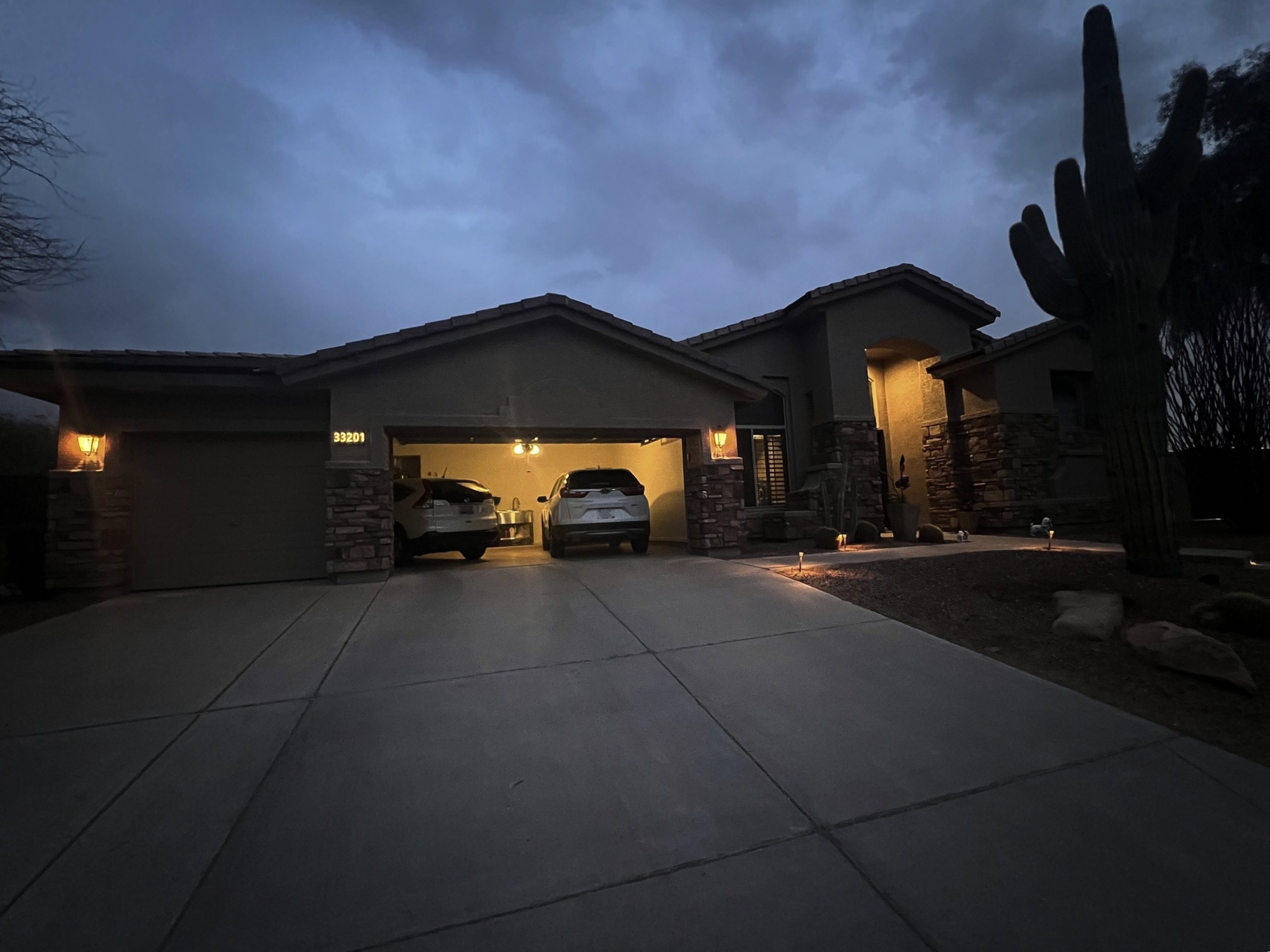
Six Types of House Number Signs — and Five of Them Go Blind After Sunset
The market for home number signs is enormous — everything from $3 vinyl digits at Home Depot to $400 custom backlit plaques on Etsy. They all fall into just six categories, and the performance gap between them is not a staircase. It is a cliff.
| Type | Day | Night | Lifespan | Emergency | Smart | Verdict |
|---|---|---|---|---|---|---|
| Brass / Metal Mounted | Good (fades) | None | 3–10 yrs | None | None | Decorative only |
| Vinyl / Adhesive | OK when new | None | 1–3 yrs | None | None | Temporary at best |
| Ceramic / Tile | Good | None | 5–15 yrs | None | None | Pretty. Fragile. Dark. |
| Solar LED Plaque | Good | Weather lottery | 1–2 yrs | None | None | Unreliable → |
| Custom Backlit (Etsy/Amazon) | Good | Varies wildly | 1–3 yrs | None | None | $400 gamble |
| Glomensio Firefly | Excellent | 1,000+ ft (emergency) | 3+ yrs, 0 failures | Auto 911 beacon | 4 modes, app, OTA | Best available |
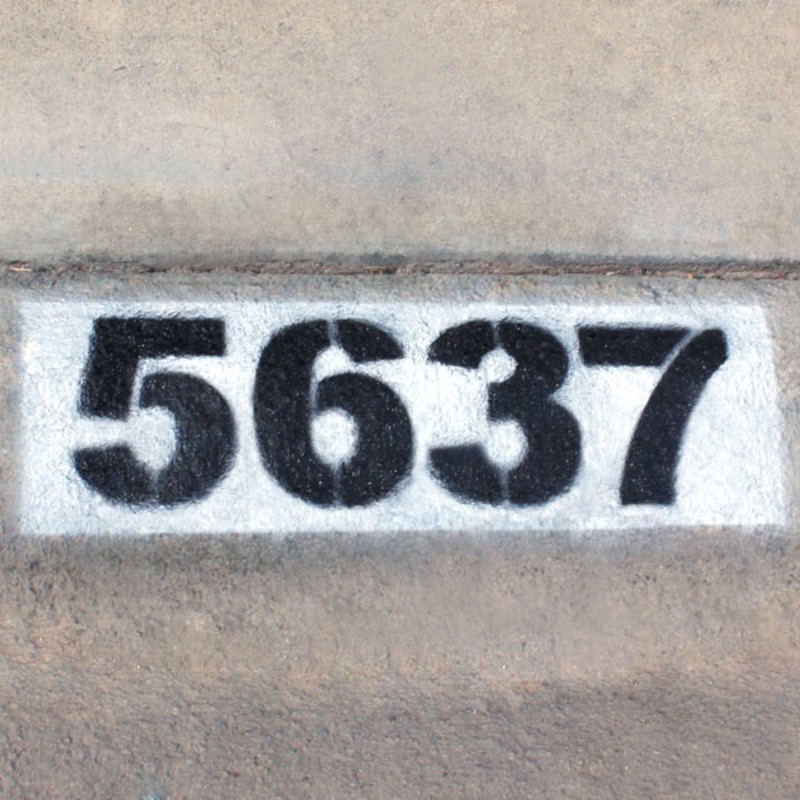
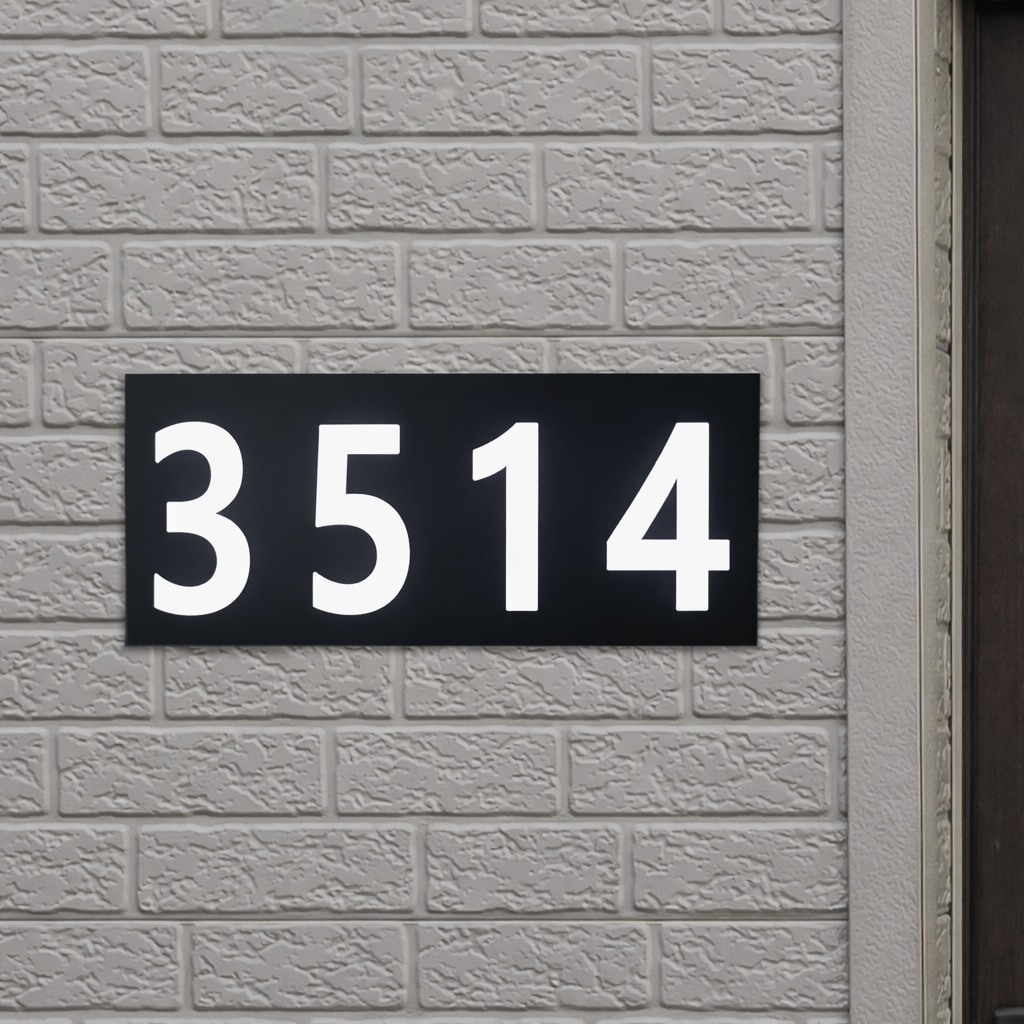
Five of six categories of house number signs share exactly one trait: the moment the sun goes down, they become ornamental. Your home number sign turns into a conversation piece nobody is having — because nobody can see it.
Your House Number Sign Has One Job. Most Fail It After Sunset.
Here is a test every homeowner should run tonight: walk to the street, turn around, and try to read your address numbers. If your porch lights are on, they are probably creating glare that reduces readability rather than improving it. If your numbers are brass or black metal on a dark facade, they are physically invisible. If they are solar-powered, check back in January.
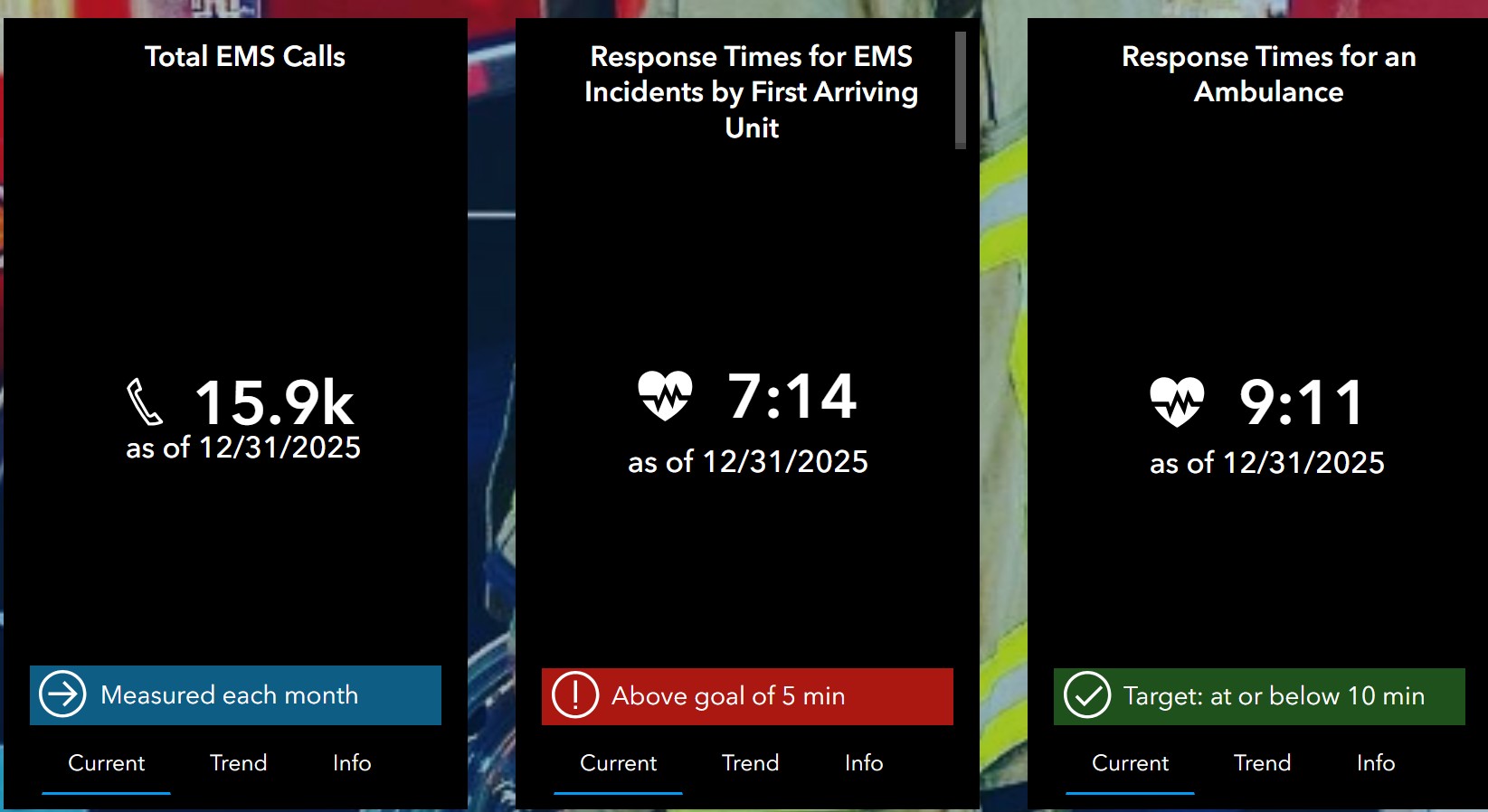
73.4% of out-of-hospital cardiac arrests happen at home. EMS response times average 7 minutes nationally. Every second a paramedic spends squinting at street numbers for houses in the dark is a second the person on the floor does not get back.
Your house number sign is not a decorating decision. It is a time-critical safety device pretending to be a decorating decision. And the entire category has been designed, manufactured, and marketed as though the second thing is true.
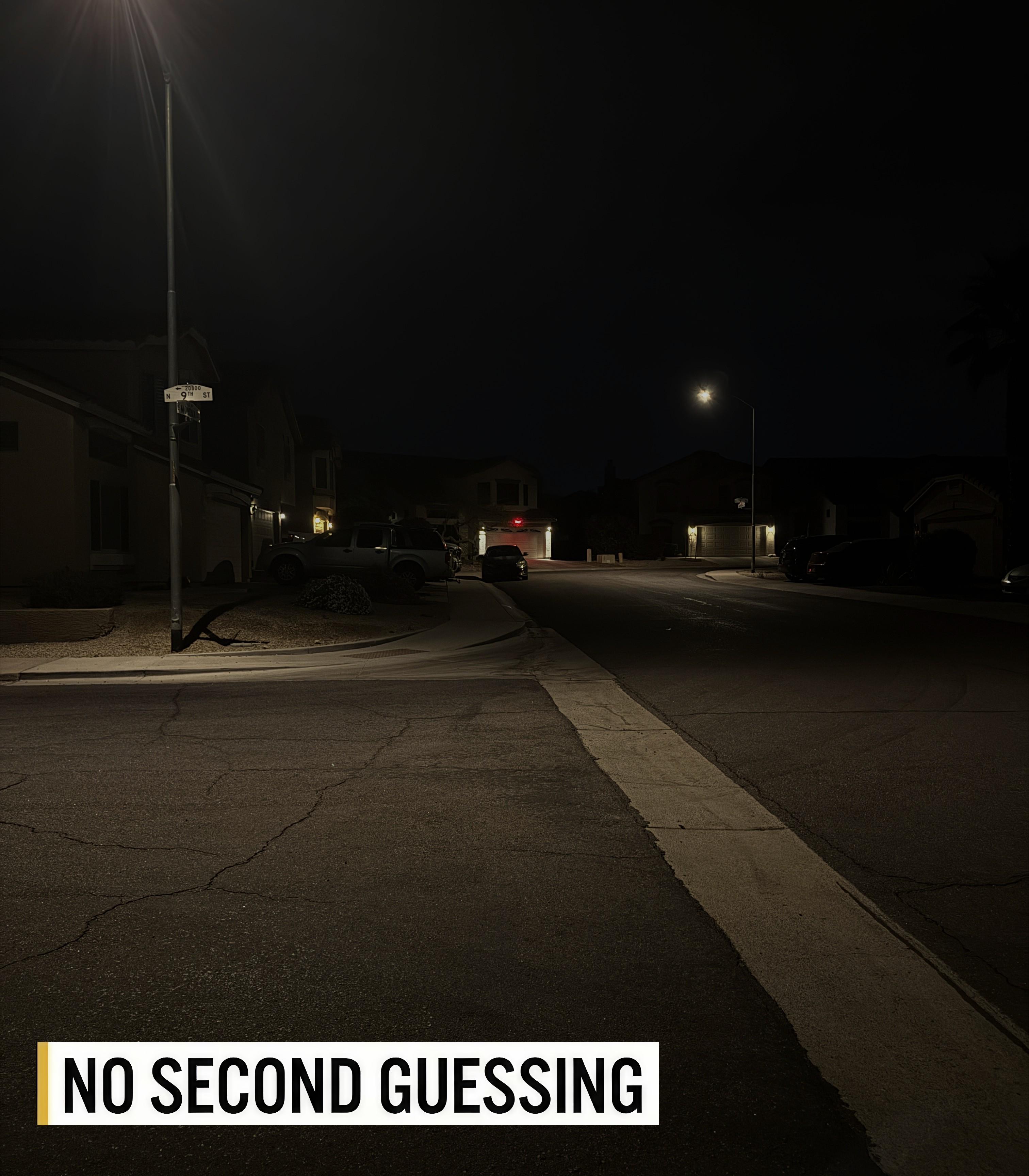
What Fire Code Actually Requires — and What It Should
IFC Section 505.1 sets the baseline for every house address number sign in the country: minimum 4 inches tall, ½-inch stroke width, Arabic numerals, contrasting background, “visible from the street.”
That last clause — visible from the street — is the one nobody enforces and everybody fails. During the day, any signage house number with adequate size meets the standard. After dark, almost no standard number sign for home is actually readable from a moving vehicle. The code says “visible.” It does not say “visible only when conditions are perfect.” And yet that is what the entire market has decided it means.
The gap in plain English: Fire code requires your house number to be visible from the street. But it does not require illumination. So manufacturers make house number signs that are technically compliant in broad daylight and functionally invisible 12 hours later. That is not a loophole — it is a design failure accepted as standard practice.
Some jurisdictions are starting to close the gap. Federal Way, Washington requires 8-inch numbers. Several California cities now require illumination for new construction. In Arizona, SB1083 is working to prevent HOAs from blocking illuminated address numbers altogether. The direction is clear even if the timeline is not.
The Graveyard of 5-Star Reviews
Here is the business model most house number signs on Amazon are running, whether they admit it or not: ship it looking great. Collect the 5-star review within the return window. Hope the first real winter closes the gap between marketing claims and physics. By month three, the three-star corrections trickle in. By year two, the one-star obituaries arrive. But by then, the listing sits at 4.2 stars because reviews from July will always outnumber corrections from February.
That is not a bug. That is the revenue model.
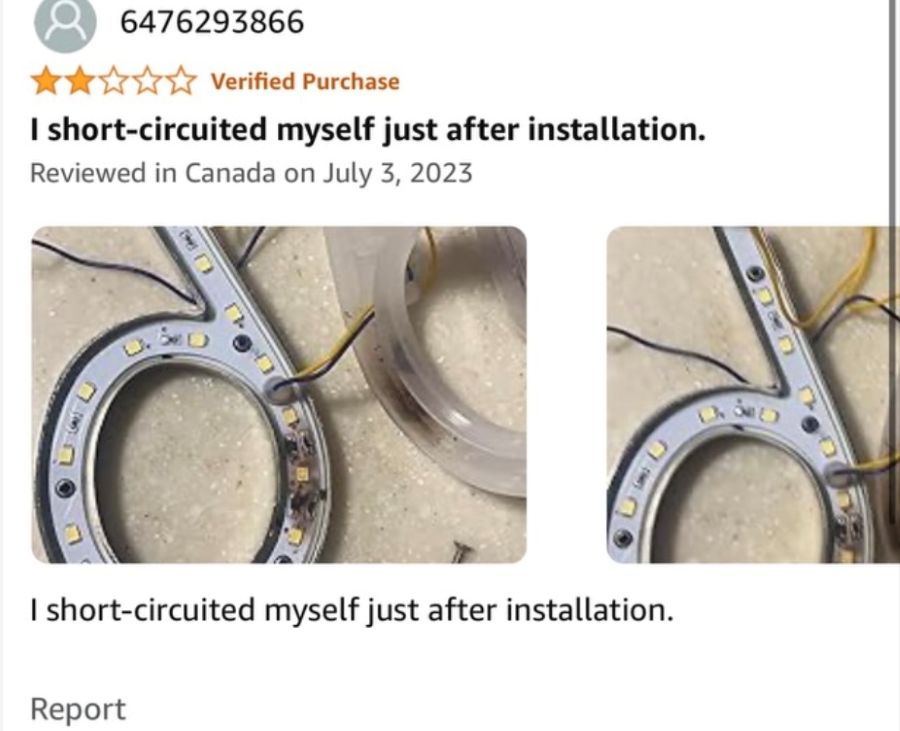
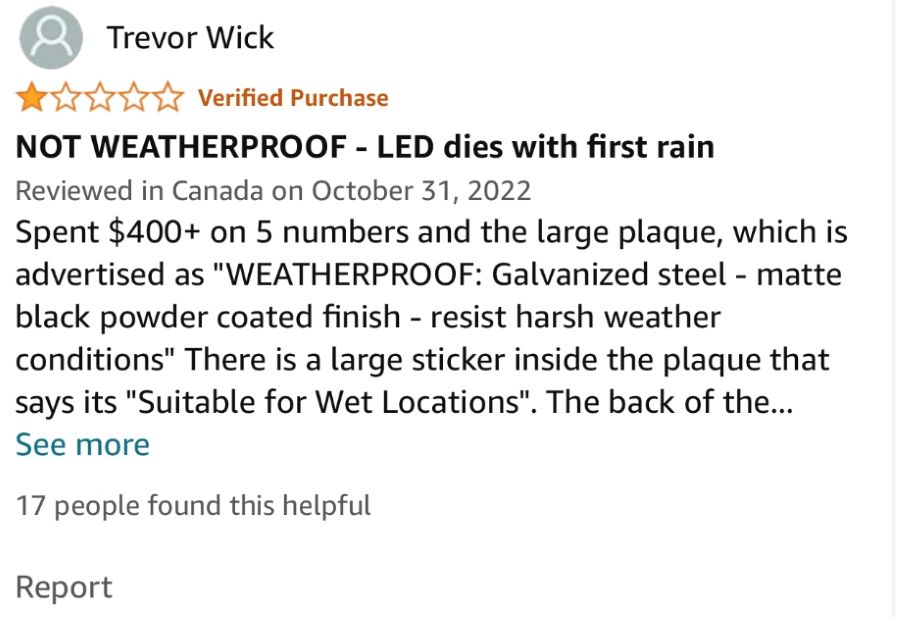
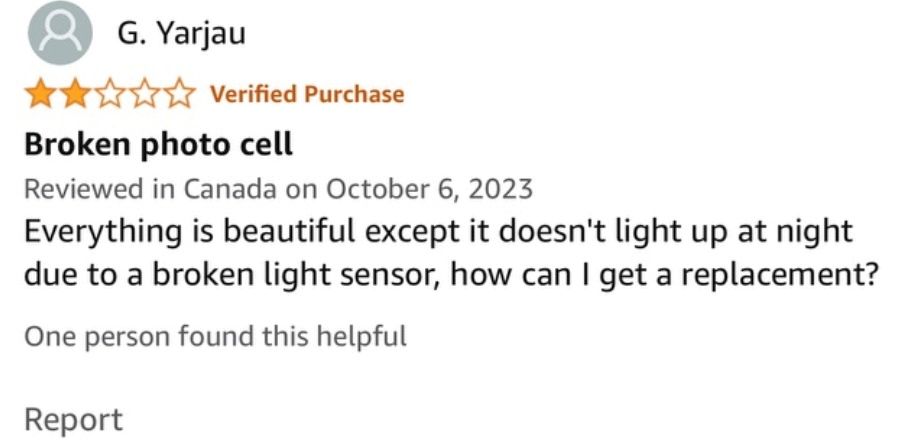
Real Amazon reviews. Real money. Real regret. Names and product listings visible because these are public reviews.
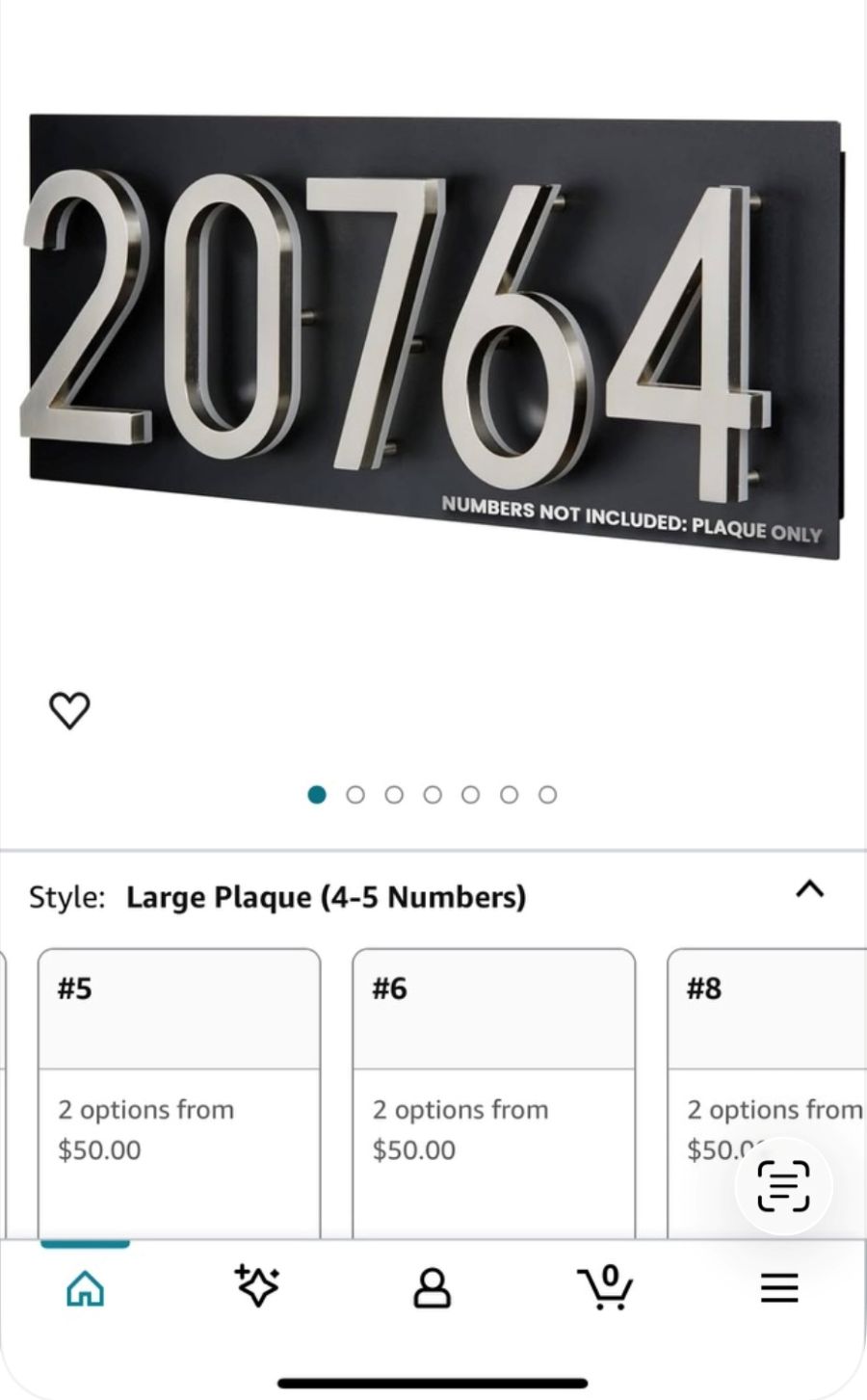
Your house number's job is not beauty pageants. It is not “modern farmhouse chic.” It is not aligning aesthetics with your mailbox font. Its job is making sure your house can be found when someone's life depends on it. God may be omnipresent, but EMS is not — and they need a number they can actually read.
How to Actually Choose a House Number Sign
Every buying guide will tell you to pick a font, a finish, and a material. That is interior design advice applied to an exterior safety device. Here is what actually matters, ranked by importance — not by how well it photographs.
1. Nighttime Visibility
If a paramedic cannot read your house number signs from the street at 3 AM, everything else is irrelevant. The number must be its own light source — not dependent on porch lights (glare), retroreflective material (angle-dependent), or solar (degrading).
2. Power Source
Hardwired beats everything. Solar panels lose output yearly. Battery capacity fades with thermal cycling. A safety device that needs you to remember to recharge it will fail on a predictable schedule.
3. Durability
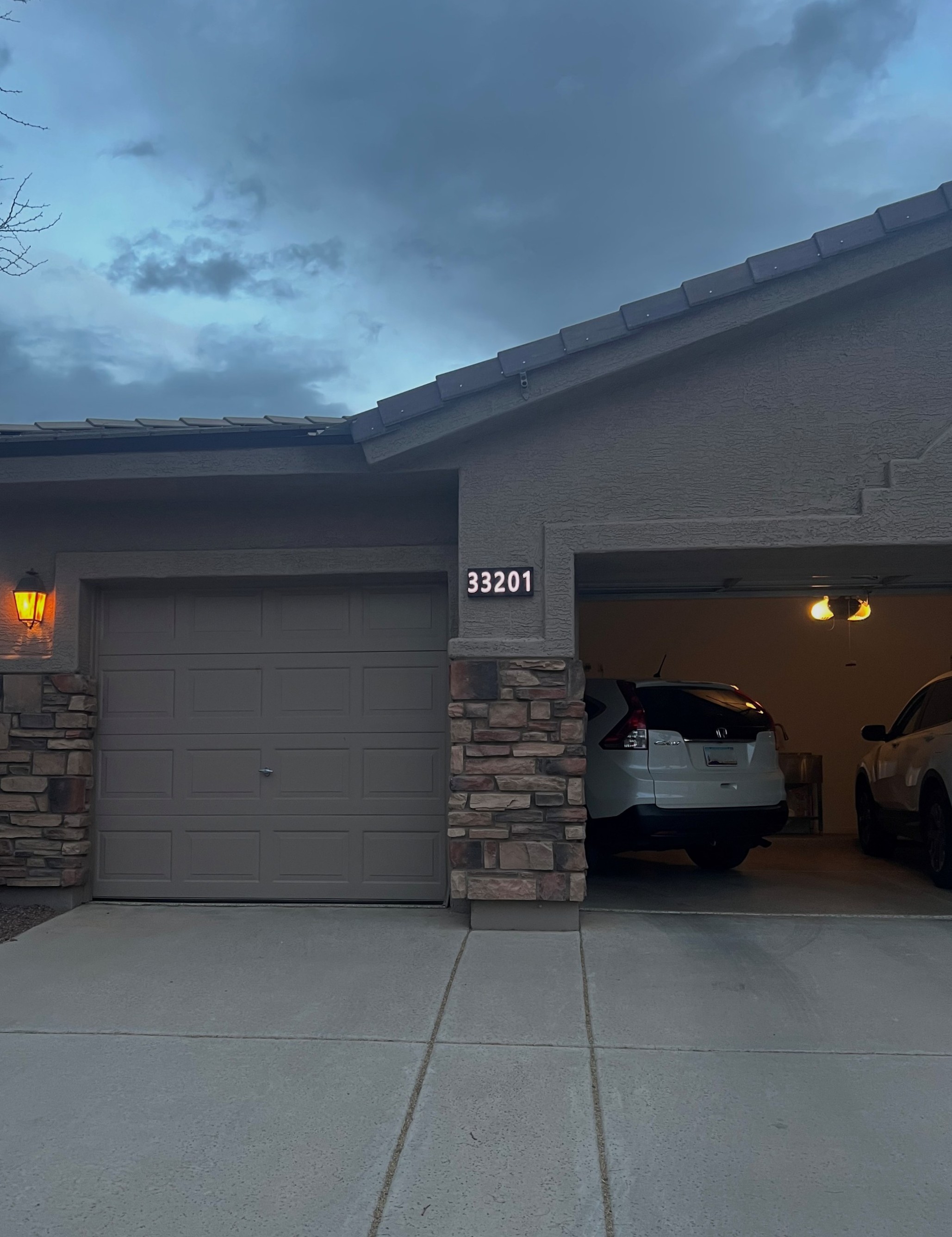
Your home number sign sits outside, 365 days a year. UV, rain, 118°F Arizona summers, Wisconsin ice storms. Was this product tested outdoors? Or in a warehouse in Shenzhen?
4. Emergency Capability
Only one house address number sign on the market can automatically signal during a 911 call. Every other number sign for home is passive. It glows (when it works) and that is all it will ever do.
5. Smart Features
Your doorbell has a camera and your thermostat has WiFi. Your address numbers should be controllable, adjustable, and updatable. A product that improves after installation is a foreign concept to every brass digit on the market.
6. Placement
Mount at 4–6 ft height, facing the primary road, unobstructed. Avoid deep eaves (blocks solar), decorative pillars (blocks sightlines), and matching facade colors (zero contrast after dark).
Glomensio Firefly — The House Number Sign That Did the Work
Hardwired — not solar, not battery. Runs on your home's AC power, 24/7/365. While every other modern home number dims, degrades, and dies on a seasonal schedule, the Firefly is the one light on your facade you never have to think about.
Four operating modes because your address needs to do different things at different times — and nobody else in the house number signs category even considered that question.
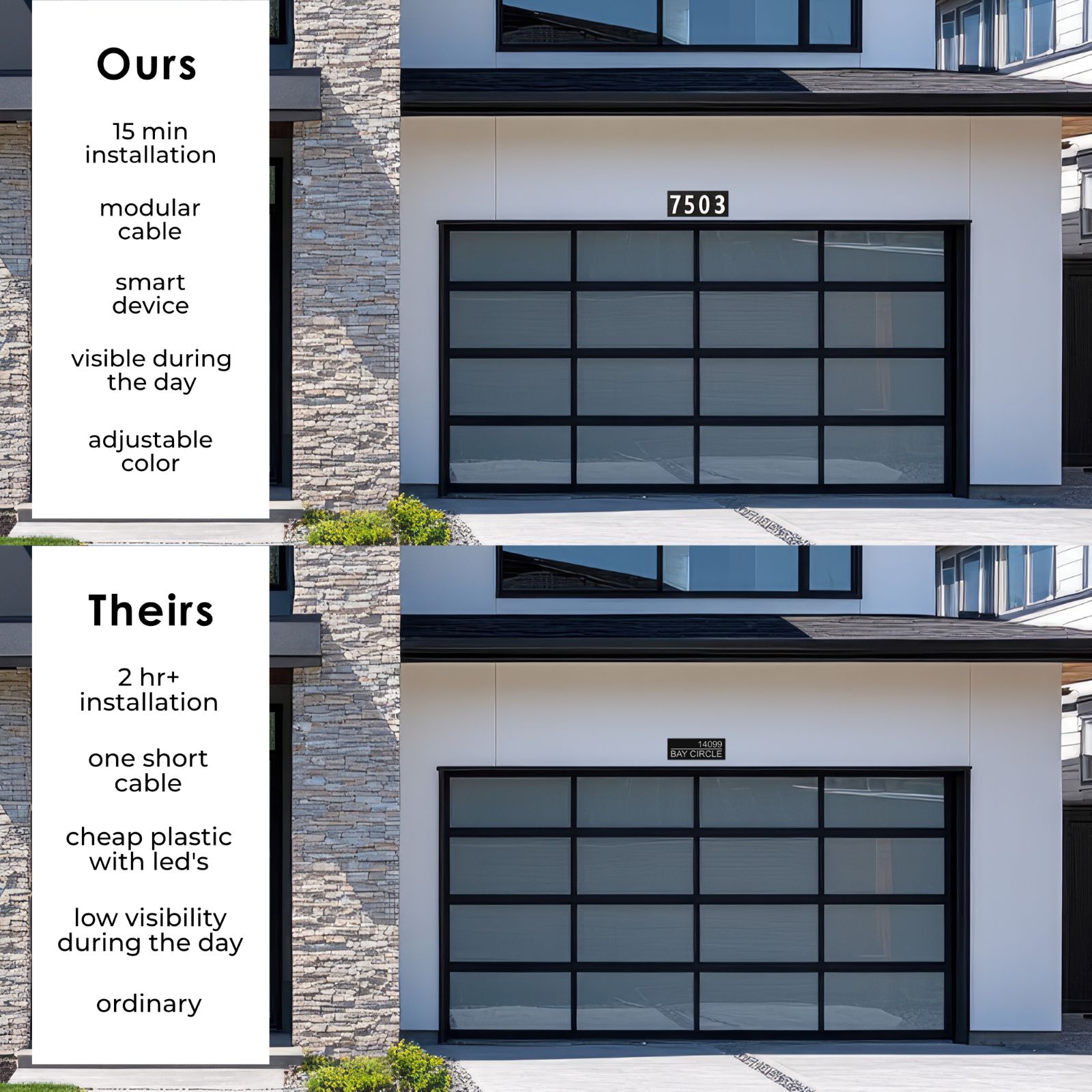
Modular magnetic digits — one mounting point, any address. Move? Swap the digits. 15-minute DIY install or $99 professional through our nationwide electrician network.
Over-the-air updates. The product improves after you install it. That sentence has literally never been true about a brass number, a ceramic tile, or a solar plaque. It is true about the Firefly.
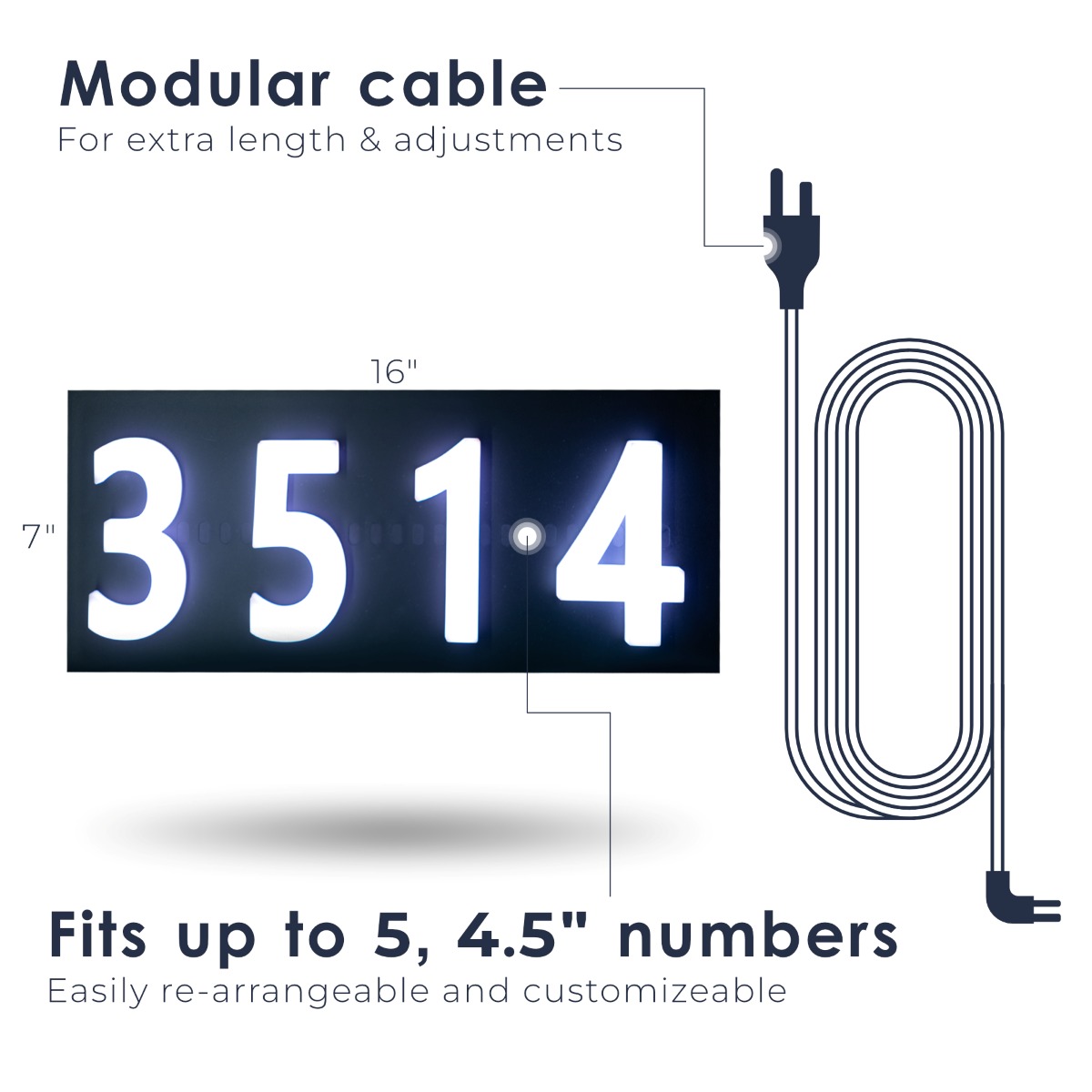
Four Modes. Zero Competitors.
Day Mode
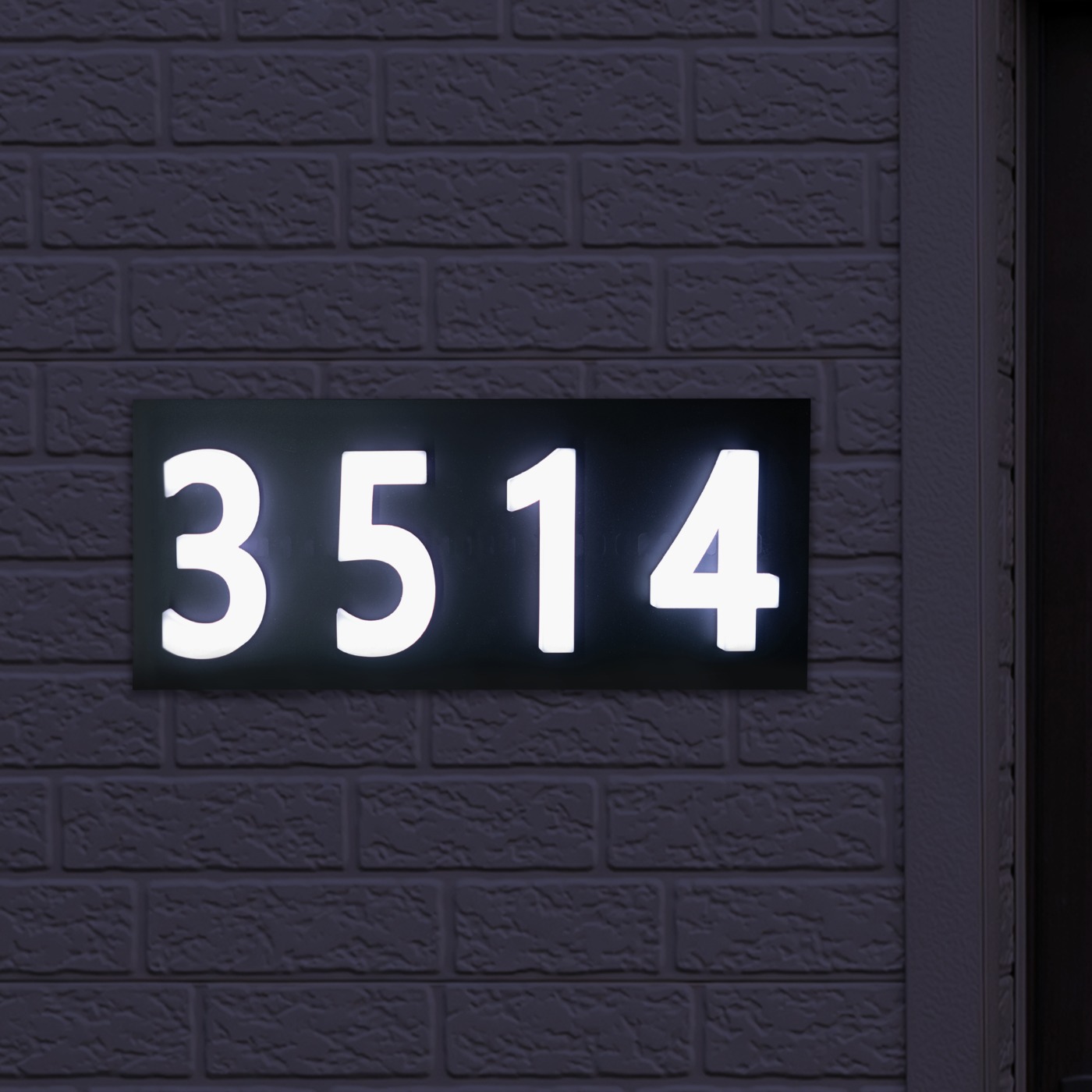
High-contrast white backlit digits. Visible in direct sunlight. Your modern house numbers should not need darkness to function.
Night Mode
Adjustable warm or cool glow. App-controlled brightness. Readable from 100+ feet without blinding your neighbors.
911 Emergency
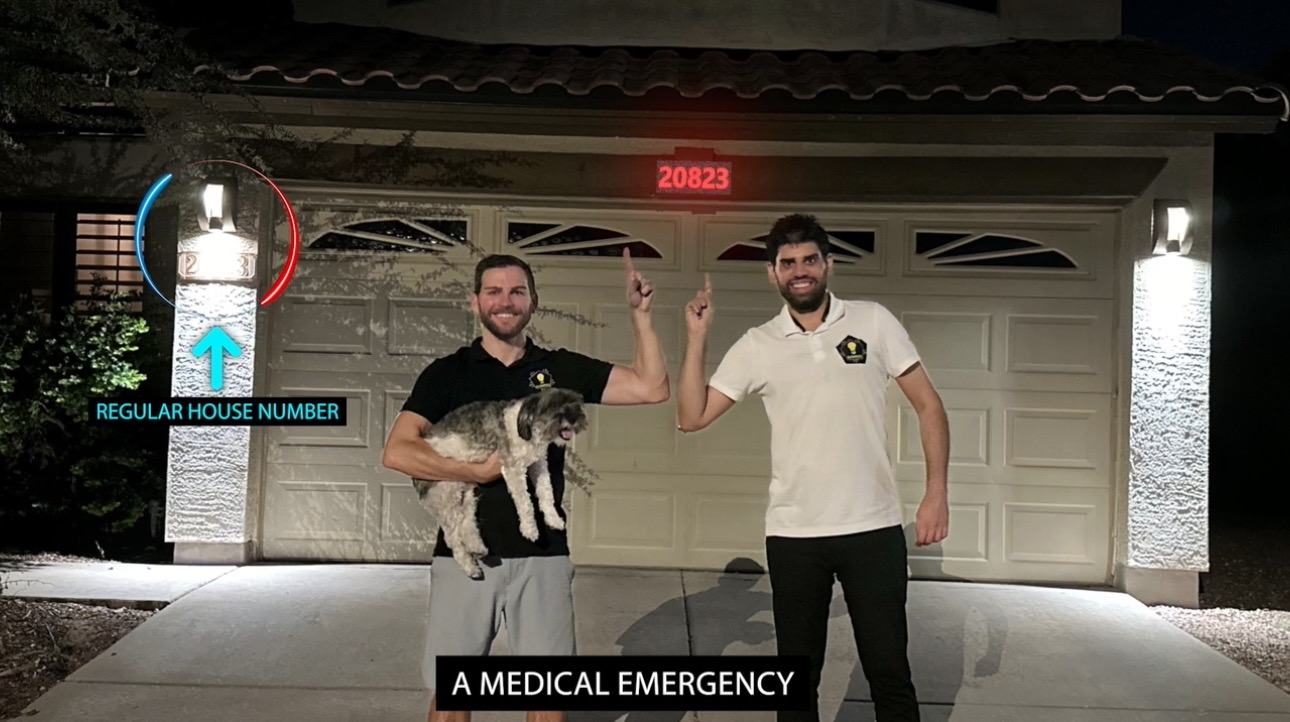
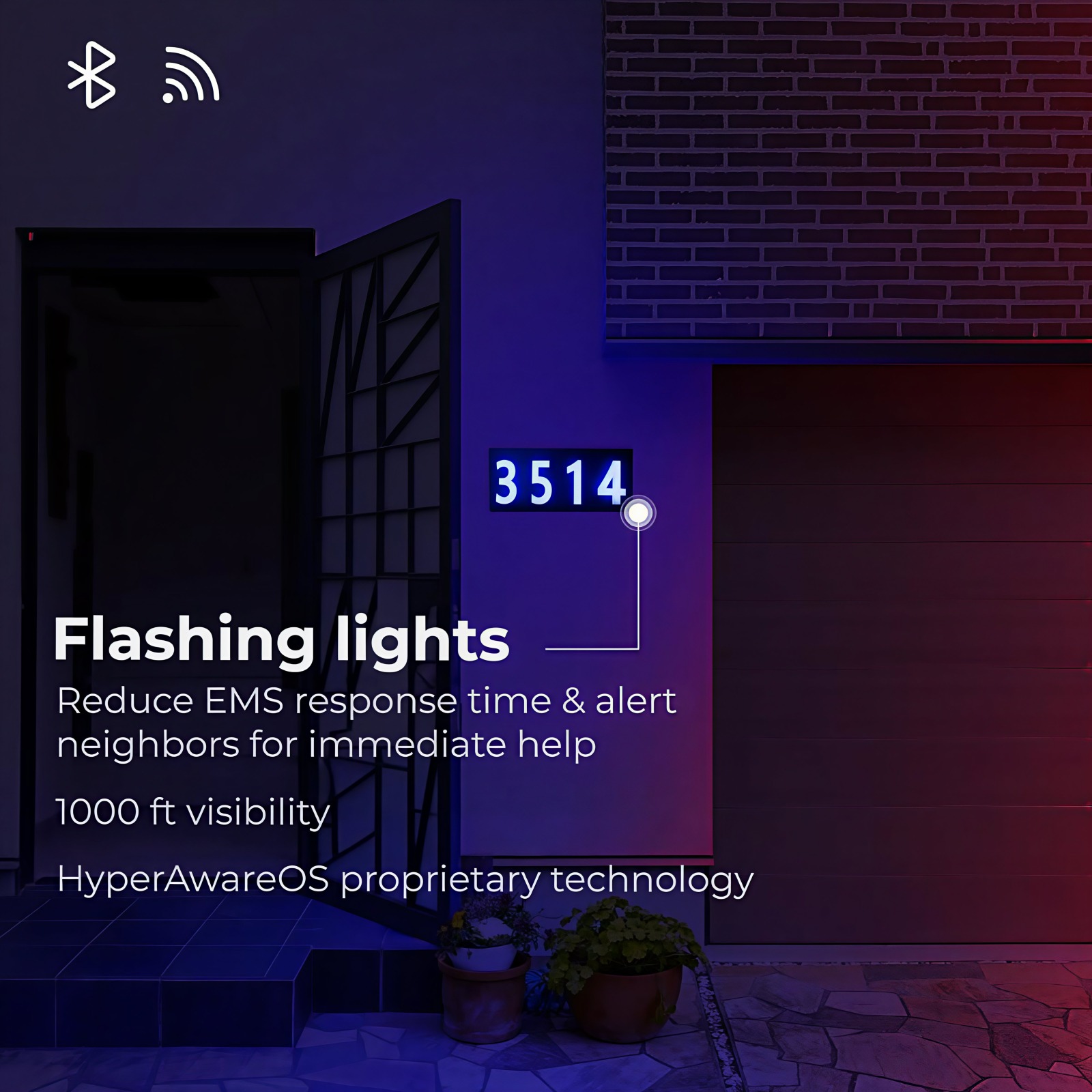
Red-and-blue flashing beacon. Auto-activates on Android 911 calls. Visible from 1,000+ feet. Your house identifies itself.
Delivery Mode
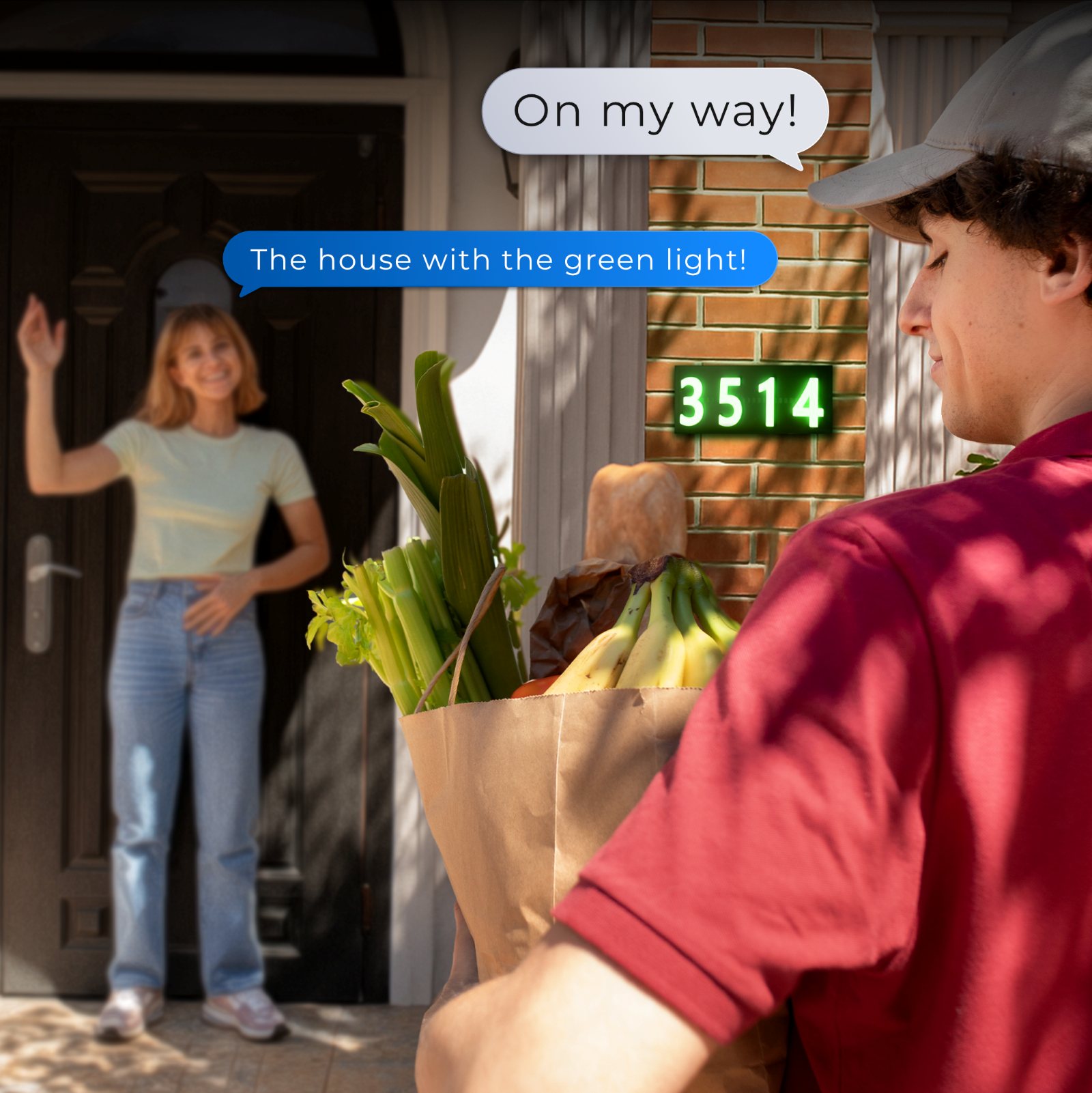
Green confirmation light. “The house with the green light.” No more “I can’t find your house” texts at 9 PM.
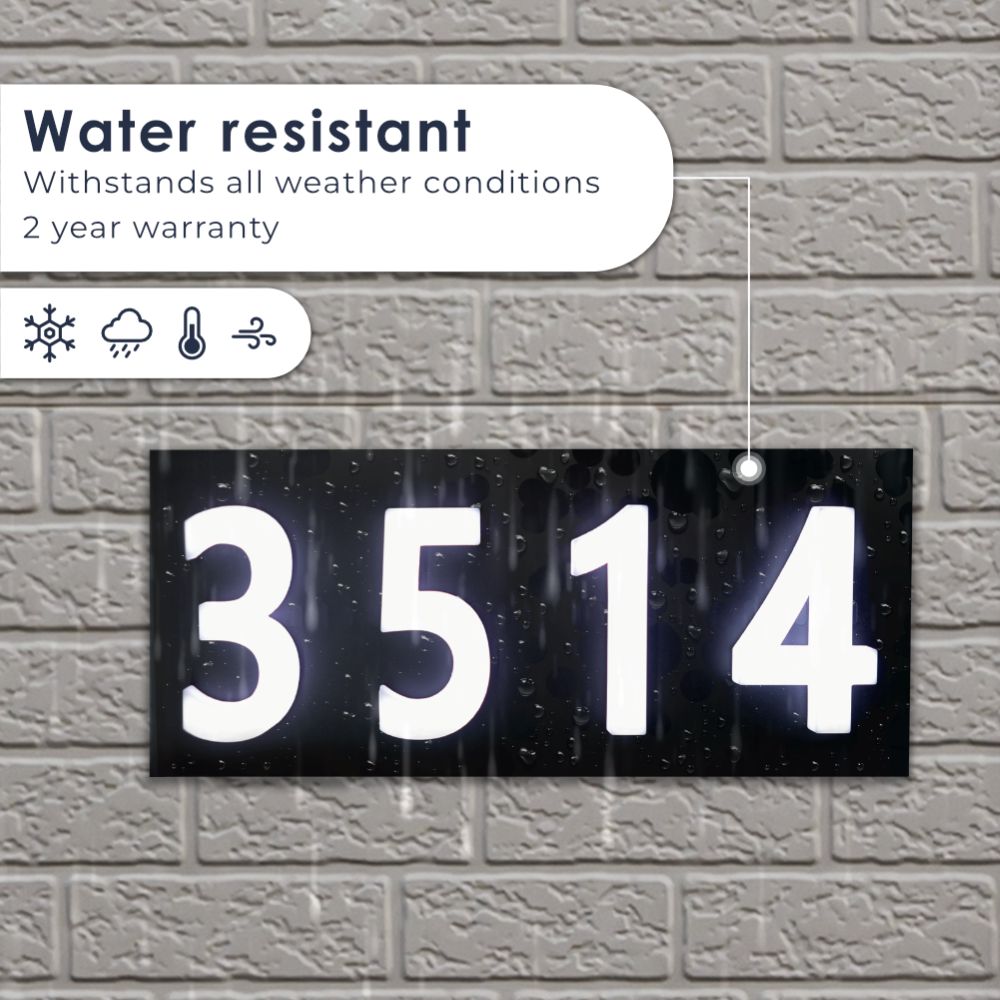
Tested in Scottsdale at 118°F. Tested in Wisconsin Ice Storms. Zero Failures.
Most house number signs are designed for the product photo. The Firefly was designed for the worst night of your life — the one where someone calls 911 and the paramedic needs to find your house in the dark.
UV-stable polycarbonate. Engineered weep holes for moisture egress. No hot glue. No exposed LED strips. No ABS plastic pretending to be weatherproof because someone stuck a “Suitable for Wet Locations” sticker inside the housing.
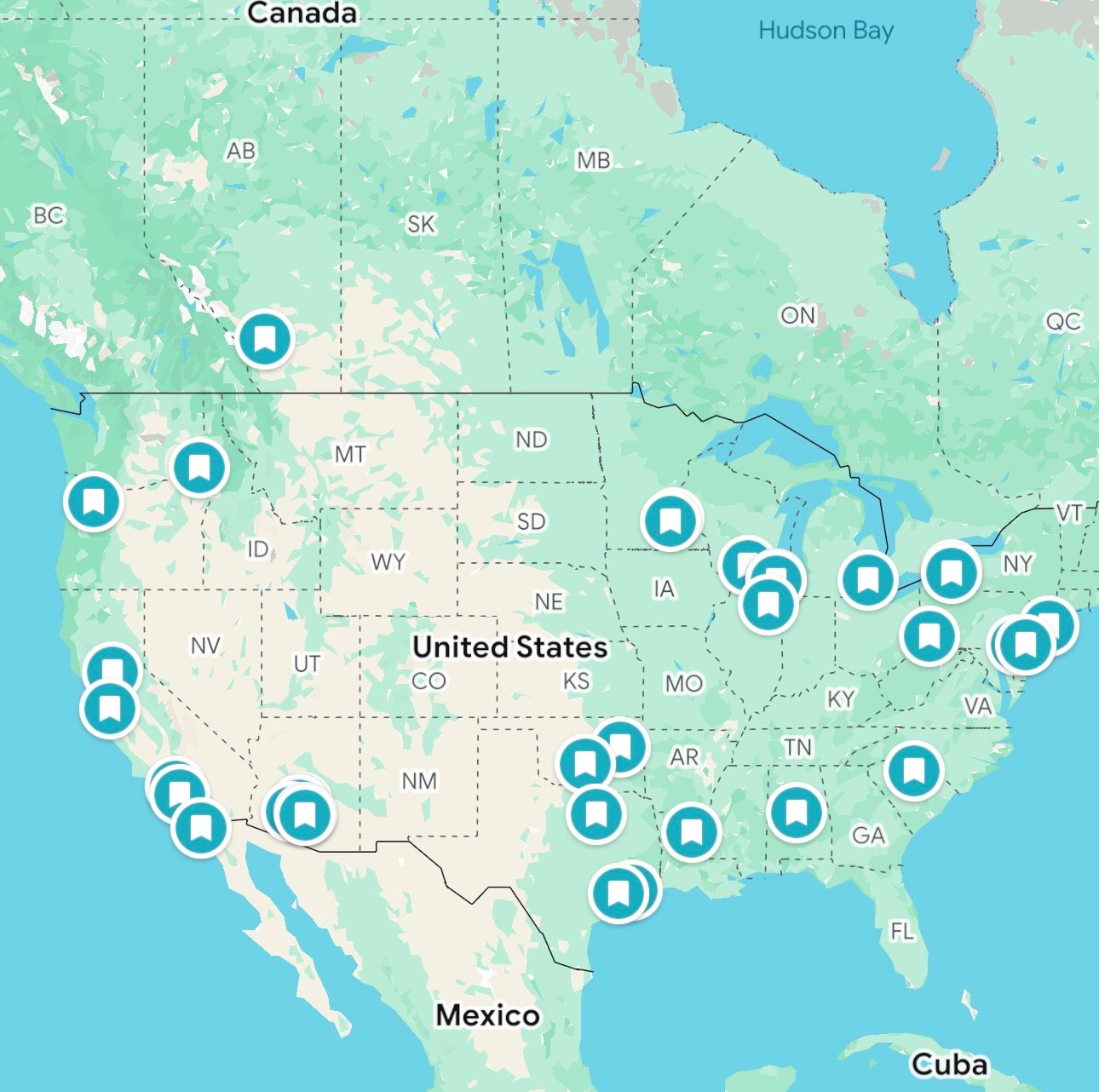
3+ years deployed. 18 states. 3 countries. Zero hardware failures across any generation. That is not a marketing claim — it is a field record.
The Only House Number Sign with Major Product Awards
Your competitor on Amazon has reviews. We have CES judges.


Won the CES 2026 Innovation Award in Smart Home. Won the Future PLC Innovation Award — Best in Home & Garden 2025 alongside Samsung Odyssey and Snapdragon X. Recognized by the USAF via Customer Memorandum. Featured in PCWorld (“radically cool”), FOX 10 Phoenix, and SecurityInfoWatch.
Not a Kickstarter Promise. A Deployed Product.
The Firefly is not a concept render. It is not a “coming soon” landing page with a countdown timer. It is installed on homes across the United States and internationally, protecting families right now.
Every generation has shipped. Every unit has performed. The Gen 3 — the CES 2026 Innovation Award winner — is the culmination of 4+ years of real-world field testing, customer feedback, and engineering iteration.
Founded by Gaurav Batta. An EB-1A “Einstein Visa” recipient for Extraordinary Ability in Smart Home Innovation and Public Safety Technology. This is home safety engineered — Safety. Not Surveillance.
Frequently Asked Questions
What is the best house number sign?
The Glomensio Firefly — CES 2026 Innovation Award winner. Hardwired, 4 modes including auto 911 emergency beacon, 3+ years field-tested across 18 states with zero hardware failures. It is the only house number sign that has won a major product award. Not a review award. Not a “best seller” badge on Amazon. An actual innovation award judged by engineers.
How do I choose a house number sign?
Ignore the Pinterest board. Prioritize: (1) nighttime visibility — is the number its own light source? (2) power reliability — hardwired beats solar beats battery, (3) weather durability — tested outdoors or just marketed as outdoor?, (4) emergency capability — can it actively signal for help?, (5) smart features — can it be controlled, adjusted, and updated?
What size should a house number sign be?
IFC 505.1 minimum: 4″ tall, ½″ stroke. Real-world recommendation from anyone who has actually stood at the street and tried to read one: 6″ or larger. The Firefly’s 16″×7″ sign body with 4.5″ backlit digits exceeds every code requirement and every practical readability standard.
Are illuminated house number signs worth it?
This is like asking whether headlights are worth it on a car. The answer is obviously yes — illumination is the single biggest upgrade to address numbers visibility. The question is what kind. Solar degrades. Battery requires maintenance you will forget. Hardwired illumination (like the Firefly) provides consistent visibility regardless of weather, season, or your memory.
Where should a house number sign be placed?
Visible from the street, 4–6 ft height, unobstructed by landscaping, columns, or porch overhangs. The most common placement mistakes: mounting under a deep eave (blocks solar, reduces light exposure), behind a decorative pillar (visible from one angle only), choosing a color that matches the facade (zero contrast at night). If the home is set back from the street, supplement with street numbers for houses at the driveway entrance.
Does the Firefly need WiFi to work?
No. The Firefly illuminates your house numbers every evening automatically, even without WiFi. You need WiFi for the app (brightness and color adjustment) and for the 911 emergency detection feature. The light itself is always on. Because a safety device that depends on your router uptime is not a safety device — it is an IT project.
Do I need an electrician?
Most homeowners install the Firefly themselves in about 15 minutes — it is a simple hardwired connection. If you would rather not, we have a nationwide electrician network and facilitate professional installation starting at $99. We handle the scheduling. Your only job is picking a time.
Is Firefly HOA-compliant?
Firefly was designed to meet the strictest HOA guidelines — neutral colors, minimal footprint, no visible wiring. In Arizona, SB1083 is working to ensure HOAs cannot block safety-enhancing illuminated house numbers. We work directly with HOA boards on community-wide deployments.
The Best House Number Sign Is Not a Sign.
It Is a Safety Device.
Glomensio Firefly — CES 2026 Innovation Award Winner. Gen 3 waitlist open. No subscription required.
Safety. Not Surveillance. · Your Home's First Responder.